
Commercial financing for medium sized businesses gives established companies the working capital, equipment funding, or expansion capital they need to grow without waiting months for a bank decision. Unlike startup loans, these financing solutions are built for companies that already generate steady revenue but need access to larger funding amounts, often between $30,000 and $20 million. In this guide, we will walk through how commercial financing works, the types of funding available, and how to choose the right lending partner for your company’s next stage of growth.
What Is Commercial Financing for Medium Sized Businesses?
Direct answer: Commercial financing for medium sized businesses is a category of funding — including term loans, business lines of credit, and revenue-based financing — designed for companies with at least $20,000 in monthly revenue that need capital beyond what standard small business loans typically provide. It connects established businesses to lenders who evaluate cash flow and business performance, approving amounts that commonly range from $30,000 to $20 million.
In practice, this type of financing bridges the gap between a small operating loan and large-scale institutional lending. Specifically, it serves companies that have moved past the startup phase and now need funding to manage payroll, purchase equipment, or expand operations. For a deeper breakdown of eligible products, the commercial finance services guide outlines each option in detail.
Furthermore, lenders in this space typically focus less on personal credit history and more on verifiable business income. As a result, companies with strong revenue but imperfect credit often still qualify for competitive terms.
Why Medium Sized Businesses Need Flexible Business Capital
Growth rarely happens on a predictable schedule. Consequently, businesses often need flexible business capital to cover seasonal dips, unexpected repairs, or sudden growth opportunities that cannot wait for a slow approval process. According to the Federal Reserve’s Small Business Credit Survey, a majority of employer firms report applying for external financing within a given year, most often citing expansion plans and day-to-day operating expenses as the primary drivers.
In addition, traditional banks often require years of financial history and strong collateral, which can exclude otherwise healthy businesses. In contrast, commercial financing for medium sized businesses tends to weigh recent bank statements and monthly revenue more heavily. If you are unsure whether your business meets the baseline requirement, the article on qualifying with $20,000 in monthly revenue explains exactly what lenders look for.
Above all, flexibility matters because no two businesses grow the same way. A restaurant chain opening a third location has different needs than a logistics company replacing aging trucks. Therefore, understanding the full range of available products, rather than defaulting to one familiar option, typically leads to better financing outcomes.

Reviewing cash flow and revenue history is the first step toward securing commercial financing for medium sized businesses.
Types of Commercial Funding Options Available
Specifically, medium sized businesses typically choose from several commercial funding options, each suited to a different purpose and repayment style. Below is a breakdown of the most common products used by established companies today.
- SBA loans — government-backed loans with longer terms and lower rates, ideal for larger purchases or long-term growth plans.
- Working capital loans — short-term funding to cover payroll, rent, or day-to-day operating costs.
- Business lines of credit — revolving access to funds, drawn and repaid as cash flow needs change.
- Equipment financing — funding tied directly to machinery, vehicles, or technology purchases, often secured by the asset itself.
- Invoice financing — advances against unpaid customer invoices, useful for businesses with long payment cycles.
- Revenue-based financing — repayment tied to a percentage of ongoing sales rather than a fixed monthly payment.
For businesses planning to purchase vehicles, machinery, or technology, the equipment financing guide walks through qualification steps in more detail. Similarly, companies with inconsistent monthly income may benefit from reviewing revenue-based financing options before committing to a fixed-payment product.
How Much Capital Can Mid-Sized Companies Access?
Typically, mid-sized companies can access anywhere from $30,000 to $20 million, depending on revenue, time in business, and the specific product chosen. For example, a business generating $50,000 in monthly revenue may qualify for a smaller working capital loan, while a company with $500,000 in monthly revenue and strong financials could qualify for a multi-million dollar SBA loan or term loan.
Moreover, the U.S. Small Business Administration notes that 7(a) loans, one of the most widely used SBA programs, can provide funding up to $5 million for eligible businesses, making them a strong option for larger capital needs (source: SBA.gov). Beyond SBA products, alternative lenders such as USA Patriot Loans structure financing specifically for businesses that need faster decisions without sacrificing funding amounts.
Consequently, the right amount depends less on a fixed formula and more on how lenders interpret your business’s full financial picture. You can review current options directly at USA Patriot Loans to see which funding range fits your company.
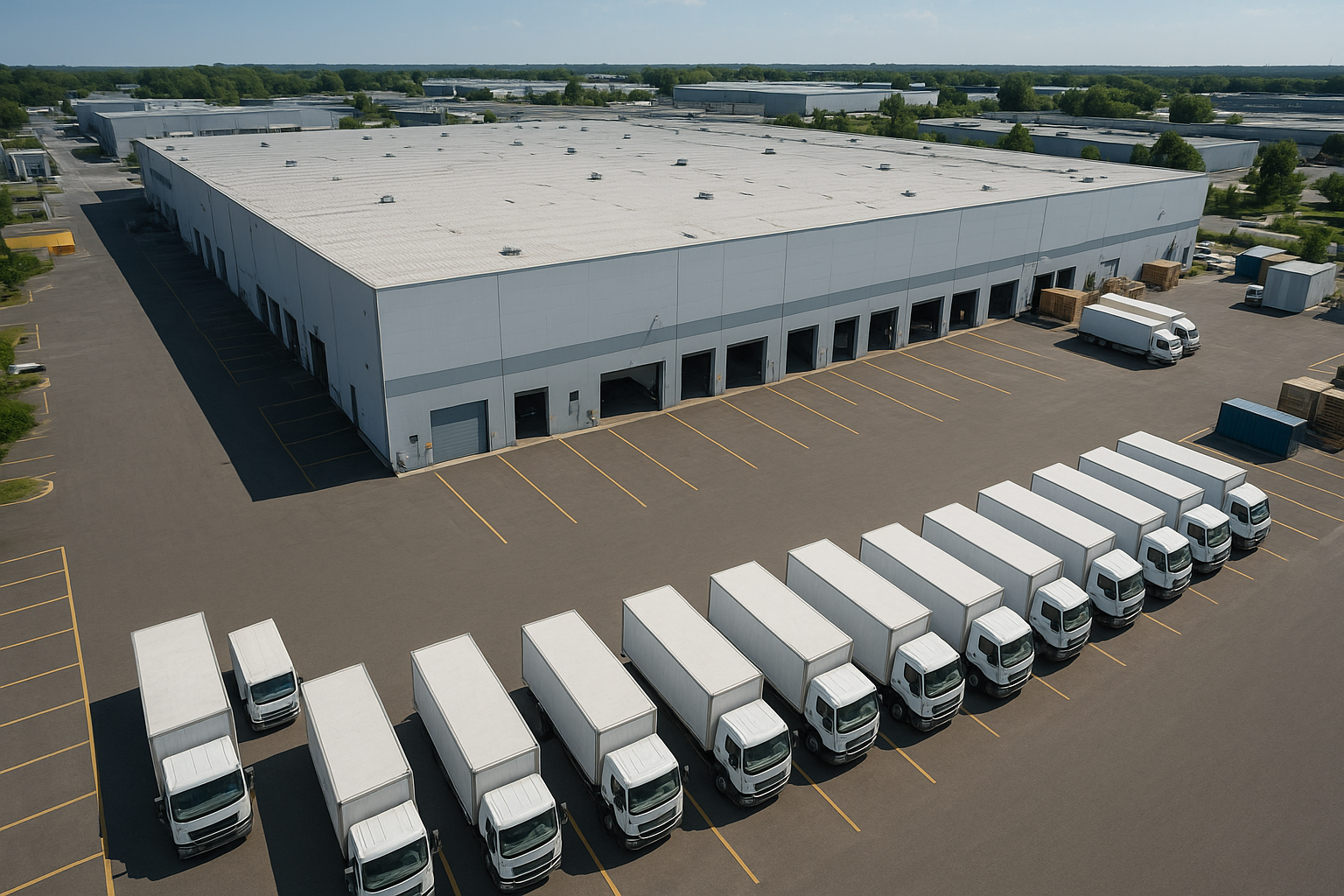
Expansion projects like new facilities or fleets often rely on commercial financing structured for growing companies.
Step-by-Step Process to Secure Business Financing
Although every lender has its own underwriting process, most applications follow a similar sequence. Below is a practical five-step process to help you move from application to funding efficiently.
- Define the funding purpose by identifying exactly why your business needs capital, whether for equipment, payroll, inventory, or expansion.
- Review your revenue and cash flow by gathering three to six months of bank statements and calculating average monthly income.
- Compare financing products side by side, weighing total repayment cost rather than focusing only on the advertised rate.
- Prepare and submit documentation, including bank statements, tax returns, and basic business identification, to avoid underwriting delays.
- Review final terms carefully, including fees and repayment schedules, before signing and confirming your funding timeline.
Notably, businesses that gather documentation early tend to move through underwriting faster. In particular, same-day or next-day funding is often available for businesses that submit complete, accurate financial records upfront.
Choosing the Right Lender for Growth Financing
Selecting a lender is just as important as selecting a loan product. Above all, look for transparency around fees, funding speed, and whether the lender has experience with businesses your size and industry. USA Patriot Loans, for example, is a disabled-veteran-owned lending company that works with established businesses nationwide seeking $30,000 to $20 million in working capital or commercial financing.
If your goal is scaling operations, opening new locations, or entering new markets, reviewing business expansion financing options can help you match the right product to your growth timeline. Meanwhile, businesses prioritizing speed over the lowest possible rate may prefer short-term or same-day funding products instead of slower bank processes.

Finalizing commercial financing terms with a transparent lender helps avoid costly surprises later.
Common Mistakes to Avoid When Seeking Mid-Size Business Loans
Even well-run businesses make avoidable errors when applying for financing. For instance, applying for a short-term loan to fund a long-term equipment purchase often creates unnecessary repayment pressure. Similarly, submitting incomplete documentation is one of the most common reasons applications get delayed or declined.
Additionally, many business owners focus solely on the interest rate without calculating the total repayment amount, which can be misleading for products like merchant cash advances. Instead, comparing the full cost of capital, as explained in the Wikipedia overview of business loans, offers a clearer picture before signing any agreement.
Frequently Asked Questions
What is commercial financing for medium sized businesses?
Commercial financing for medium sized businesses is funding designed for established companies with steady revenue that need capital beyond typical startup loan limits. It includes term loans, lines of credit, equipment financing, and revenue-based financing in amounts from $30,000 to $20 million.
How much revenue do I need to qualify for commercial financing?
Most lenders require businesses to generate at least $20,000 in monthly revenue before approving commercial financing. Higher revenue generally unlocks larger funding amounts and better rates.
How long does it take to get approved for commercial business financing?
Approval can take as little as 24 to 72 hours for alternative lenders, while bank and SBA loans typically take two to eight weeks. Same-day funding options exist for qualified borrowers with urgent capital needs.
What documents are needed to apply for commercial financing?
Lenders typically request recent bank statements, tax returns, a profit and loss statement, and basic business identification documents. Some fast-funding programs require only a few months of bank statements.
What is the difference between a term loan and a line of credit?
A term loan provides a lump sum repaid over a fixed schedule, while a business line of credit offers revolving access to funds you draw and repay as needed. Lines of credit are often better suited for ongoing cash flow fluctuations.
How much does commercial financing typically cost?
Costs vary by product and risk profile, with SBA and bank loans offering the lowest rates and short-term or revenue-based products carrying higher factor rates. Always compare the total repayment amount, not just the headline rate.
Can a medium sized business get financing with less-than-perfect credit?
Yes, many alternative lenders weigh business revenue and cash flow more heavily than personal credit scores. Revenue-based financing and merchant cash advances are common options for businesses rebuilding credit.
What is the biggest mistake businesses make when seeking financing?
The most common mistake is applying for the wrong loan type for the actual business need, such as using short-term debt for a long-term equipment purchase. This often leads to cash flow strain and higher total costs.
How is commercial financing for medium sized businesses different from small business startup loans?
Startup loans focus on new businesses with little operating history, while commercial financing for medium sized businesses evaluates existing revenue, time in business, and cash flow trends. This typically allows for larger approval amounts and more flexible terms.
What can commercial financing be used for?
Funds are commonly used for working capital, equipment purchases, inventory, payroll, business expansion, and emergency operating expenses. Some lenders restrict use of funds, so it helps to confirm eligible purposes before applying.
Do I need collateral for commercial business financing?
Not always. Many working capital loans and revenue-based financing products are unsecured, while equipment financing and commercial hard money loans typically use the asset itself as collateral.
How do I choose the best lender for commercial financing?
Compare total repayment cost, funding speed, required documentation, and whether the lender specializes in your industry and revenue range. Reading lender reviews and confirming transparent terms before signing helps avoid costly surprises.
Final Thoughts
In summary, commercial financing for medium sized businesses opens the door to working capital, equipment funding, and expansion capital that traditional small business loans often cannot provide. Ultimately, the right choice depends on your revenue, timeline, and funding purpose, whether that means a fast working capital loan or a larger SBA-backed term loan. As a result, businesses that compare their options carefully and prepare documentation early tend to secure better terms and faster funding. If your company generates at least $20,000 in monthly revenue and needs funding between $30,000 and $20 million, USA Patriot Loans offers nationwide commercial financing solutions built for established businesses ready to grow.
Leave a Reply