
Invoice factoring for small businesses nationwide is a financing method that converts unpaid customer invoices into immediate working capital, often within 24 to 48 hours. Rather than waiting 30, 60, or even 90 days for clients to pay, business owners can sell those outstanding invoices to a factoring company at a small discount and receive most of the cash upfront. As a result, this approach has become one of the fastest-growing funding solutions for companies that need steady cash flow without taking on traditional long-term debt.
Quick Answer: Invoice factoring lets a small business sell its unpaid invoices to a factoring company for immediate cash, typically 80 to 95 percent of the invoice value upfront, with the remaining balance released once the customer pays, minus a small fee.
For businesses operating across the United States, nationwide invoice factoring programs have removed much of the regional friction that once limited access to this type of funding. Today, companies in trucking, staffing, construction, and manufacturing routinely use factoring to bridge the gap between delivering services and receiving payment.

Reviewing outstanding invoices is the first step before applying for invoice factoring for small businesses nationwide.
What Is Invoice Factoring for Small Businesses Nationwide?
Invoice factoring for small businesses nationwide is the sale of unpaid accounts receivable to a third-party finance company in exchange for fast cash. Instead of waiting out a customer’s payment terms, a business receives most of the invoice value upfront and the factoring company collects payment directly from the customer later.
This arrangement, sometimes called accounts receivable factoring, has existed for centuries in trade finance. However, modern technology has made it far more accessible, allowing businesses anywhere in the country to apply online and receive funding without visiting a physical branch. According to general factoring industry history, the practice predates modern banking and remains a cornerstone of trade credit management.
How Does Invoice Factoring Work for Small Businesses?
The mechanics are straightforward once broken into individual steps. In particular, the business never borrows money in the traditional sense; instead, it sells an asset it already owns, the invoice itself, at a discount.
Because the factoring company assumes much of the waiting period, it charges a fee for the service. This fee typically scales with how long the invoice takes to get paid and the creditworthiness of the paying customer, not necessarily the small business owner’s personal credit history.
Step-by-Step: How the Invoice Factoring Process Works
- Submit outstanding customer invoices and a short application to a nationwide factoring company for review.
- The factoring company verifies that work or goods were delivered and checks the paying customer’s credit profile.
- Once approved, the business receives an upfront advance, usually 80 to 95 percent of the invoice value, within one to two business days.
- The customer pays the invoice directly to the factoring company according to the agreed payment terms.
- The factoring company releases the remaining reserve amount to the business after subtracting its fee.
Invoice Factoring vs. Invoice Financing: What’s the Difference?
Although the terms are often used interchangeably, invoice factoring and invoice financing are not identical. With factoring, the business sells the invoice outright and the factoring company typically manages collections. With financing, the business borrows against the invoice value while keeping control over collecting payment from its own customer.
For a deeper comparison, including which option fits different cash flow situations, see this guide on invoice financing solutions for small business cash flow. Businesses weighing equipment purchases alongside receivables funding may also find it useful to compare equipment financing versus invoice financing before deciding which route fits their growth plans.
Who Qualifies for Nationwide Invoice Factoring Services?
Qualification standards for invoice factoring are generally more flexible than those for traditional bank loans. Since the factoring company is primarily concerned with whether the paying customer is creditworthy, even newer businesses or those with limited credit history can often qualify.
Generally, businesses should have at least $20,000 in monthly revenue and issue invoices to other businesses or government entities rather than individual consumers. In addition, having organized records of delivered work or shipped goods speeds up the verification process significantly.
Industries that commonly rely on this funding include trucking, staffing agencies, construction subcontractors, manufacturers, and wholesale distributors, largely because these sectors routinely wait 30 to 90 days for customer payment. For businesses exploring broader commercial finance options alongside factoring, this commercial finance services guide outlines additional funding structures worth comparing.
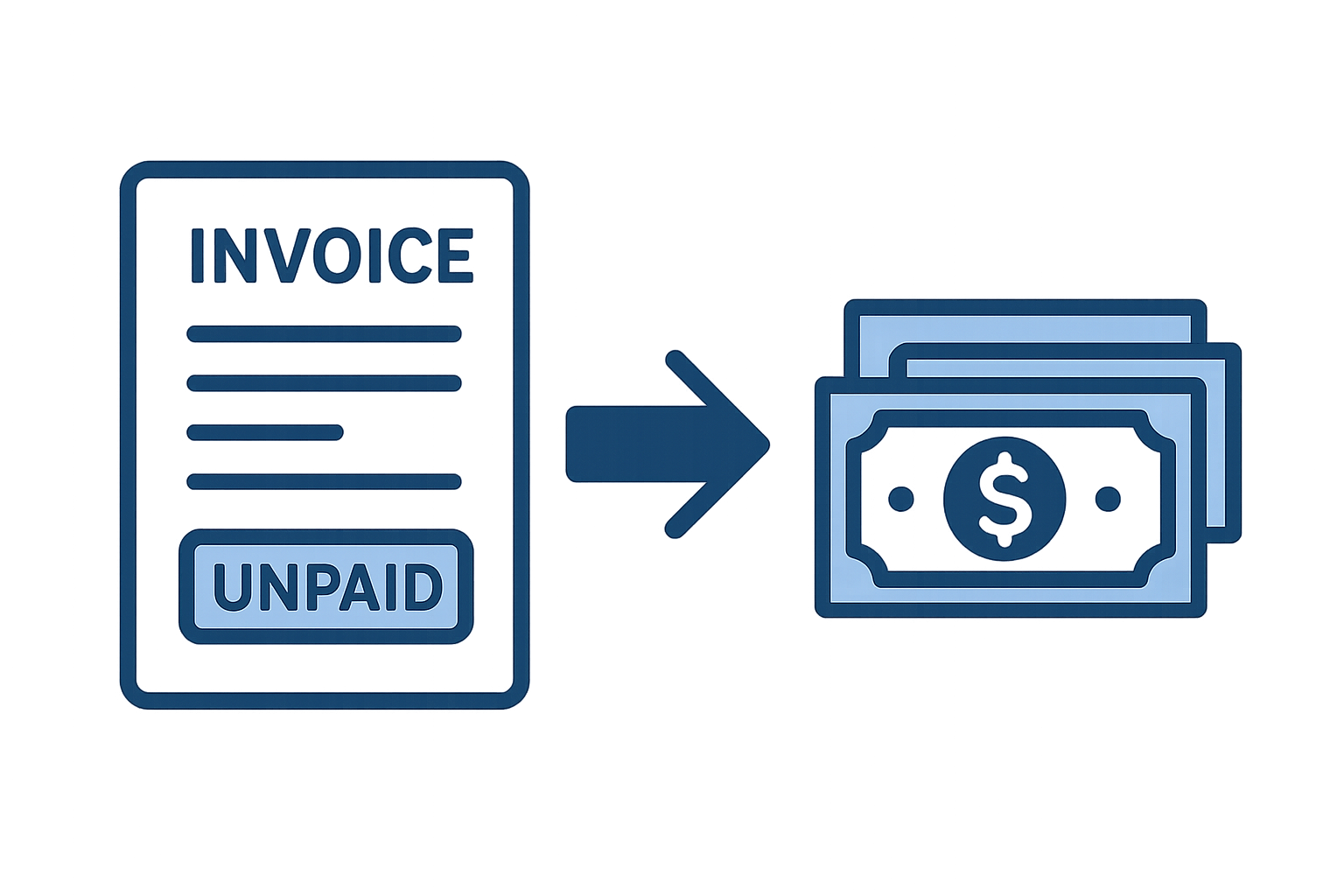
Converting receivables into cash is the core benefit of invoice factoring for small businesses.
How Much Does Invoice Factoring Cost?
Factoring fees typically range from 1 to 5 percent of the invoice’s face value per month, depending on invoice volume, the paying customer’s credit strength, and the industry risk level. Consequently, businesses with larger monthly invoice volumes often negotiate lower per-invoice rates.
According to data referenced by the International Factoring Association, the U.S. factoring industry advances well over $100 billion annually to businesses across nearly every sector, underscoring how mainstream this funding tool has become for cash-strapped companies. Beyond the base fee, businesses should also ask about additional charges such as origination fees, monthly minimums, or early termination penalties before signing an agreement.
Key Benefits of Invoice Factoring for Growing Businesses
Above all, the biggest advantage of invoice factoring is speed. Businesses can often access funds within one to two days, compared to weeks or months for a traditional bank loan. Furthermore, because factoring is based on the sale of an asset rather than borrowed debt, it does not add liabilities to the balance sheet the way a term loan would.
In addition, many factoring companies offer collections support, which frees up internal staff time that would otherwise go toward chasing down late-paying customers. This can be particularly valuable for small teams without a dedicated accounts receivable department. Businesses seeking flexible, recurring access to capital alongside factoring might also review a business line of credit guide to understand how the two tools can work together.
Common Mistakes to Avoid With Invoice Factoring
One frequent mistake is factoring invoices from customers with a poor payment history, which can lead to higher fees or rejected applications. Similarly, business owners sometimes skip reading the full contract, missing details about recourse terms, which determine what happens if a customer never pays.
Another common error is failing to compare multiple factoring companies before signing. Since fee structures and contract lengths vary widely, taking time to request quotes from two or three providers can meaningfully reduce the overall cost of financing.
Is Invoice Factoring the Right Fit for Your Business?
Invoice factoring tends to work best for businesses with predictable, business-to-business invoicing cycles and a genuine cash flow gap caused by slow-paying customers. On the other hand, companies with inconsistent invoicing or mostly consumer clients may find other options, such as a working capital loan or merchant cash advance, more appropriate.
USA Patriot Loans, a nationwide small business lending company founded by a disabled veteran and headquartered in Pennsylvania, works with established businesses generating at least $20,000 in monthly revenue to connect them with financing solutions that fit their specific cash flow needs. Businesses evaluating their options can also review this equipment financing guide to compare how receivables-based funding stacks up against asset-based financing. For more information on nationwide funding programs, visit USA Patriot Loans directly.

Comparing financing options helps teams decide if invoice factoring fits their cash flow needs.
Frequently Asked Questions
What is invoice factoring for small businesses nationwide?
Invoice factoring for small businesses nationwide is a financing arrangement where a company sells its unpaid invoices to a factoring provider for immediate cash. Typically, the business receives 80 to 95 percent of the invoice value upfront.
How quickly can a business receive funding through invoice factoring?
Most factoring companies release funds within 24 to 48 hours of approving an invoice. As a result, it ranks among the fastest nationwide financing options for closing cash flow gaps.
How is invoice factoring different from invoice financing?
Invoice factoring involves selling the invoice and handing collections to the factoring company, while invoice financing lets the business borrow against invoices but keep collection responsibilities. Therefore, factoring suits businesses that prefer hands-off collections.
What does invoice factoring typically cost?
Factoring fees usually range from 1 to 5 percent of the invoice value per month. Rates generally depend on invoice volume, customer creditworthiness, and industry risk.
Do small businesses need good personal credit to qualify for invoice factoring?
No, personal credit is rarely the deciding factor. Instead, factoring companies focus primarily on the creditworthiness of the business’s customers.
Which industries commonly use invoice factoring?
Trucking, staffing, construction, manufacturing, and wholesale distribution businesses frequently use invoice factoring. These sectors often wait 30 to 90 days for customer payments.
Is invoice factoring considered a loan?
No, invoice factoring is not a loan. Instead, it is the sale of an asset, so it typically does not create new debt on the business’s balance sheet.
What happens if a customer does not pay the invoice?
This depends on whether the arrangement is recourse or non-recourse factoring. With recourse factoring, the business must buy back or replace unpaid invoices, while non-recourse factoring shifts more risk to the factoring company.
What common mistakes should businesses avoid with invoice factoring?
Common mistakes include factoring invoices from unreliable customers, skipping a careful read of contract terms, and failing to compare fee structures across multiple providers before committing.
How much funding can a small business receive through factoring?
Funding amounts scale with invoice volume. Many nationwide factoring programs support anywhere from $30,000 to several million dollars in available capital.
Can new businesses qualify for invoice factoring?
Yes, businesses with limited operating history can often qualify. This is because approval depends more on customer creditworthiness than on the applicant’s time in business.
What is the step-by-step process for invoice factoring?
The process includes submitting invoices, verification by the factoring company, receiving an upfront advance, customer payment to the factor, and release of the remaining reserve minus fees.
Does the U.S. Small Business Administration offer invoice factoring?
No, the U.S. Small Business Administration does not directly provide factoring services. However, it publishes educational resources on alternative financing that can help business owners compare options before choosing a private factoring provider.
Final Thoughts
In summary, invoice factoring for small businesses nationwide offers a practical way to unlock cash that is already tied up in unpaid invoices, without waiting weeks or months for customer payments. By understanding how the process works, what it costs, and which mistakes to avoid, business owners can decide whether this funding tool fits their growth strategy.
Ultimately, the right financing choice depends on a business’s invoicing patterns, customer base, and cash flow timing. For businesses ready to explore their options, comparing invoice factoring against related solutions such as lines of credit or equipment financing is a worthwhile next step toward stronger, more predictable cash flow.

Leave a Reply