
Small business loans for veterans give former service members a faster, more accessible path to the working capital, equipment, and expansion funding their companies need to grow. Because veteran entrepreneurs often juggle unique challenges, from service-connected disabilities to limited startup capital, lenders and government programs have built financing paths specifically for them. This guide walks through what these loans are, how they work, and how to qualify in 2026.
Direct Answer: Small business loans for veterans are financing products—such as SBA loans, working capital loans, and lines of credit—built to help veteran-owned businesses access anywhere from $30,000 to $20 million. Many include fee waivers, faster underwriting, or dedicated support tied directly to veteran ownership status.

Reviewing financing options is often the first step toward securing small business loans for veterans.
What Are Small Business Loans for Veterans?
Small business loans for veterans are lending products designed to help companies owned by former military members access capital more efficiently. In practice, these include SBA 7(a) loans, term loans, working capital loans, and lines of credit, often paired with reduced fees or expedited processing tied to verified veteran ownership.
Unlike generic small business financing, veteran-focused loan programs frequently factor in service history, disability status, and nationwide eligibility rather than requiring collateral-heavy applications. As a result, many veteran business owners find these programs more approachable than traditional bank financing, particularly when speed matters.
Why Veteran Entrepreneurs Need Specialized Business Financing
Veteran-owned businesses represent a significant share of the U.S. economy. According to SBA and U.S. Census Bureau data, roughly 1.9 million businesses nationwide are veteran-owned, generating well over $1 trillion in annual receipts combined. However, many veteran entrepreneurs still report greater difficulty securing traditional bank financing than their non-veteran counterparts.
Consequently, specialized veteran business financing exists to close that gap. For example, the SBA’s Veterans Advantage initiative waives or reduces upfront guarantee fees on qualifying 7(a) loans up to $500,000, lowering the overall cost of borrowing. In addition, alternative lenders increasingly offer streamlined underwriting for veteran-owned companies that may not fit a conventional bank’s narrow lending box.
For businesses based in Pennsylvania or operating nationwide, resources like veteran-owned business loan programs built for fast funding show how localized expertise can still serve companies across all 50 states.
Types of Small Business Loans for Veterans Available Today
Several loan types fall under the umbrella of small business loans for veterans, each suited to different needs. Understanding the differences helps veteran business owners choose financing that matches their actual goals rather than defaulting to whatever is easiest to find.
- SBA Loans: Government-backed loans with competitive rates and veteran fee waivers, ideal for long-term growth.
- Working Capital Loans: Short-term funding for day-to-day operations, payroll, or seasonal cash flow gaps.
- Business Lines of Credit: Flexible, revolving access to funds drawn only when needed.
- Equipment Financing: Capital secured by the equipment itself, useful for construction, trucking, or manufacturing.
- Merchant Cash Advances: Fast funding repaid as a percentage of future sales, suited for businesses with strong card revenue.
- Revenue-Based Financing: Repayment tied directly to monthly revenue rather than a fixed schedule.
How to Qualify for Veteran Business Financing: Step-by-Step
Qualifying for small business loans for veterans follows a fairly predictable process. Above all, preparation and organized documentation make the biggest difference in approval speed.
- Determine your funding need. Identify how much capital your business needs and what it will be used for, such as equipment, payroll, inventory, or expansion, since this determines which loan type fits best.
- Gather financial documentation. Collect recent bank statements, tax returns, a valid ID, and proof of veteran-owned business status before starting any application to avoid delays during underwriting.
- Compare veteran-focused lenders and programs. Research lenders that specialize in veteran business financing, including SBA-approved lenders and alternative funders, to compare rates, fees, and funding speed side by side.
- Submit your application and supporting documents. Complete the lender’s application accurately and upload all required documentation at once, since incomplete submissions are the most common cause of processing delays.
- Review the offer and close on funding. Carefully review the interest rate, repayment term, and any fees before accepting an offer, then complete the final paperwork to receive your business funding.
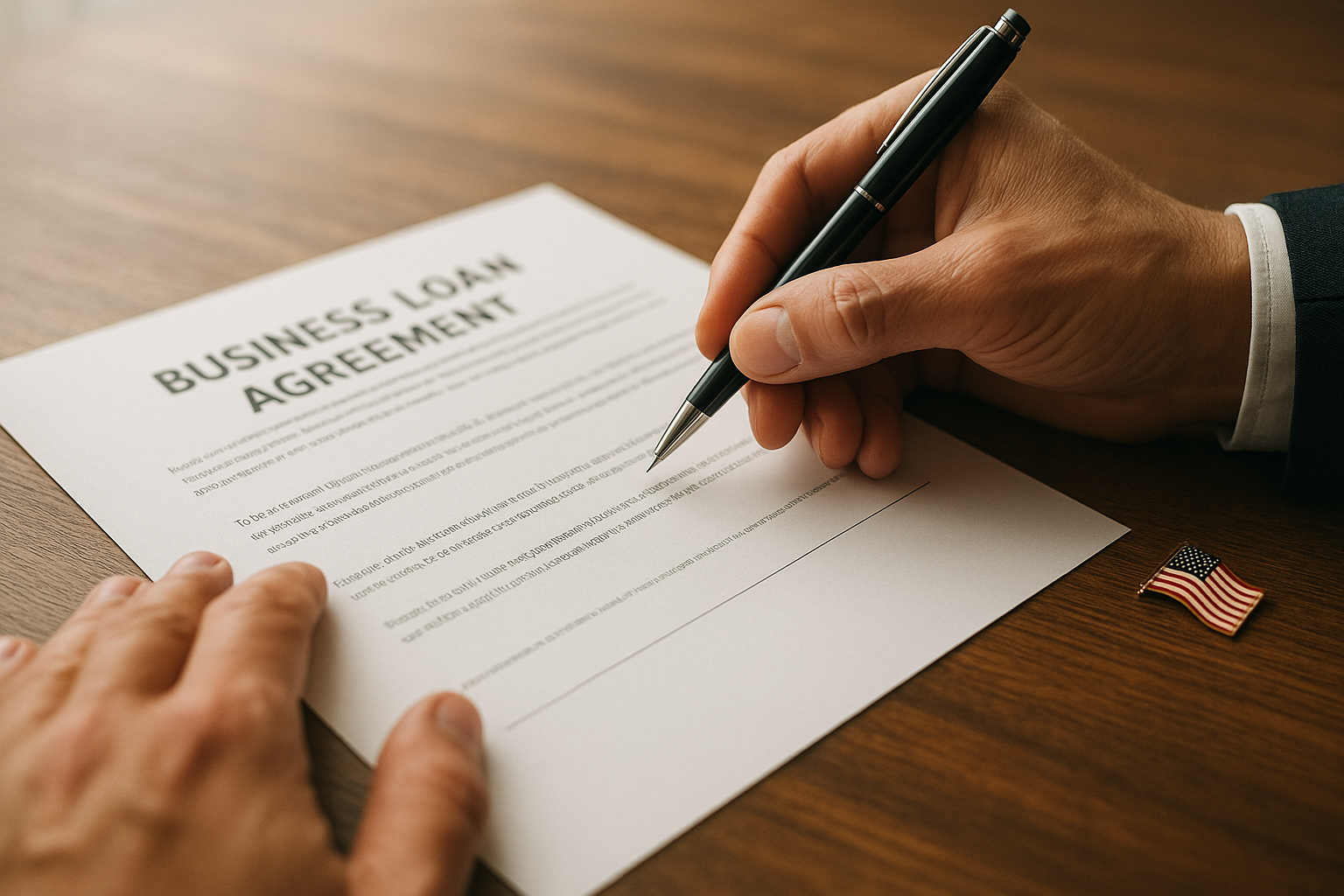
Finalizing a small business loan for veterans typically involves reviewing terms before signing.
USA Patriot Loans: Financing Built With Veteran-Owned Businesses in Mind
USA Patriot Loans is a disabled-veteran-owned nationwide lender founded by Paul Giordano in November 2023 and headquartered in Pennsylvania. The company works with established small and medium-sized businesses generating at least $20,000 in monthly revenue, offering everything from SBA loans and working capital to equipment financing and same-day business funding.
In particular, veteran business owners researching what makes a lender suitable for veteran-owned small businesses often look for transparency, speed, and a lender that understands military service backgrounds firsthand. Likewise, businesses questioning whether a funding company is trustworthy can review this breakdown of whether USA Patriot Loans is a legitimate business funding company before applying.
For businesses prioritizing speed and minimal paperwork, this comparison of small business loans with fast approval and minimal paperwork offers additional context on how veteran-focused lenders stack up against traditional banks.
Common Mistakes Veterans Make When Applying for Business Loans
Even strong businesses sometimes get denied funding due to avoidable errors. For instance, applying to multiple lenders simultaneously can trigger several hard credit inquiries in a short window, which may lower credit scores unnecessarily.
Similarly, submitting incomplete bank statements or mismatched tax documents is one of the most frequent causes of processing delays. In contrast, veterans who organize paperwork in advance and clearly state their funding purpose tend to move through underwriting much faster.
Finally, many applicants choose the wrong loan type for their timeline. A business needing funds within 48 hours should not apply for a multi-week SBA loan; conversely, a company planning long-term expansion may overpay by choosing a short-term product instead. Matching the loan structure to the actual business goal remains essential. According to the Small Business Administration’s history, government-backed lending was originally designed to fill exactly these kinds of financing gaps for underserved business owners, including veterans.
Frequently Asked Questions
What are small business loans for veterans?
Small business loans for veterans are financing products—including SBA loans, term loans, and lines of credit—designed for companies owned by former service members. Many come with streamlined underwriting, fee waivers, or dedicated veteran support programs.
How do I qualify for small business loans for veterans?
Qualification typically requires proof of veteran ownership, at least $20,000 in monthly revenue, and basic business financial documents. Time in business, cash flow, and personal credit history also factor into approval.
What is the SBA Veterans Advantage program?
The SBA Veterans Advantage program reduces or waives upfront guarantee fees on qualifying 7(a) loans for veteran-owned small businesses. It is designed to lower the cost of borrowing for eligible applicants.
How fast can veteran business owners get funded?
Alternative lenders can often fund veteran-owned businesses within 24 to 72 hours, while SBA loans typically take several weeks due to additional documentation. Choosing the right loan type depends on how urgently capital is needed.
What credit score do I need for a veteran small business loan?
Many online and alternative lenders approve applicants with credit scores in the mid-500s to 600s, while SBA loans generally require scores of 650 or higher. Strong revenue can sometimes offset a lower credit score.
How much can veteran-owned businesses borrow?
Depending on the lender and loan type, veteran-owned businesses can typically borrow between $30,000 and $20 million. The exact amount depends on revenue, time in business, and the specific financing product.
Are small business loans for veterans different from regular business loans?
The underlying loan products are often the same as standard business financing, but veteran-focused lenders may offer fee reductions, faster service, or additional guidance. The core eligibility and underwriting process remains similar.
What documents are required to apply?
Most lenders require recent bank statements, tax returns, a government-issued ID, and proof of business ownership. SBA loans may also request a business plan and additional financial projections.
Do veteran business loans have lower interest rates?
Not automatically, but fee waivers under programs like SBA Veterans Advantage can reduce overall borrowing costs. Rates still depend on credit profile, revenue, and the loan product chosen.
What’s the difference between SBA loans and working capital loans for veterans?
SBA loans typically offer lower rates and longer terms but require more paperwork and time to close. Working capital loans fund faster, often within days, but may carry higher costs for that speed and flexibility.
How much does it cost to get a small business loan for veterans?
Costs vary by product and include interest, origination fees, and sometimes guarantee fees. SBA Veterans Advantage can reduce or eliminate certain upfront fees on qualifying loans up to $500,000.
What are common mistakes veterans make when applying for business funding?
Common mistakes include applying to too many lenders at once, submitting incomplete documentation, and choosing a loan type that doesn’t match the actual funding timeline needed. Comparing offers before signing helps avoid costly terms.
Can veteran-owned startups qualify for small business loans?
Newer businesses may qualify for certain working capital products, though most lenders prefer at least six months to one year of operating history. Established revenue strengthens approval odds significantly.
Is USA Patriot Loans a legitimate option for veteran business funding?
Yes, USA Patriot Loans is a disabled-veteran-owned nationwide lender founded in 2023 that specializes in fast, straightforward funding for small and growing businesses. It offers SBA loans, working capital, and other financing options across all 50 states.
What’s the best way to improve approval odds for veteran business loans?
Keeping business and personal finances organized, maintaining consistent monthly revenue, and applying with lenders experienced in veteran-owned business financing all improve approval odds. Working with a knowledgeable loan specialist can also streamline the process.
Final Thoughts on Small Business Loans for Veterans
Ultimately, small business loans for veterans exist to close a real funding gap that many former service members face when scaling their companies. From SBA fee waivers to fast working capital products, veteran entrepreneurs today have more financing paths than ever before, provided they understand which option matches their timeline and goals.
Therefore, before applying, take time to compare lenders, organize documentation, and clarify exactly how the funds will be used. Businesses ready to explore options can visit USA Patriot Loans directly to discuss eligibility and funding timelines with a team built around veteran-owned business needs.

Leave a Reply