
Business loans for established small businesses give owners with a proven operating history access to larger funding amounts, lower rates, and faster approvals than most startups ever see. Lenders look at real revenue, time in business, and cash flow rather than just a business plan. As a result, companies that have been operating for two or more years often qualify for working capital, equipment financing, or a business line of credit within days instead of months.
Quick Answer: Business loans for established small businesses typically range from $30,000 to $20 million and include SBA loans, term loans, lines of credit, and revenue-based financing. Approval depends mainly on monthly revenue, time in business, and cash flow, not just personal collateral.
What Are Business Loans for Established Small Businesses?
Business loans for established small businesses are financing products built for companies that already have revenue history, rather than brand-new startups with only a business plan. These loans fall into categories such as SBA loans, working capital loans, term loans, and equipment financing, each matched to a different business need.
Because the business already generates income, lenders can underwrite using bank statements and tax returns instead of projections alone. Consequently, approval decisions move faster, and funding amounts often scale with monthly revenue. A company bringing in $50,000 per month, for example, may qualify for considerably more capital than one earning $20,000, even if both have similar credit profiles.

Reviewing financial documents is the first step toward securing business loans for established small businesses.
Why Lenders Favor Established Business Financing Over Startup Loans
Lenders carry less risk when a business has a track record of revenue and repayment. In contrast, startup financing relies heavily on personal credit and projections, which is inherently riskier for the lender. Therefore, established businesses frequently see faster approvals, higher loan ceilings, and more flexible underwriting.
According to the Federal Reserve Banks’ annual Small Business Credit Survey, most employer firms seeking financing had been operating for several years, and a large majority applied specifically to manage cash flow or pursue growth rather than to cover startup costs. This pattern reinforces why time in business remains one of the strongest predictors lenders use when evaluating an application. Specifically, businesses with 20,000 dollars or more in verified monthly revenue tend to move through underwriting noticeably faster than those without consistent deposit history, as outlined in this detailed guide to qualifying with $20,000 in monthly revenue.
Types of Small Business Funding Available to Growing Companies
Established business owners generally choose from several funding categories, each suited to a different situation:
- SBA loans – government-backed, lower rates, longer repayment terms, slower funding timelines.
- Working capital loans – flexible funds for payroll, rent, or day-to-day operations.
- Business lines of credit – reusable credit limits for ongoing or seasonal needs.
- Term loans – lump-sum funding repaid over a fixed schedule.
- Equipment financing – secured by the equipment being purchased.
- Merchant cash advances and revenue-based financing – repayment tied to daily or weekly sales.
- Invoice financing – advances against unpaid customer invoices.
- Commercial hard money loans – asset-backed financing for time-sensitive deals.
For a broader comparison of options, this funding guide for small companies breaks down which product fits common growth scenarios, from opening a second location to covering a seasonal inventory gap.
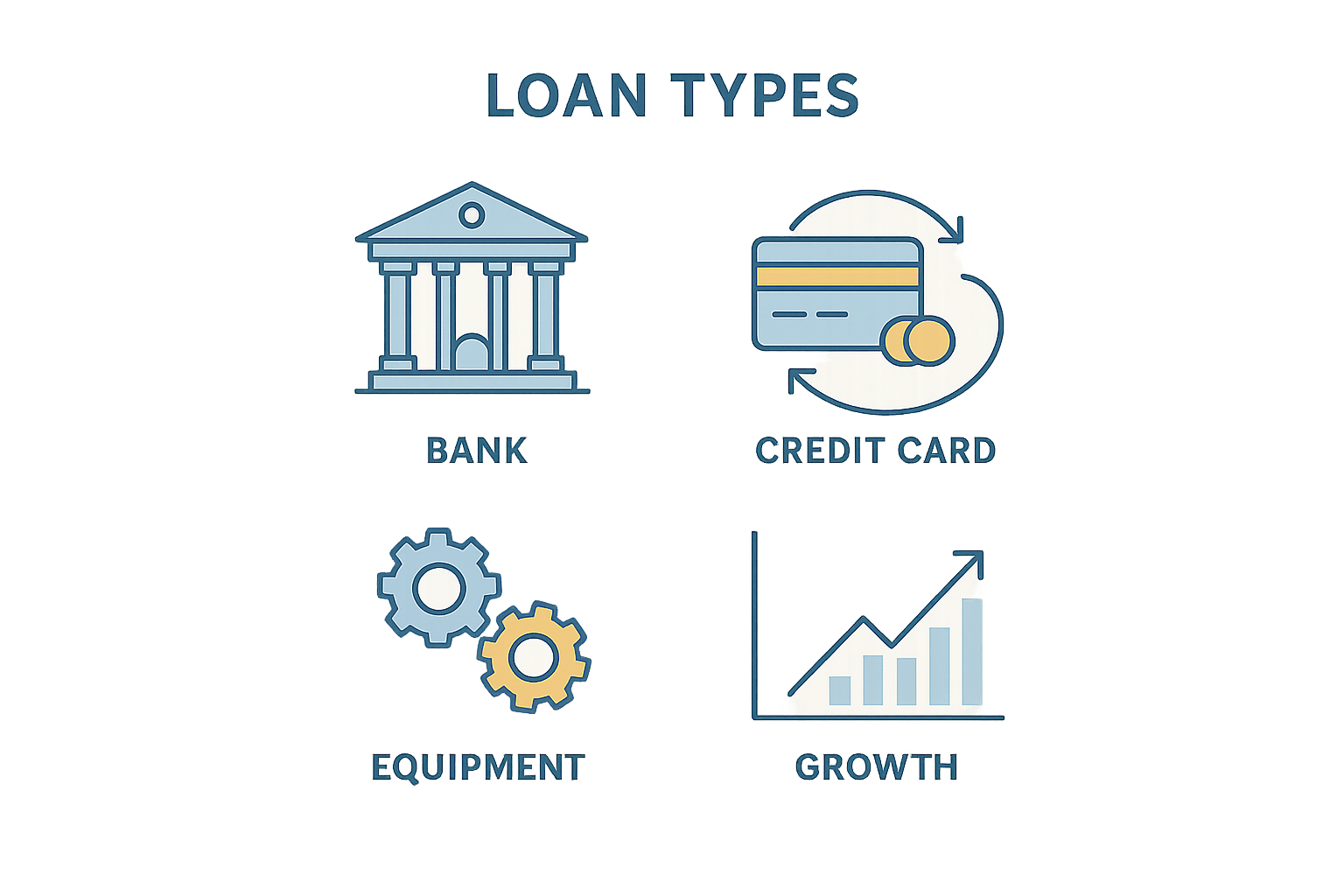
Different funding types serve different stages of business growth.
How to Qualify for Business Loans for Established Small Businesses
Qualifying is more straightforward than many owners expect, provided the paperwork is organized ahead of time. The following steps outline the typical path from application to funding.
- Review your monthly revenue and cash flow. Pull three to six months of bank statements and confirm your average monthly revenue meets the lender’s minimum, often around $20,000 for alternative products.
- Match the loan type to your business need. A short-term cash flow gap calls for a different product than a major equipment purchase or long-term expansion plan.
- Gather required financial documents. Most lenders ask for bank statements, tax returns, and a profit and loss statement; some only need a simple application.
- Submit an application to a qualified lender. Accurate, complete information the first time prevents delays caused by follow-up requests.
- Review terms and confirm funding details. Check the rate, repayment schedule, and fees before signing, then confirm when funds will arrive.
Owners wanting a faster path through this process can review this working capital qualification guide, which outlines document checklists lenders commonly request. In addition, this overview of fast-approval loans with minimal paperwork highlights options for owners who want to avoid lengthy underwriting altogether.
Typical Rates and Terms for Small Business Financing
Rates and repayment structures vary widely depending on the product. SBA loans generally offer the lowest rates but require more documentation and a longer approval window, sometimes several weeks. In contrast, working capital loans, merchant cash advances, and revenue-based financing fund faster, usually within days, but may carry a factor rate instead of a traditional annual percentage rate.
A factor rate is a fixed multiplier applied to the amount borrowed rather than a compounding interest rate, which makes total repayment easier to calculate upfront. Above all, owners should compare the total repayment cost across products rather than focusing on the rate alone, since term length significantly affects the real cost of borrowing. For reference, the U.S. Small Business Administration’s loan programs page outlines current guaranty structures and rate caps for SBA-backed products.
Common Mistakes That Delay Small Business Loan Approval
Even well-established businesses run into avoidable delays. Incomplete bank statements, inconsistent deposit patterns, and applying for a loan type that doesn’t match the actual need are the most frequent culprits. Similarly, mixing personal and business accounts can make revenue verification harder than it needs to be.
Furthermore, some owners apply with multiple lenders simultaneously without understanding how each underwrites risk, which can create confusing or conflicting offers. Instead, it helps to compare structured options side by side, such as those explained in this complete guide to business lines of credit, before submitting multiple applications.

Clear documentation helps established businesses finalize funding agreements faster.
Choosing a Lender for Established Business Loans
Not every lender structures financing the same way, so comparing options matters. USA Patriot Loans, a disabled-veteran-owned company founded in 2023 and based in Pennsylvania, works with established businesses nationwide seeking $30,000 to $20 million across products including SBA loans, working capital, equipment financing, and revenue-based financing. Businesses generating at least $20,000 in monthly revenue can review current options directly at USA Patriot Loans.
When evaluating any lender, compare funding speed, total repayment cost, and whether the underwriting process fits your documentation on hand. Additionally, this overview of business loan structures offers helpful background for owners comparing secured and unsecured products for the first time.
Frequently Asked Questions About Business Loans for Established Small Businesses
What are business loans for established small businesses?
Business loans for established small businesses are financing products designed for companies with an operating history, steady revenue, and cash flow, rather than brand-new startups. They include SBA loans, term loans, lines of credit, and revenue-based financing, typically ranging from $30,000 to $20 million.
How long must a business operate before qualifying for funding?
Most lenders want to see at least six months to two years of operating history before approving established business financing. Longer track records, generally three or more years, usually unlock better rates and higher funding limits.
How much revenue do I need to qualify for a small business loan?
Many alternative lenders require a minimum of $20,000 in monthly revenue, while SBA and bank lenders often look for consistent monthly deposits well above that level. Revenue consistency matters as much as the total amount.
What’s the difference between SBA loans and alternative business financing?
SBA loans are partially government-guaranteed, offer lower rates, and take longer to fund, usually several weeks to months. Alternative financing, such as working capital loans or lines of credit, closes faster but may carry higher costs.
How fast can established businesses receive funding?
Established businesses with organized financial documents can often receive approval within 24 to 48 hours and funding within a few business days through alternative lenders. SBA-backed products typically take longer due to additional underwriting.
What documents are required to apply for a business loan?
Lenders typically request recent bank statements, tax returns, a profit and loss statement, and proof of business ownership. Some products also require only a simple one-page application instead of a full financial package.
How much can an established small business borrow?
Funding amounts generally range from $30,000 to $20 million, depending on monthly revenue, time in business, and the loan type. Businesses with stronger cash flow typically qualify toward the higher end of that range.
What factors determine my business loan interest rate?
Rates depend on time in business, monthly revenue, credit profile, industry risk, and the loan structure chosen. Shorter-term or revenue-based products often carry factor rates instead of traditional annual percentage rates.
What common mistakes delay small business loan approval?
Incomplete bank statements, inconsistent deposits, and applying for the wrong loan type are the most frequent causes of delay. Owners who gather documents in advance and match the product to their need move through underwriting faster.
Is collateral always required for small business financing?
No, many working capital loans, merchant cash advances, and revenue-based products are unsecured and rely on revenue history instead of collateral. Larger loans, such as equipment financing or commercial hard money loans, are usually secured by the asset itself.
What is a business line of credit and how does it work?
A business line of credit gives owners access to a set credit limit they can draw from repeatedly, paying interest only on the amount used. It works well for managing seasonal cash flow gaps or unexpected expenses.
What’s the best financing option for business expansion?
Term loans and SBA loans generally suit large, planned expansions because they offer lower rates and longer repayment periods. Faster-growing businesses sometimes prefer revenue-based financing or working capital loans for quicker access to funds.
Final Thoughts
In summary, business loans for established small businesses reward owners who can show steady revenue, organized documentation, and a clear purpose for the funds. Whether the goal is covering payroll, purchasing equipment, or financing expansion, matching the right product to the need speeds up approval and lowers overall cost. Above all, comparing lenders on speed, terms, and total repayment, rather than rate alone, helps established business owners secure financing that genuinely supports long-term growth instead of adding unnecessary strain.
Leave a Reply