
Merchant cash advance companies USA business owners turn to for quick capital promise same-day decisions, but not every provider treats small businesses fairly. Some charge punishing factor rates or bury default clauses in fine print, while others offer transparent terms built around real sales patterns. Before signing an agreement, it helps to understand how these advances work, what separates a trustworthy lender from a risky one, and when a different type of financing might serve your business better.
Quick answer: Reputable merchant cash advance companies USA business owners can trust combine clear factor rates, repayment tied to actual daily sales, and funding delivered within one to two business days. Always compare the total repayment amount, not just the headline advance size, and verify a provider’s licensing and customer reviews before you sign.
What Is a Merchant Cash Advance?
A merchant cash advance, often shortened to MCA, is a lump sum of working capital advanced to a business in exchange for a share of future sales. Unlike a loan, it carries no fixed interest rate or monthly due date. Instead, as explained on Wikipedia’s overview of merchant cash advances, the provider is technically purchasing a portion of future receivables rather than lending money outright.
In practice, this means repayment flexes with revenue. On a strong sales week, a larger dollar amount is withdrawn automatically. On a slower week, the withdrawal shrinks. Therefore, businesses with seasonal or unpredictable sales sometimes prefer this structure over a fixed loan payment that never adjusts.
Merchant Cash Advance Companies USA: How They Work
Merchant cash advance companies USA wide generally follow a similar review process. First, they examine three to six months of bank statements to estimate average monthly revenue. Next, they calculate an advance amount, usually between $10,000 and $500,000, based on that revenue history rather than a credit score alone.
The cost of the advance is expressed as a factor rate, commonly between 1.1 and 1.5, instead of an annual percentage rate. For instance, a $40,000 advance at a 1.25 factor rate requires $50,000 in total repayment. Consequently, a fixed percentage of daily or weekly revenue, called the holdback, is withdrawn until that full amount is satisfied.
Retail businesses in particular lean on this model heavily because of consistent card transaction volume. For a deeper breakdown of how this applies to storefronts, see this guide to merchant cash advances for retail businesses.

Reviewing offers carefully helps identify the most trustworthy merchant cash advance companies USA has to offer.
How to Choose Reliable Cash Advance Lenders Nationwide
Not all cash advance lenders operate with the same transparency. Above all, look for a provider willing to put the factor rate, holdback percentage, and total repayment figure in writing before you sign anything. In addition, check how long the company has been operating and whether independent reviews mention clear communication or hidden fees.
USA Patriot Loans, a disabled-veteran-owned business financing company founded in November 2023 and headquartered in Pennsylvania, works with established small and medium-sized businesses nationwide generating at least $20,000 in monthly revenue. The company offers a range of options beyond cash advances, including SBA loans, working capital loans, and lines of credit, so businesses can compare structures side by side rather than defaulting to a single product. You can learn more about why businesses choose USA Patriot Loans or explore funding options directly at USA Patriot Loans.
Specifically, ask any lender these three questions: What is the exact factor rate? Is there an origination fee deducted before funding? What happens if revenue drops sharply during the repayment period? Clear answers signal a lender worth considering.
Step-by-Step: How to Apply for a Merchant Cash Advance
The application process is fairly consistent across most providers. Here is the typical sequence:
- Gather three to six months of business bank statements, a voided check, and basic business identification before contacting any provider.
- Request quotes from at least two or three merchant cash advance companies USA wide so you can compare factor rates, holdback percentages, and total repayment amounts side by side.
- Complete the provider’s short application and upload bank statements; most decisions on revenue-based funding arrive within one business day.
- Review the offer terms carefully, confirming the factor rate, holdback percentage, and repayment schedule in writing, with no hidden origination or renewal fees.
- Accept funding and monitor cash flow by tracking daily or weekly withdrawals against revenue so the repayment pace stays manageable.
Merchant Cash Advance vs. Other Business Financing Options
A merchant cash advance is not always the cheapest option. For comparison, the U.S. Small Business Administration’s loan programs typically offer lower overall costs and longer repayment terms, though approval can take longer and requires stronger documentation. Term loans and business lines of credit sit somewhere in between, offering fixed or revolving structures without the daily withdrawal rhythm of an MCA.
According to the Federal Reserve Banks’ Small Business Credit Survey, a meaningful share of small employer firms that sought outside financing turned to online and alternative lenders rather than traditional banks, often citing speed as the deciding factor. In other words, speed and revenue flexibility are the trade-offs businesses weigh against cost.
For businesses facing an unexpected shortfall, it is worth comparing an advance against options built specifically for urgency, such as this overview of emergency business funding. Similarly, companies planning growth rather than a crisis may find more cost-effective structures through business expansion financing.
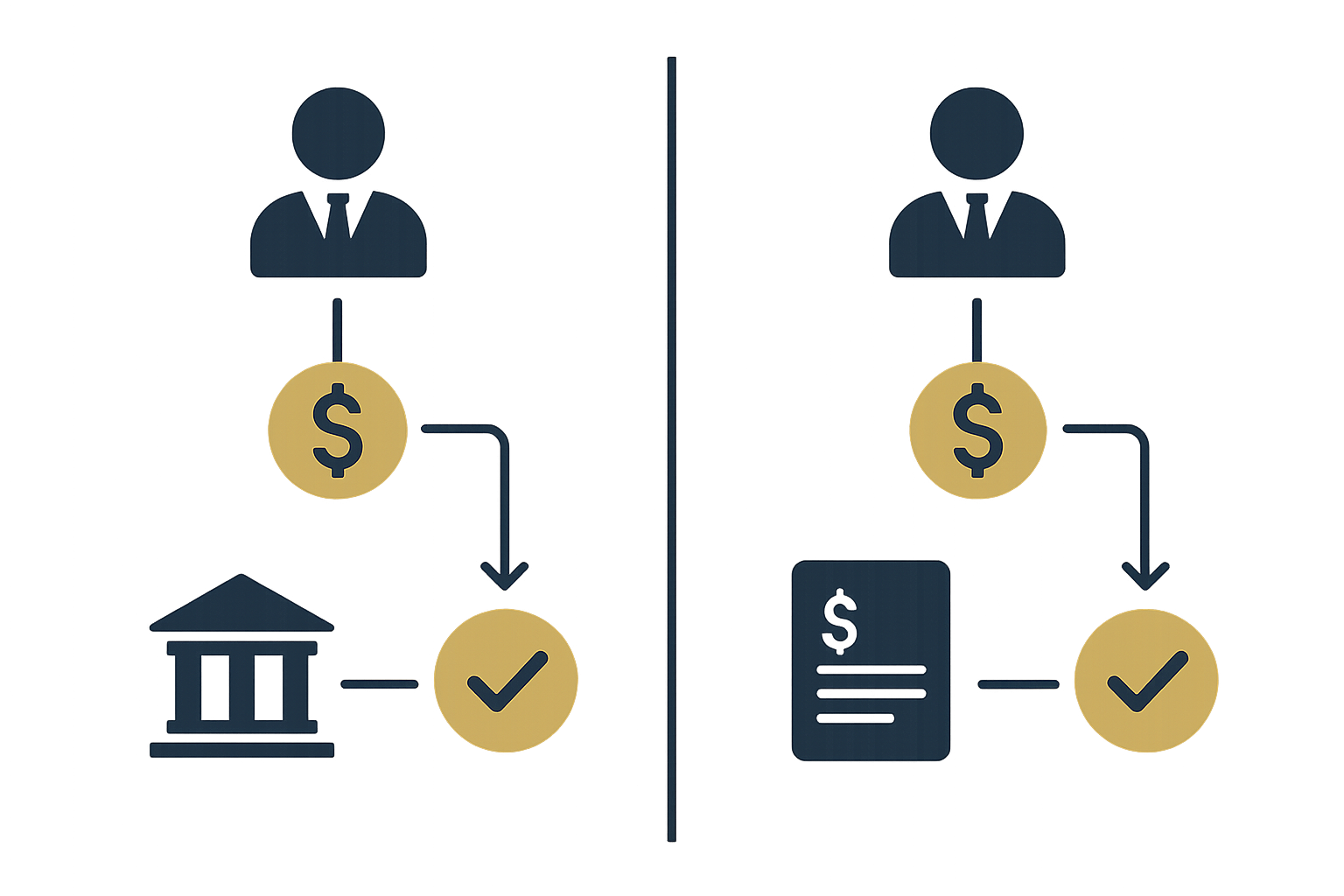
Weighing cost against speed helps determine which financing path fits a business’s cash flow.
Common Mistakes to Avoid With MCA Providers
Several avoidable mistakes cause the most financial strain. First, stacking multiple advances at once can quickly overwhelm daily cash flow since each one withdraws a separate percentage of revenue. Second, focusing only on the advance size while ignoring the total repayment figure often leads to surprise costs.
Finally, skipping the default clause is a frequent error. Specifically, some contracts include confession-of-judgment style terms or steep penalties for early repayment attempts. As a result, reading the full agreement, or having an advisor review it, is always worth the extra time before funds are accepted.
Frequently Asked Questions About Merchant Cash Advance Companies USA
What are merchant cash advance companies USA businesses actually use?
Merchant cash advance companies USA businesses use are finance providers that purchase a portion of future sales in exchange for an upfront lump sum. Repayment happens automatically through a fixed percentage of daily or weekly card and bank revenue until the advance, plus a fee, is satisfied.
How does a merchant cash advance work?
A provider reviews recent bank and sales history, then offers a lump sum repaid through a fixed percentage of future revenue. There is no fixed monthly payment; repayment speed rises and falls with how much the business actually sells.
How is a merchant cash advance different from a business loan?
A traditional business loan charges interest and requires fixed monthly payments regardless of sales volume. A cash advance instead charges a factor rate and collects repayment as a percentage of daily revenue, which can rise or fall with sales.
How much funding can a merchant cash advance provide?
Most merchant cash advances range from $10,000 to $500,000, though larger, well-established businesses sometimes qualify for more. The exact amount depends on monthly revenue, time in business, and average bank deposits.
How fast can a business get funded by MCA providers?
Many MCA providers fund approved applications within 24 to 48 hours of submitting bank statements. Some same-day funding programs can deposit cash the same business day the application is approved.
What credit score is needed to qualify for a cash advance?
Most merchant cash advance companies focus on monthly revenue and bank deposit consistency rather than a strict credit score minimum. A score in the mid-500s is often workable, though stronger revenue typically unlocks better terms.
How is a merchant cash advance repaid?
Repayment is usually automatic, with a fixed percentage of daily or weekly sales withdrawn directly from a business bank account or card processor. This continues until the total repayment amount, including fees, is paid in full.
What does a factor rate mean, and how much does an advance cost?
A factor rate, often between 1.1 and 1.5, is multiplied by the advance amount to determine total repayment. For example, a $50,000 advance at a 1.3 factor rate requires $65,000 in total repayment.
Which industries rely most on merchant cash advances?
Retail stores, restaurants, salons, auto repair shops, and other businesses with steady card or revenue volume commonly use merchant cash advances. These industries often have strong daily sales but limited collateral for traditional loans.
What mistakes should businesses avoid with cash advance lenders?
Common mistakes include stacking multiple advances at once, ignoring the effective annual cost, and skipping the fine print on default clauses. Comparing total repayment amounts, not just the advance size, helps avoid overextending cash flow.
What alternatives exist besides a merchant cash advance?
Alternatives include term loans, business lines of credit, invoice financing, and SBA-backed loans, which often carry lower overall costs. The right choice depends on how quickly funds are needed and how predictable monthly revenue is.
How can a business choose a reputable merchant cash advance company?
Look for transparent factor rates, clear repayment terms, verifiable reviews, and no large upfront fees before signing. Reputable merchant cash advance companies USA regulators and industry groups recognize will provide a written contract explaining total repayment before funding.
Is a merchant cash advance legally classified as a loan?
No, a merchant cash advance is technically a purchase of future receivables rather than a loan, which is why it is not subject to standard usury interest-rate laws. This structure is also why providers use a factor rate instead of an annual percentage rate.
Final Thoughts
Choosing among merchant cash advance companies USA wide ultimately comes down to transparency and fit. A fast advance can solve a short-term cash crunch, but it should never be the default choice without comparing factor rates, total repayment, and alternatives like SBA loans or lines of credit. Therefore, take time to review contracts carefully, ask direct questions about fees, and consider providers that offer multiple financing products rather than a single rigid option. With careful comparison, business owners can secure the working capital they need without sacrificing long-term cash flow stability.
Leave a Reply