Fixed rate small business loans give business owners a predictable way to borrow money because the interest rate, and therefore the monthly payment, never changes over the life of the loan. For companies trying to manage cash flow around payroll, inventory, or expansion costs, that predictability can matter more than chasing the lowest possible starting rate. This guide explains how fixed rate financing works, who typically qualifies, and how to compare it against other funding options before you apply.
Quick answer: Fixed rate small business loans lock your interest rate for the entire repayment term, keeping monthly payments the same from the first installment to the last. They are commonly used for term loans, SBA loans, and equipment financing, and they suit businesses that want stable, predictable budgeting over flexibility.
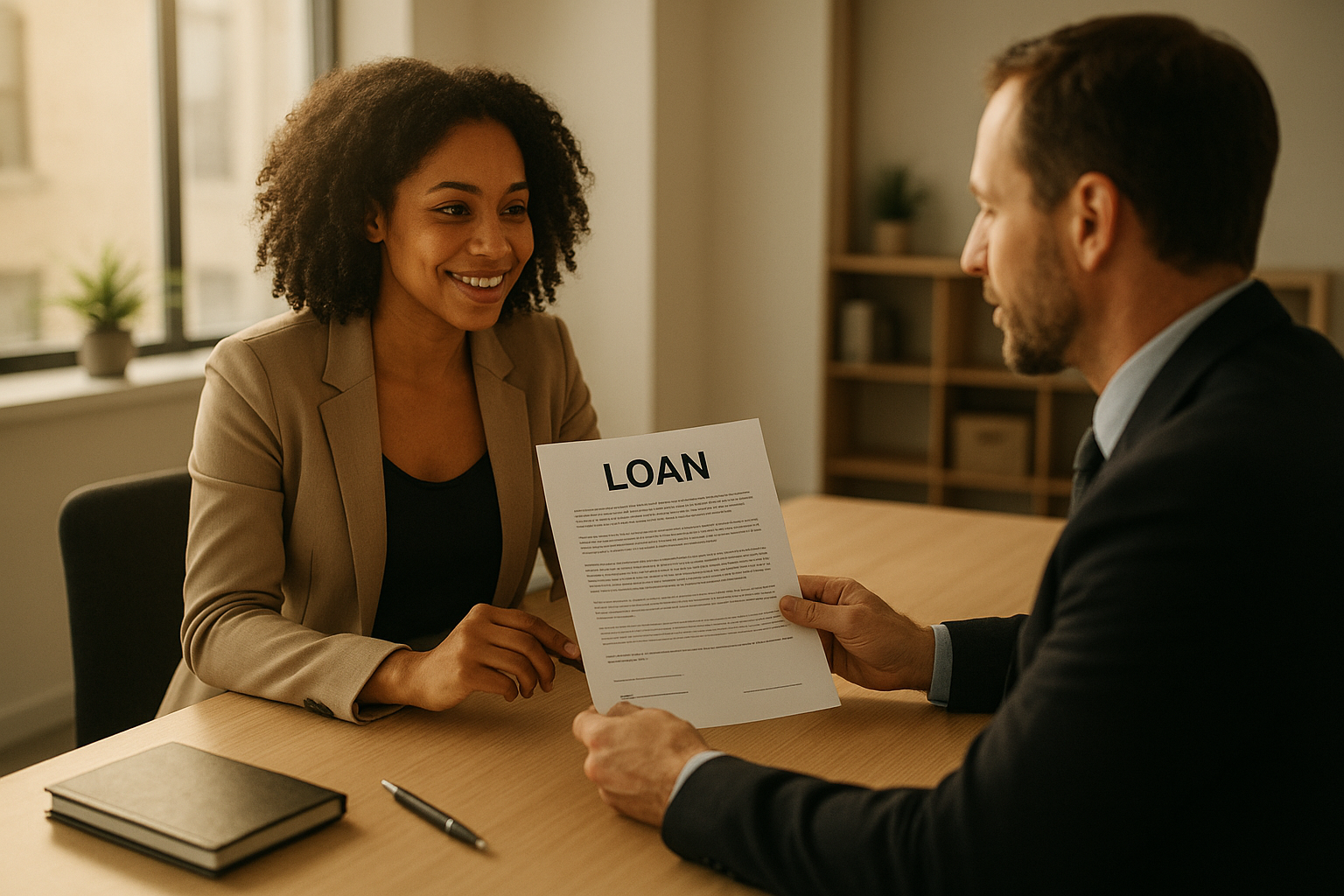
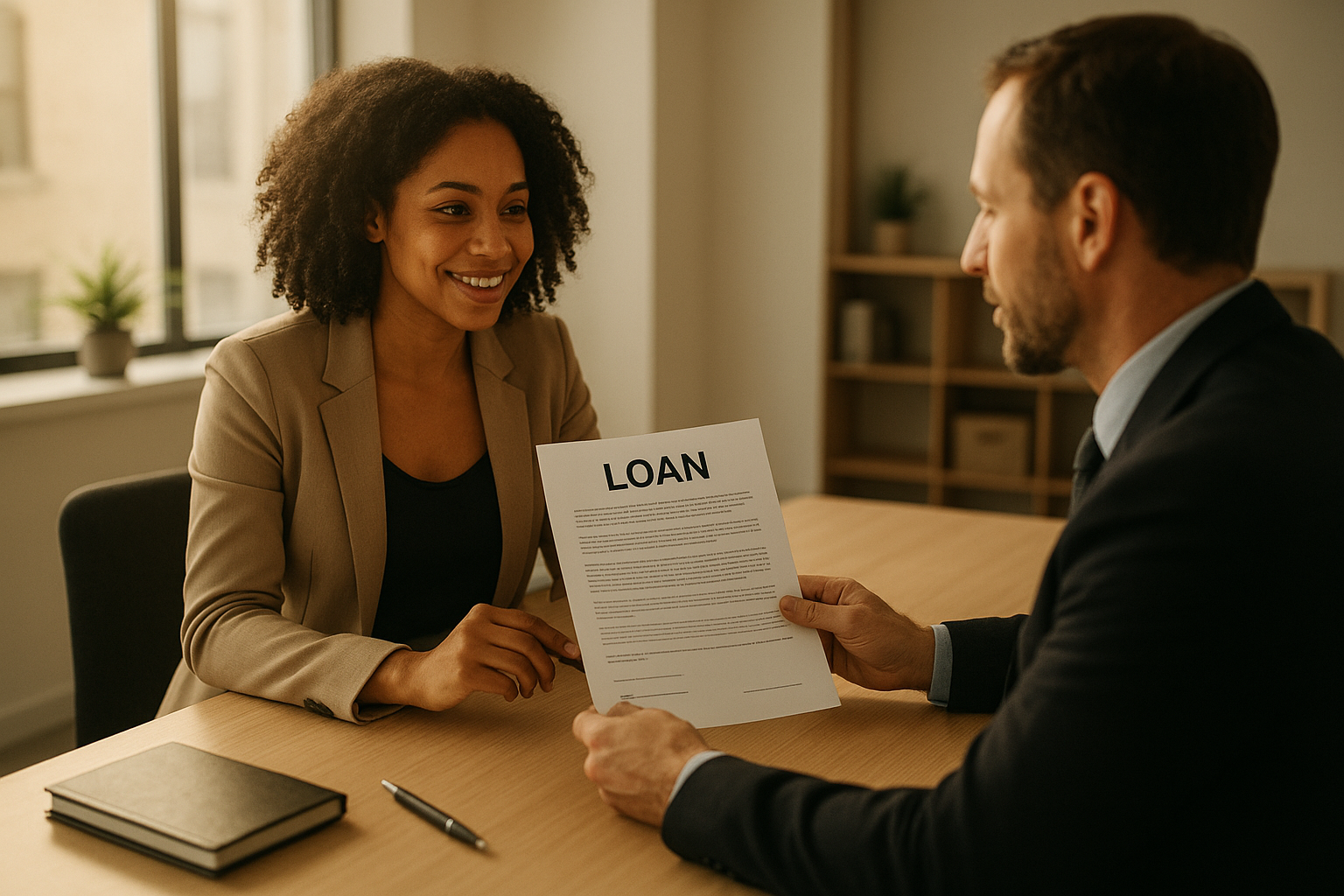
Reviewing fixed rate small business loans paperwork with a lender before signing.
What Are Fixed Rate Small Business Loans?
Fixed rate small business loans are financing products where the lender sets one interest rate at closing, and that rate stays the same for the entire repayment term. As a result, the monthly principal and interest payment is identical from the first payment to the last, unlike variable rate loans that fluctuate with an index such as the prime rate.
This structure is common across several financing types, including term loans, equipment financing, and certain SBA loan programs. According to the U.S. Small Business Administration, lenders participating in SBA programs can offer either fixed or variable rates, but fixed rate caps are set relative to the prime rate published by the Federal Reserve. In particular, this gives borrowers a transparent ceiling on how high the rate can go, even before the loan is approved.
How Do Fixed Interest Rate Business Loans Work?
Once a lender approves a fixed rate business loan, the interest rate is built into an amortization schedule that spreads payments evenly across the term. Each payment includes a portion of principal and a portion of interest, and that split shifts slightly over time, but the total payment amount itself stays constant.
For example, a business borrowing $150,000 over five years at a fixed rate will pay the same amount every month regardless of what happens to broader market interest rates. In contrast, a variable rate loan tied to the prime rate could see payments rise if the Federal Reserve raises rates during the loan term. Readers who want a deeper breakdown of how banks set these benchmarks can review our guide on how bank interest rates affect small business loans for additional context.
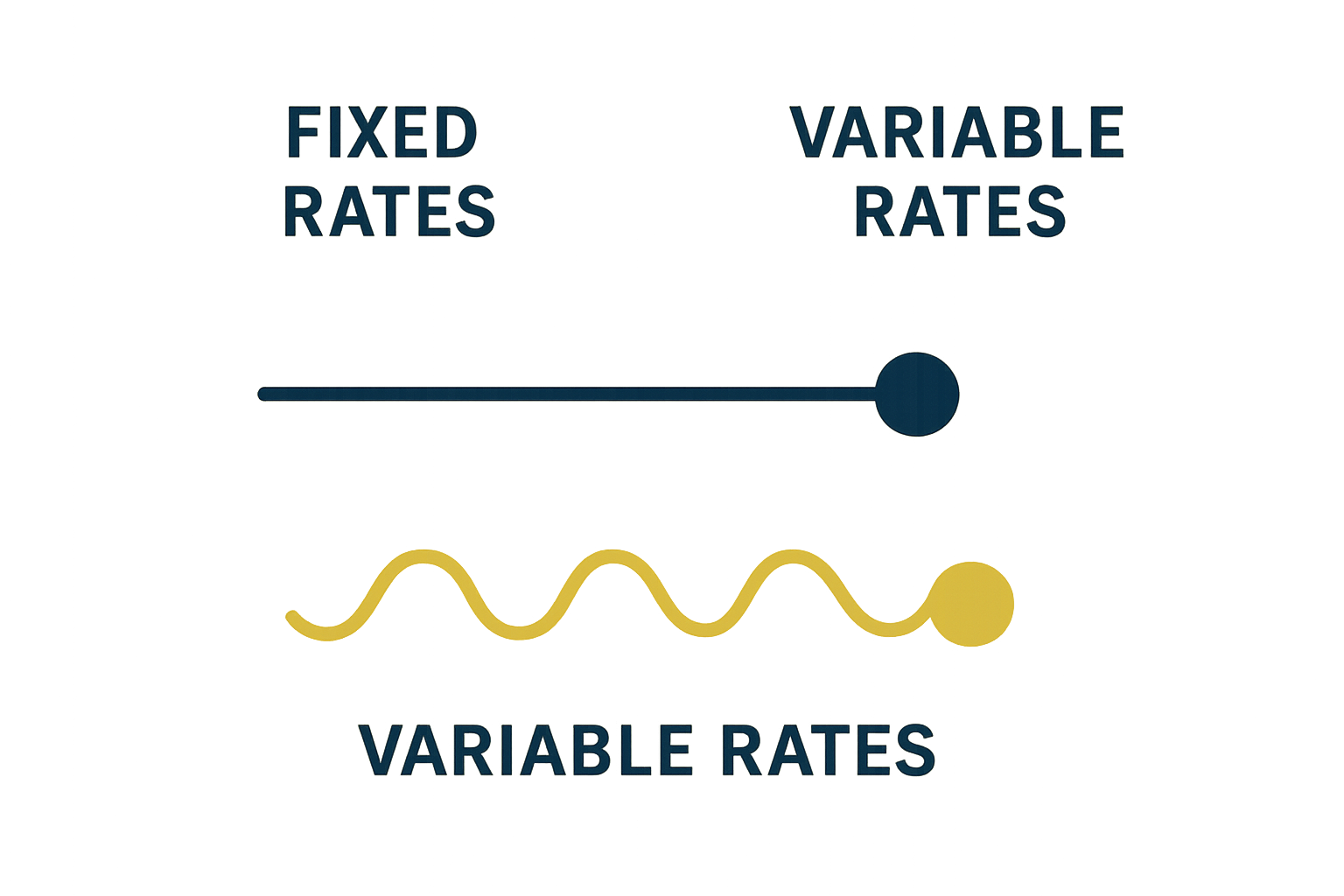
Fixed rates stay flat for the full term, while variable rates move with the market.
Fixed Rate vs. Variable Rate Small Business Financing
Choosing between fixed and variable rate financing usually comes down to how much certainty a business needs. Fixed rates offer stable monthly payments, which simplifies budgeting and forecasting. Variable rates, however, sometimes start lower and can save money if benchmark rates fall during the loan term.
Fixed Rate
Predictable payments, protection from rising rates, easier long-term budgeting.
Variable Rate
Potentially lower starting rate, but payments can rise if market rates increase.
Businesses weighing short-term financing against longer commitments may also want to compare options in our article on short-term business loans with low interest, since term length directly affects which rate structure makes more sense.
Benefits of Choosing Fixed Rate Small Business Loans
Fixed rate small business loans offer several practical advantages beyond simple predictability. First, they make it easier to forecast cash flow months or years in advance, since the payment obligation never shifts. Second, they protect borrowers from rate increases driven by Federal Reserve policy changes, which matters for businesses with tight margins.
Additionally, fixed rate loans tend to simplify internal accounting and lender reporting, since the interest expense line item stays consistent. For businesses planning large purchases or expansions, that stability can reduce financial risk considerably.
Who Qualifies for Fixed Rate Small Business Financing?
Qualification requirements vary by lender, but most fixed rate loan programs look for established businesses with steady revenue, typically at least $20,000 in monthly income, along with a reasonable personal credit history. Time in business also matters; lenders generally prefer companies operating for a year or more.
The SBA notes that 7(a) loan rate caps are calculated using the prime rate plus a margin that depends on loan size and maturity, which means businesses with stronger qualifications often secure more favorable fixed terms. Specifically, larger loans with longer repayment periods tend to carry higher rate ceilings than smaller, shorter-term loans. For a broader look at qualification standards across lender types, see our nationwide comparison of top lenders for small business loans.
How to Apply for a Fixed Rate Small Business Loan
Applying for fixed rate financing follows a fairly consistent process across most lenders. The following steps outline what to expect from start to funding.
- Review your financials. Gather recent bank statements, tax returns, and profit and loss reports so lenders can accurately assess your revenue and repayment capacity.
- Determine how much funding you need. Calculate the exact amount required for your project, whether it is working capital, equipment, or expansion, to avoid over-borrowing or under-funding your plans.
- Compare lenders and rate structures. Request quotes from multiple lenders and compare fixed interest rate offers, fees, and repayment terms side by side before committing to one option.
- Submit your application and documentation. Complete the lender’s application and upload supporting documents promptly, since missing paperwork is the most common cause of funding delays.
- Review and sign the final loan agreement. Carefully read the repayment schedule, fees, and any prepayment terms before signing, then confirm funding details with your lender to begin receiving capital.
Businesses that need capital quickly should also review our guide on how to get funded fast, which covers ways to speed up documentation and approval.

Signing the final agreement is the last step before funding arrives.
Where to Find Fixed Rate Small Business Loans Nationwide
Banks, credit unions, SBA-approved lenders, and alternative financing companies all offer versions of fixed rate small business loans, though terms and speed of funding vary widely. Traditional banks often provide the lowest rates but require more documentation and longer approval timelines, while alternative lenders can move faster with more flexible underwriting.
USA Patriot Loans, a disabled-veteran-owned nationwide lending company, works with established small and medium-sized businesses seeking $30,000 to $20 million in working capital or commercial financing, including term loans, SBA loans, and equipment financing options with fixed rate structures. For businesses that also want to minimize paperwork during the process, our overview of fast approval loans with minimal paperwork outlines additional options worth comparing.
Frequently Asked Questions About Fixed Rate Small Business Loans
What are fixed rate small business loans?
Fixed rate small business loans are financing products where the interest rate stays the same for the entire loan term, so monthly payments never change. This makes budgeting easier because owners know exactly what they owe each month regardless of market rate swings.
How do fixed rate small business loans differ from variable rate loans?
Fixed rate loans lock in one interest rate for the life of the loan, while variable rate loans move up or down with an index like the prime rate. Variable loans can start lower but carry the risk of rising payments later.
What credit score is needed to qualify for fixed rate small business loans?
Most lenders look for a personal credit score in the mid-600s or higher, though requirements vary by lender and loan type. Strong revenue and time in business can sometimes offset a lower credit score.
How much can I borrow with a fixed rate business loan?
Loan amounts typically range from around $30,000 to $20 million depending on the lender, collateral, and the business’s annual revenue. Larger amounts usually require stronger financials and sometimes collateral.
Are SBA loans fixed or variable rate?
SBA loans can be structured as either fixed or variable rate, depending on the loan program and lender. The U.S. Small Business Administration sets maximum rate caps for both options based on the prime rate.
How long does it take to get approved for a fixed rate small business loan?
Approval timelines range from same-day decisions with alternative lenders to several weeks for traditional bank or SBA loans. Funding speed often depends on how quickly the business supplies complete documentation.
What documents are required to apply for a fixed rate business loan?
Lenders generally request recent bank statements, tax returns, a profit and loss statement, and proof of business ownership. Some lenders also ask for a business plan or collateral details for larger loan amounts.
Can startups get fixed rate small business loans?
Startups can qualify in some cases, but most fixed rate loan programs favor businesses with at least one to two years of operating history and consistent monthly revenue. Newer businesses may need to consider alternative financing first.
What is the typical repayment term for a fixed rate business loan?
Repayment terms commonly range from one to ten years, with shorter terms for working capital needs and longer terms for equipment or expansion financing. Term length directly affects the size of the monthly payment.
Is a fixed rate always better than a variable rate for small business financing?
Not always. Fixed rates offer predictability, which suits businesses that prioritize stable budgeting, while variable rates can save money if market rates fall. The right choice depends on cash flow stability and risk tolerance.
What mistakes do business owners make when choosing fixed rate small business loans?
A common mistake is focusing only on the interest rate while ignoring fees, prepayment penalties, and total repayment cost. Another is borrowing more than the business can comfortably repay from monthly cash flow.
How much do fixed rate small business loans typically cost in fees?
Fees vary by lender but often include an origination fee of one to five percent of the loan amount, plus possible underwriting or closing costs. Reviewing the full cost breakdown before signing helps avoid surprises.
Final Thoughts on Fixed Rate Small Business Loans
In summary, fixed rate small business loans remain one of the most predictable ways for established businesses to fund growth, cover working capital gaps, or finance equipment without worrying about shifting payments. Because the rate never changes, owners can budget with confidence and avoid surprises tied to Federal Reserve rate decisions. Before applying, however, it pays to compare lenders, review fee structures, and confirm the repayment term fits your cash flow. Businesses ready to explore options nationwide can start by visiting USA Patriot Loans to discuss fixed rate small business loans tailored to their funding needs.
Leave a Reply