Author: wpusername6050

  • Difference Between Credit Union and Bank Explained

    Difference Between Credit Union and Bank Explained

    The difference between credit union and bank comes down to ownership, purpose, and how each institution treats borrowers. For small business owners comparing financing sources, however, that difference can also shape how quickly you get approved and how much a loan actually costs. This guide breaks down both options plainly, then explains where faster, more flexible commercial financing fits into the picture.

    Quick Answer: A bank is a for-profit institution owned by shareholders, while a credit union is a nonprofit cooperative owned by its members. As a result, credit unions often offer lower rates and fees, but banks generally provide more loan products, higher borrowing limits, and fewer membership restrictions.
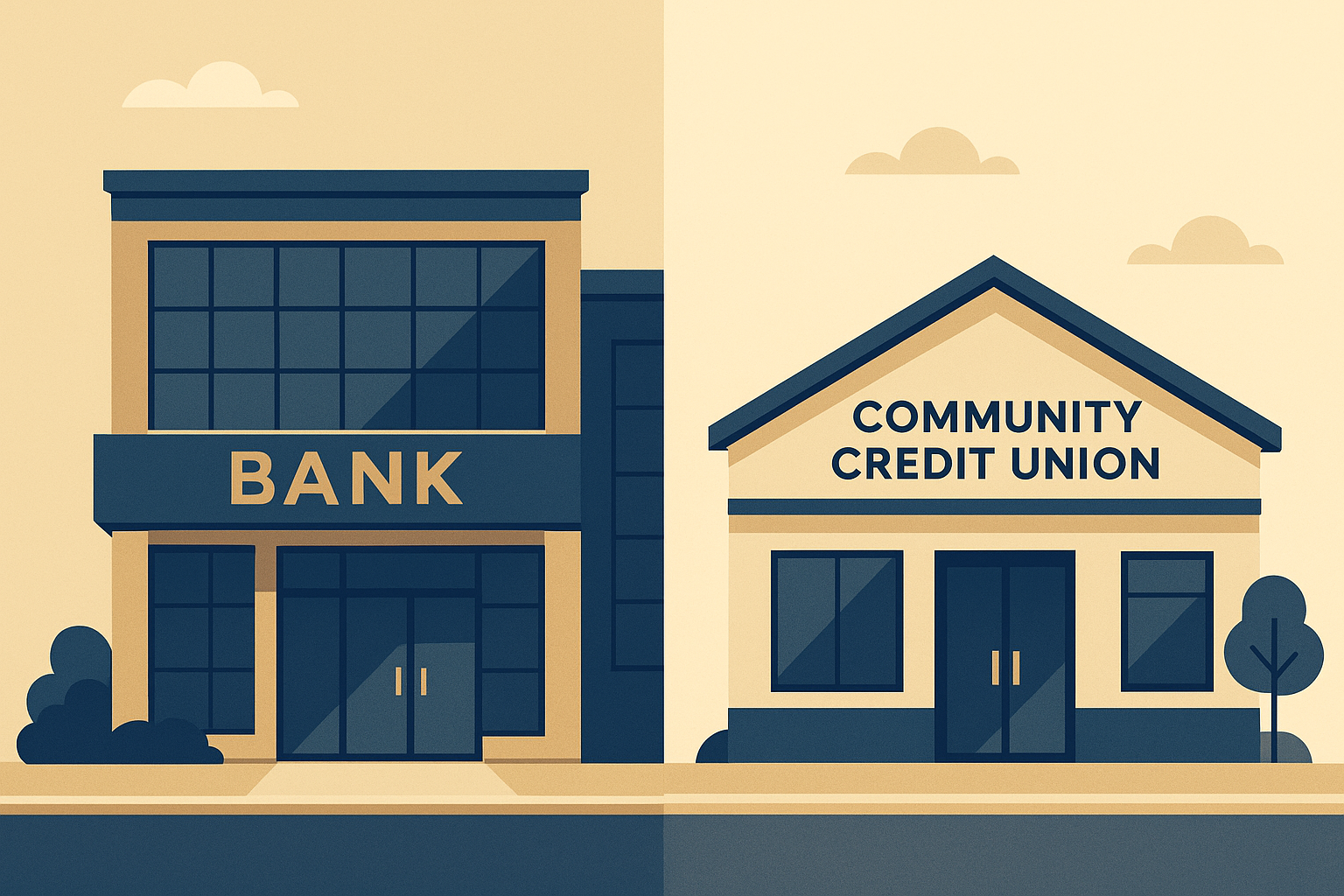
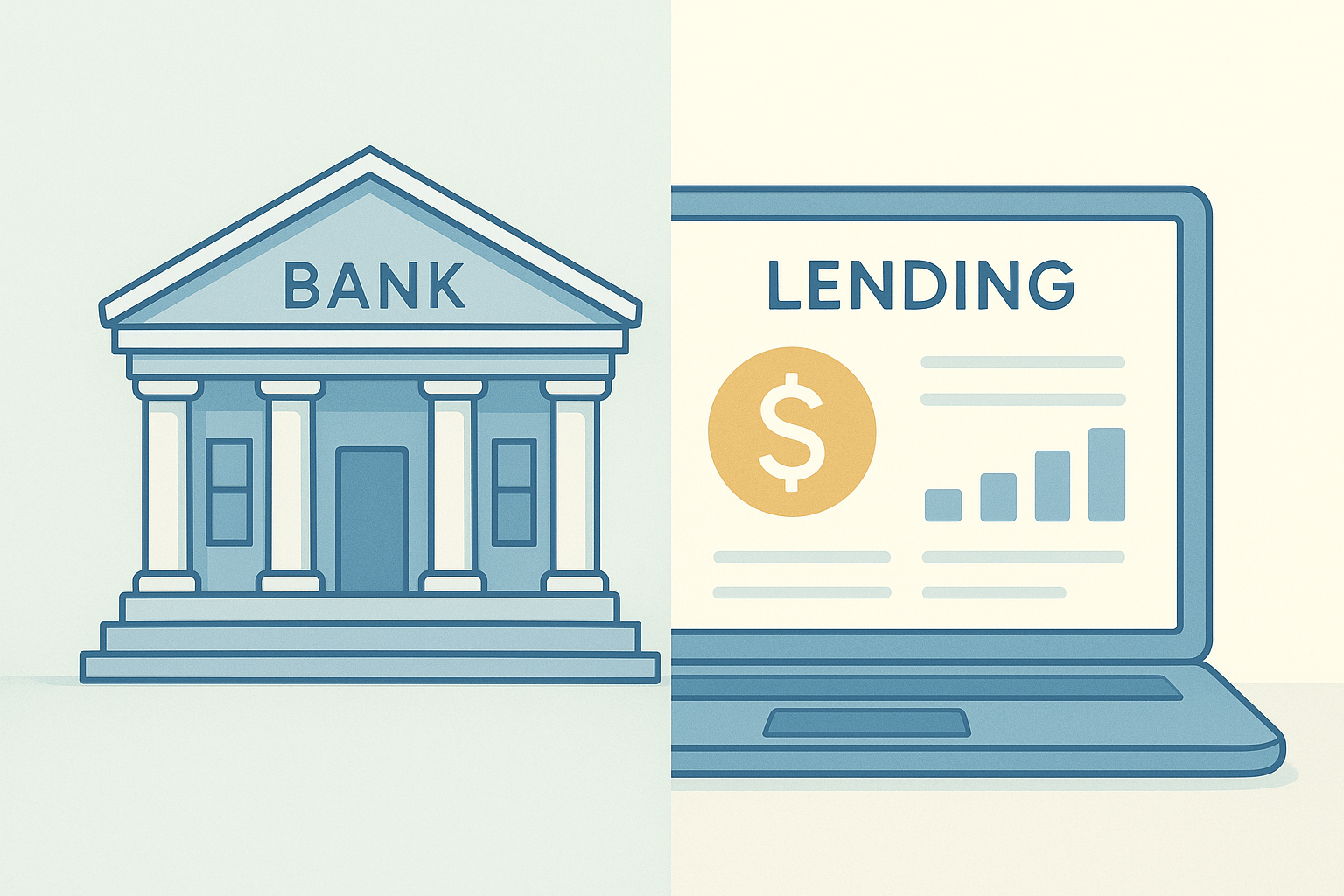
    Illustration comparing a bank building and a credit union office side by side

    Understanding the difference between credit union and bank institutions helps business owners choose the right financing path.

    What Is the Difference Between Credit Union and Bank Institutions?

    The difference between credit union and bank institutions is primarily structural. A bank is a for-profit business, typically owned by shareholders, that generates revenue through interest, fees, and investment activity. A credit union, in contrast, is a nonprofit financial cooperative owned collectively by its members, who must usually share a common bond such as employer, location, or profession.

    Because credit unions do not answer to shareholders, they generally return profits to members through lower loan rates and reduced fees. Banks, on the other hand, prioritize profitability and shareholder returns, which can mean higher fees but also more resources, more branches, and a wider range of financial products. According to the Wikipedia entry on credit unions, this cooperative structure dates back to 19th-century Europe and remains the defining feature that separates credit unions from traditional banks today.

    Credit Union vs. Bank Ownership and Structure

    Specifically, credit union members typically get one vote each, regardless of how much money they hold in an account. This democratic structure means major decisions, like electing a board of directors, are made collectively rather than by outside investors. In addition, credit unions are insured through the National Credit Union Administration (NCUA), a federal agency that protects deposits similarly to how the FDIC protects bank deposits.

    Banks, meanwhile, are structured as corporations. Shareholders elect a board, and executives run daily operations with profitability as a central goal. As a result, banks often invest heavily in technology, physical branches, and specialized lending divisions, which can benefit borrowers who need complex commercial products such as SBA loans or large equipment financing packages.

    How Traditional Banks Operate

    Traditional banks operate on a wide scale, often across multiple states or nationally. Consequently, they tend to offer a broader menu of financial products, including checking accounts, mortgages, and various forms of business financing. For established businesses, this range can be an advantage, since a single bank may handle everything from payroll accounts to term loans.

    However, that scale comes with tradeoffs. Larger banks frequently rely on standardized underwriting models, meaning approval decisions may hinge heavily on credit score thresholds and revenue benchmarks rather than individual business circumstances. In particular, this can make it harder for newer or smaller companies to secure fast approval, even when the business itself is healthy.

    Bank Versus Credit Union: Key Differences for Business Owners

    For business owners specifically, the bank versus credit union decision often comes down to a handful of practical factors. The table below summarizes the core distinctions.

    Factor Bank Credit Union
    Ownership Shareholders Members
    Profit goal For-profit Nonprofit
    Eligibility Open to public Membership required
    Loan product range Broad Often limited
    Deposit insurance FDIC NCUA

    As the table shows, neither option is universally better. Instead, the right choice depends on your business’s eligibility, urgency, and the specific financing product you need. The FDIC and NCUA both maintain public resources explaining exactly how deposit insurance protections differ between the two institution types.

    Small business owner comparing loan documents from a bank and a credit union

    Comparing paperwork and terms is a key step before choosing a lender.

    Which Option Better Serves Growing Businesses?

    For fast-growing businesses, neither a bank nor a credit union is automatically the right fit. Growing companies often need larger loan amounts, flexible repayment structures, or funding within days rather than weeks. Unfortunately, both banks and credit unions typically rely on lengthy underwriting processes involving extensive documentation, tax returns, and collateral review.

    According to NCUA data, credit unions collectively served more than 140 million members across the United States as of 2023, showing how widespread the model has become. Still, membership eligibility rules mean a business simply cannot join every credit union it might want to borrow from, which limits accessibility compared to a bank’s open enrollment.

    Why Many Business Owners Look Beyond Banks and Credit Unions for Funding

    Given the timelines and eligibility hurdles above, many small and medium-sized business owners turn to alternative commercial lenders instead. This is where a lender such as USA Patriot Loans becomes relevant. As a nationwide, disabled-veteran-owned business financing company, USA Patriot Loans works with established businesses generating at least $20,000 in monthly revenue to provide options including SBA loans, working capital loans, business lines of credit, equipment financing, and same-day business funding.

    Unlike a traditional bank or credit union, alternative lenders often prioritize speed and flexibility over rigid, one-size-fits-all underwriting. Therefore, businesses that have been declined by a bank, or that simply cannot wait weeks for a decision, frequently find alternative financing to be a practical bridge. To see the full range of financing options and eligibility details, visit the why choose us overview for more detail on how the process works.

    How to Decide Between a Credit Union and a Bank for Business Financing

    Choosing the right financing source does not have to be overwhelming. Use the following steps to evaluate your options methodically.

    1. Define your funding timeline. Determine how quickly you need capital, since banks and credit unions can take weeks to fund a loan while alternative lenders may fund within days. For a deeper walkthrough, see our Capital Finance Guide: How to Fund Your Business Fast.
    2. Check membership and eligibility requirements. Confirm whether you qualify for credit union membership based on location, industry, or employer, since ineligible businesses cannot access credit union loan products at all.
    3. Compare rates, fees, and total loan cost. Request full rate and fee disclosures from each institution and calculate the total repayment cost, not just the advertised interest rate, before making a decision.
    4. Evaluate alternative financing if you are declined or need speed. If a bank or credit union denies your application or the process is too slow, explore alternative commercial lenders offering working capital, lines of credit, or same-day business funding.

    Common Mistakes When Comparing Bank and Credit Union Loans

    One frequent mistake is focusing solely on the advertised interest rate while ignoring origination fees, prepayment penalties, or collateral requirements. Another common error involves assuming approval is guaranteed simply because a business has an existing account relationship. In reality, both banks and credit unions run independent underwriting reviews for every loan application, regardless of account history.

    Furthermore, some business owners wait too long to explore alternatives after a decline, which can create cash flow strain. Consequently, it often makes sense to research multiple financing paths simultaneously rather than sequentially, especially when working capital needs are time-sensitive.

    Frequently Asked Questions About the Difference Between Credit Union and Bank

    What is the main difference between credit union and bank?

    The main difference between credit union and bank institutions is ownership: credit unions are member-owned nonprofits, while banks are for-profit companies owned by shareholders. This affects rates, fees, and how decisions get made.

    Are credit unions safer than banks?

    Both are considered safe because deposits are federally insured. Credit union deposits are insured by the NCUA, while bank deposits are insured by the FDIC, each up to $250,000 per depositor.

    Do credit unions offer lower interest rates than banks?

    Credit unions often offer lower loan rates and fees because they operate as nonprofits and return profits to members. However, rates vary widely by institution, credit profile, and loan type.

    Can any business join a credit union?

    No, credit unions require membership eligibility based on factors like location, employer, or industry association. This restriction can slow down or block access for businesses that don’t qualify.

    Which is better for small business loans, a bank or a credit union?

    It depends on your timeline and needs. Banks typically offer more loan products and higher limits, while credit unions may offer friendlier service, but both often involve lengthy underwriting for business financing.

    How long does it take to get a business loan from a bank or credit union?

    Traditional banks and credit unions often take two to eight weeks to approve and fund a business loan. This is significantly slower than alternative lenders that can fund in as little as 24 to 48 hours.

    What are common mistakes business owners make when choosing between a bank and credit union?

    A common mistake is assuming lower advertised rates always mean lower total cost, without factoring in fees, membership requirements, or approval timelines. Another mistake is not comparing alternative financing options for time-sensitive needs.

    Do banks or credit unions have stricter loan requirements?

    Both tend to require strong credit scores, collateral, and detailed financial documentation for business loans. Credit unions may be slightly more flexible for existing members, but requirements remain rigorous at both institution types.

    Why do some businesses choose alternative lenders over banks and credit unions?

    Businesses often choose alternative lenders for speed, flexibility, and higher approval rates when banks or credit unions decline them. Alternative lenders can also offer specialized products like merchant cash advances or revenue-based financing.

    What is the cost difference between borrowing from a credit union versus a bank?

    Credit unions sometimes charge lower fees and interest because they are not profit-driven, but the actual cost depends on the loan product, term, and your creditworthiness. Comparing annual percentage rates and total fees is the best way to evaluate cost.

    Can a credit union offer the same business financing products as a bank?

    Many credit unions offer business loans, lines of credit, and SBA loans similar to banks, but product variety is often more limited. Larger banks typically have more specialized commercial financing options available.

    Is it harder to get approved at a bank or a credit union?

    Approval difficulty depends on the institution, but both banks and credit unions apply conservative underwriting standards for business loans. This is why many established businesses with lower monthly revenue turn to alternative commercial lenders instead.

    What documents do I need to apply for a business loan at a bank or credit union?

    You typically need financial statements, tax returns, a business plan, and personal identification. Additional documents like collateral valuations or cash flow projections may also be required depending on the loan size.

    Final Thoughts on Choosing a Financing Partner

    Ultimately, the difference between credit union and bank institutions boils down to ownership, eligibility, and product range, while both share a common drawback for business owners: slow, standardized underwriting. In particular, businesses that need capital quickly, or that don’t fit neatly into traditional lending criteria, often benefit from exploring alternative commercial financing alongside banks and credit unions. Whether you ultimately choose a bank, a credit union, or a specialized lender, comparing rates, timelines, and eligibility requirements side by side remains the best way to secure the right funding for your business’s next stage of growth. For a closer look at additional financing options nationwide, visit USA Patriot Loans to review current programs.


  • Bank Interest Rates Explained for Small Business Loans

    Bank Interest Rates Explained for Small Business Loans

    Bank Interest Rates Explained for Small Business Loans

    Bank interest rates directly influence how much a small business pays to borrow money, and they shape nearly every financing decision an owner makes. When a bank raises or lowers its rates, monthly payments, total loan costs, and even approval odds can shift quickly. For many entrepreneurs, however, traditional bank interest rates come paired with long approval timelines, rigid qualification standards, and stacks of paperwork. As a result, business owners increasingly compare bank rates against alternatives such as working capital loans, business lines of credit, and revenue-based financing. This guide breaks down how bank interest rates work, why they change, and what small business owners can do to secure funding on better terms.

    Quick Answer: Bank interest rates are the percentage a bank charges for lending money, based on factors like the federal funds rate, credit history, and loan risk. Because bank underwriting is often slow and strict, many small businesses turn to alternative lenders like USA Patriot Loans for faster access to capital.

    What Are Bank Interest Rates?

    Bank interest rates are the percentage a financial institution charges a borrower for the use of borrowed money, expressed annually as an APR, or annual percentage rate — the yearly cost of a loan including interest and certain fees. In practical terms, a bank interest rate determines how much extra a business repays on top of the original loan amount, known as the principal. Consequently, even a one or two percentage point difference can add thousands of dollars to a loan’s total cost over its term.

    Rates can be fixed, meaning they stay the same for the life of the loan, or variable, meaning they move with a benchmark index such as the prime rate. Therefore, before signing any agreement, it helps to understand which type of rate structure applies and how it could affect future payments. According to the Federal Reserve, changes to the federal funds rate ripple through nearly every commercial lending product in the country.

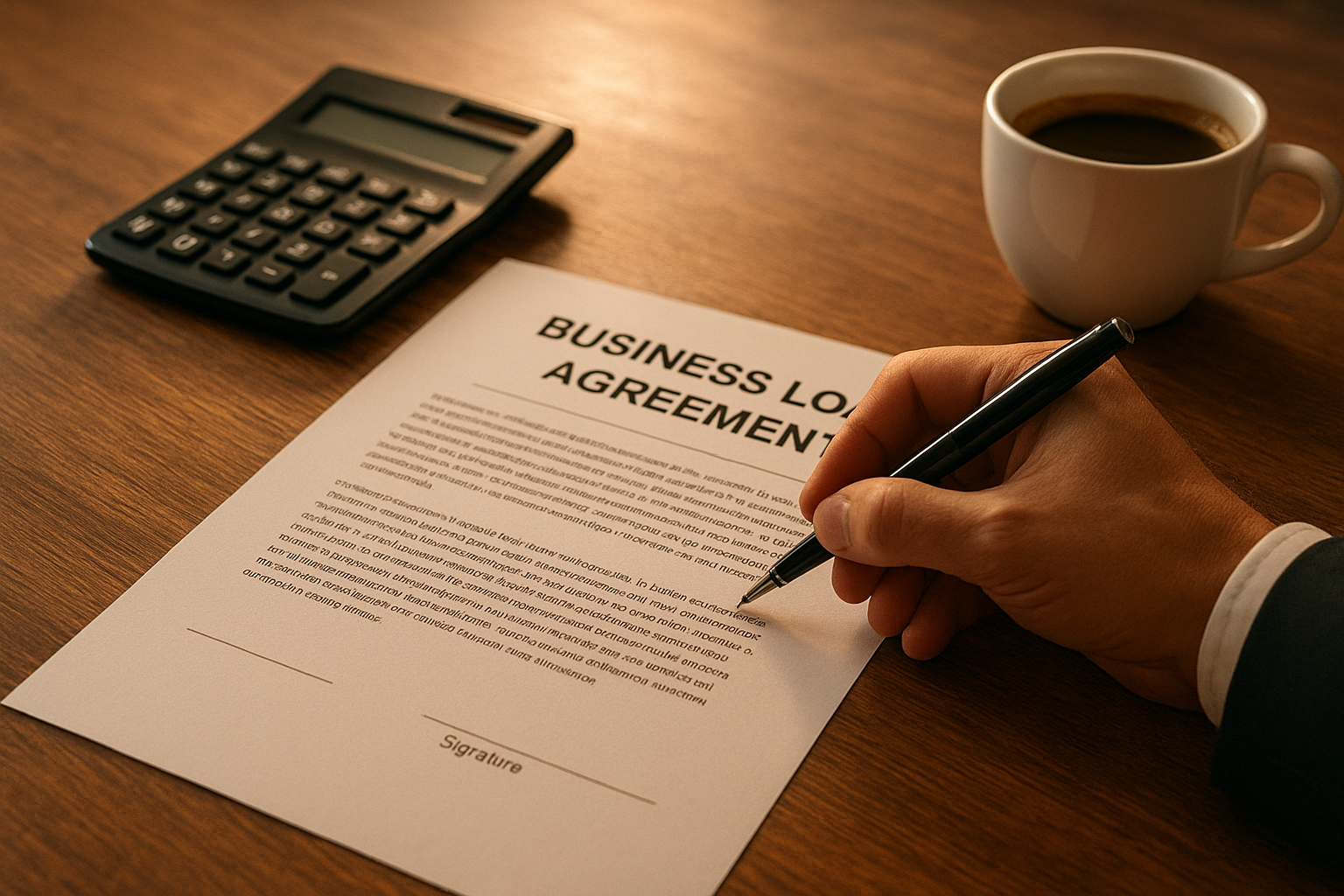
    Small business owner reviewing bank interest rates on a printed loan agreement

    Understanding bank interest rates before signing a loan agreement helps business owners avoid costly surprises. For a deeper walkthrough, see our Common Terms for Business Term Loans Explained.

    How Business Loan Interest Rates Are Determined

    Several factors combine to set business loan interest rates, and none of them work in isolation. First, the federal funds rate sets a baseline cost of money across the entire banking system. Second, a business’s credit score, time in operation, and annual revenue all signal risk to underwriters. Third, the loan’s term length, collateral, and industry classification further adjust the final rate offered.

    In addition, banks weigh broader economic conditions such as inflation and unemployment when setting lending policy. For example, during periods of rising inflation, banks typically raise rates to protect their margins. In contrast, when the economy slows, rates often drop to encourage borrowing and stimulate growth. Similarly, a business with strong cash flow and a solid repayment history is likely to receive a more favorable offer than one with limited financial history.

    Specifically, most banks review at least three years of financial statements, tax returns, and personal credit history before finalizing a rate. As a result, newer businesses or those with thinner credit files often struggle to access the lowest advertised rates, even when their business fundamentals are strong.

    Bank Rates vs. Alternative Small Business Financing Options

    Traditional bank rates are often lower on paper, but the full picture includes more than the number itself. Above all, approval speed and flexibility matter just as much to many business owners. Bank loans can take several weeks to fund because of extensive underwriting, while alternative lenders frequently approve funding within a few business days.

    For instance, working capital loans, business lines of credit, and revenue-based financing are structured to move faster than conventional bank products. Merchant cash advances and invoice financing likewise convert future receivables into immediate cash without the lengthy paperwork banks require. Meanwhile, SBA loans sit somewhere in between: government backing helps lower the rate, but the approval process still takes time.

    Business owners considering their options can review a wide range of financing structures — including SBA loans, term loans, and short-term business loans through USA Patriot Loans — to compare speed, flexibility, and total cost side by side before committing to a bank offer.

    Comparison between traditional bank financing and modern alternative business lending options

    Comparing bank interest rates against alternative financing helps business owners choose the right funding path. For a deeper walkthrough, see our Business Loans for Small Companies: Funding Guide.

    Why High Lending Rates Can Slow Small Business Growth

    High lending rates raise monthly payments, which in turn reduce the cash a business has available for payroll, inventory, or expansion. Consequently, some owners delay growth plans simply because the cost of capital feels too steep. Furthermore, strict bank qualification standards mean many small businesses are denied financing altogether, even when their underlying operations are healthy.

    According to the U.S. Small Business Administration, access to timely capital remains one of the most cited barriers to small business growth nationwide. In particular, seasonal businesses or those facing an unexpected opportunity often cannot wait weeks for bank approval. As a result, emergency business funding and same-day funding products have grown in popularity as a practical response to slow-moving traditional lending.

    Ultimately, the true cost of a loan is not just the rate itself but also the opportunity cost of waiting. A slightly higher rate paired with fast funding can sometimes be more valuable to a growing business than a lower rate that arrives too late to matter.

    Steps to Secure Better Financing When Rates Are High

    Fortunately, business owners are not powerless against rising bank interest rates. The following steps outline a practical path toward more affordable, accessible financing.

    1. Compare multiple lenders. Request rate quotes from several banks and alternative lenders so you can compare total borrowing costs side by side before signing any agreement.
    2. Strengthen your credit profile. Pay down existing debt, correct credit report errors, and build a longer payment history to qualify for more competitive lending rates.
    3. Consider alternative financing structures. Explore working capital loans, revenue-based financing, or invoice financing, which can offer faster funding and flexible terms compared to traditional bank products. For a deeper walkthrough, see our Bank Statement Loans: Fast Funding Without Tax Returns.
    4. Review fees and total cost of capital. Read the full loan agreement carefully, calculate the APR rather than just the interest rate, and confirm there are no hidden origination or prepayment fees.
    5. Work with a nationwide business lender. Partner with a lender experienced in fast small business funding to secure capital quickly without waiting through lengthy bank underwriting cycles. For a deeper walkthrough, see our Top Lenders for Small Business Loans in My Area: A Nationwide Comparison Guide.

    Businesses that follow these steps typically gain more negotiating power and a clearer view of their true financing costs. For a closer look at how a nationwide lender structures its approach, you can review why business owners choose USA Patriot Loans for speed and flexibility. For a deeper walkthrough, see our How Quickly Can I Get Business Funding From USA Patriot Loans?.

    Business owner finalizing a small business loan agreement after comparing bank interest rates

    Comparing options before finalizing a loan can help business owners avoid unfavorable bank interest rates. For a deeper walkthrough, see our Best Options for Expanding My Business With Loans.

    Frequently Asked Questions About Bank Interest Rates

    What are bank interest rates?

    Bank interest rates are the percentage a bank charges a borrower for the use of borrowed money, typically expressed as an annual percentage rate. They determine how much extra a business repays on top of the original loan amount. For a deeper walkthrough, see our How to Choose Between a Business Line of Credit and a Term Loan.

    How do banks determine interest rates for small business loans?

    Banks set rates based on the federal funds rate, the borrower’s credit history, loan term, collateral, and overall risk profile. Stronger financials and longer operating history usually lead to lower offered rates.

    Are bank interest rates fixed or variable for business loans?

    Bank business loans can carry either fixed or variable rates, depending on the loan product. Fixed rates stay the same for the loan term, while variable rates move with a benchmark index like the prime rate.

    Why are bank interest rates often higher for small businesses than large corporations?

    Small businesses often carry less collateral, shorter credit histories, and less predictable revenue than large corporations, so banks price in extra risk. As a result, small business rates are frequently higher than those offered to established enterprises.

    How can I qualify for lower bank interest rates?

    Improving your personal and business credit scores, reducing existing debt, and providing strong financial documentation all help secure lower rates. Offering collateral or a personal guarantee can also improve loan terms. For a deeper walkthrough, see our Can I Get a Business Loan With No Hard Credit Inquiry?.

    What credit score do I need for competitive bank interest rates?

    Most banks look for a personal credit score of 680 or higher to offer their most competitive rates. Businesses below that threshold often qualify for financing but at higher rates or through alternative lenders.

    How do bank interest rates compare to SBA loan rates?

    SBA loans often carry lower rates than conventional bank loans because the government guarantees a portion of the loan, reducing lender risk. However, SBA loans typically require longer approval timelines than standard bank financing.

    Can bank interest rates change after loan approval?

    Fixed-rate loans lock in the rate for the full term, so it will not change after approval. Variable-rate loans, however, can fluctuate whenever the underlying benchmark index moves. For a deeper walkthrough, see our What Are the Best Business Loans With Fast Approval?.

    What is the difference between APR and bank interest rates?

    The interest rate reflects only the cost of borrowing the principal, while the APR includes the interest rate plus additional fees like origination charges. Comparing APRs gives a more accurate picture of a loan’s true cost.

    How long does it take to get a bank loan versus alternative financing?

    Traditional bank loans can take several weeks to a few months to fund because of underwriting requirements. Alternative lenders often approve and fund loans within a few business days, sometimes even the same day. For a deeper walkthrough, see our Best Lenders for Business Loan Approval Nationwide 2026.

    What mistakes should business owners avoid when comparing bank interest rates?

    A common mistake is comparing only the interest rate without factoring in fees, repayment terms, and total cost of capital. Owners should also avoid applying to multiple banks simultaneously, which can trigger multiple hard credit inquiries.

    Are there financing options with faster approval than banks?

    Yes, alternative lenders offering working capital loans, revenue-based financing, and merchant cash advances often approve funding much faster than traditional banks. These options can be useful when speed matters more than securing the lowest possible rate. You can learn more about Wikipedia’s overview of interest rates for additional background.

    Conclusion

    Bank interest rates play a central role in the true cost of small business borrowing, but they are only one piece of the financing puzzle. Speed, flexibility, and total qualification requirements matter just as much as the rate printed on a term sheet. Therefore, comparing traditional bank offers against alternative options like working capital loans, business lines of credit, and revenue-based financing gives owners a fuller picture before they commit. Ultimately, understanding how bank interest rates are set — and knowing where to find faster, more flexible funding — helps small business owners make confident decisions and keep their growth plans moving forward.

  • SBA Loan Contact Number: How to Reach the SBA Fast

    SBA Loan Contact Number: How to Reach the SBA Fast

    SBA Loan Contact Number: How to Reach the SBA Fast

    The SBA loan contact number connects small business owners directly to the U.S. Small Business Administration for questions about loan programs, applications, and lender referrals. If you are searching for this number, you likely want to check on an existing SBA loan, confirm eligibility, or find a participating lender near you. This guide explains exactly how to reach the SBA, what to expect from that call, and when a direct business lender might get you funded faster.

    Quick Answer: The main SBA loan contact number is 1-800-827-5722 (SBA Answer Desk), available Monday through Friday during standard federal business hours. For existing loans, your assigned lender or local SBA district office may be a faster point of contact than the national line.

    Business owner dialing the sba loan contact number from an office desk

    Knowing the correct sba loan contact number saves time when you need program answers quickly.

    What Is the SBA Loan Contact Number?

    The SBA loan contact number is 1-800-827-5722, the official line for the SBA Answer Desk. In particular, this number is designed for general questions about SBA loan programs such as the 7(a) loan, 504 loan, and microloans, rather than for day-to-day account servicing.

    Furthermore, callers can use this number to ask about eligibility rules, locate a nearby SBA district office, or request guidance on required paperwork. According to the U.S. Small Business Administration, the agency guaranteed billions of dollars in small business loans last year, which is why phone volume to this line stays high during peak tax and budgeting seasons.

    Why Small Business Owners Look Up an SBA Loan Phone Number

    Many owners look up an SBA loan phone number when they feel stuck between paperwork requirements and unclear timelines. Specifically, first-time applicants often want reassurance that they are applying through a legitimate, SBA-approved lender before sharing sensitive financial documents.

    In addition, some business owners call because they already have a loan and want to confirm payment details, ask about deferment options, or update contact information on file. As a result, the SBA’s phone lines serve two very different audiences: brand-new applicants and existing borrowers.

    How to Contact the SBA Directly

    Beyond the national SBA loan contact number, the agency also maintains regional district offices that can offer more localized help. For instance, the SBA district office locator lets you search by state or zip code to find a physical office near your business.

    • National Answer Desk: 1-800-827-5722, Monday through Friday.
    • Local district offices: Found through the SBA’s online locator tool.
    • Online resources: Program details and forms at sba.gov.

    Meanwhile, if you are researching background on the agency itself, the Wikipedia entry on the Small Business Administration offers a useful overview of its history and mission since it was founded in 1953.

    SBA Loan Contact Number vs. Contacting a Direct Lender

    Calling the SBA loan contact number is helpful for general guidance, but it will not fund your business. Instead, the SBA guarantees a portion of the loan while an approved lender or a direct financing company actually underwrites and disburses the money. For a deeper walkthrough, see our Hard Money Lending in Florida: Complete 2026 Guide.

    Consequently, business owners who need capital quickly often find that contacting a direct nationwide lender moves faster than working through the SBA process alone. For example, SBA loan approval can take 30 to 90 days depending on the program, while direct lenders offering working capital loans or short-term business loans can sometimes approve and fund requests within a day or two.

    USA Patriot Loans, for instance, works with established businesses nationwide on SBA loans as well as alternatives such as business lines of credit, equipment financing, and same-day business funding. You can explore SBA and alternative loan programs directly if the standard SBA timeline does not fit your schedule.

    Comparison of contacting the SBA versus applying with a direct business lender

    Weighing the SBA loan contact number against a direct lender helps business owners choose the faster path. For a deeper walkthrough, see our SBA Small Business Loan Guide: Rates, Terms & How to Qualify.

    Step-by-Step: How to Apply for an SBA Loan or Alternative Financing

    Above all, having a clear process helps you avoid wasted calls and repeated document requests. Below is a simple sequence that works whether you stick with the SBA or move to a direct lender.

    1. Contact the SBA loan contact number or visit SBA.gov to confirm which SBA loan program fits your business size, industry, and funding needs before you apply anywhere.
    2. Gather core documents such as tax returns, bank statements, and a profit and loss statement, since both the SBA and direct lenders require proof of steady revenue.
    3. Compare SBA processing timelines, which often run 30 to 90 days, against direct lender options that can approve and fund working capital in as little as 24 to 48 hours.
    4. Submit your application either through an SBA-approved lender found via the district office locator or through a direct nationwide lender for faster review.
    5. Review your funding offer carefully, comparing interest rates, repayment terms, and total cost before signing, then choose the option that keeps monthly payments manageable for your business.

    Common Mistakes to Avoid When Contacting the SBA About a Loan

    Even experienced business owners run into avoidable delays. Therefore, it helps to know the typical pitfalls before you pick up the phone.

    First, many callers dial the SBA loan contact number without their EIN or loan number ready, which slows down the conversation. Second, some owners mistakenly expect the SBA representative to make funding decisions, when in fact that authority sits with the participating lender. Third, applicants sometimes apply for the wrong SBA program, such as choosing a 504 loan for working capital needs when a 7(a) loan or a direct working capital product would fit better.

    Similarly, business owners occasionally wait too long between document requests, causing their file to go stale and requiring a fresh review. In contrast, staying responsive and organized keeps both SBA and direct lender applications moving smoothly.

    When Should You Skip the SBA Loan Contact Number and Call a Lender Instead?

    Sometimes the smarter move is bypassing the SBA process entirely, especially when timing matters more than the lowest possible rate. For example, businesses facing emergency repairs, inventory shortages, or seasonal cash flow gaps often cannot wait 60 to 90 days for SBA approval.

    In those cases, revenue-based financing, merchant cash advances, invoice financing, or short-term business loans through a direct lender can fill the gap much faster. According to the SBA’s own loan program overview, the agency itself acknowledges that its guarantee process involves multiple review stages, which naturally extends timelines compared to direct commercial lending.

    If you are unsure which route fits your situation, it is worth learning why business owners nationwide choose USA Patriot Loans for both SBA loans and faster alternative financing. For a deeper walkthrough, see our SBA Loans Lender: Complete Guide for Business Owners.

    Business owner signing a loan agreement after comparing SBA and direct lender options

    Choosing the right funding path often matters more than the sba loan contact number alone. For a deeper walkthrough, see our SBA Loan Portal: How to Find the Right Funding Fast.

    Frequently Asked Questions About the SBA Loan Contact Number

    What is the SBA loan contact number?

    The SBA loan contact number is 1-800-827-5722, the official SBA Answer Desk line for questions about SBA loan programs, eligibility, and lender referrals. It connects callers to trained SBA staff, not to a specific lender.

    How do I reach the SBA loan contact number for an existing loan?

    Call 1-800-827-5722 and select the option for existing loan servicing, or contact your local SBA district office directly. Have your loan number and business EIN ready before you call.

    Is the SBA loan contact number the same as my lender’s phone number?

    No, the SBA loan contact number reaches the federal agency, while your lender’s number connects to the bank or financial company that actually funded and services your loan. Most day-to-day payment questions should go to your lender.

    Why do business owners call the SBA instead of a lender directly?

    Business owners often call the SBA to understand program rules, confirm eligibility, or find a participating lender in their area. However, the SBA itself does not issue funds directly in most loan programs.

    How long does it take to get a response after calling the SBA?

    Phone responses are usually immediate during business hours, but detailed application questions may take one to three business days for a follow-up email or callback. Loan approval itself is a separate, longer process.

    What information should I have ready before calling the SBA?

    Have your business EIN, loan or application number, and a brief description of your question ready. This helps the representative locate your file quickly and reduces hold time.

    How much does it cost to apply for an SBA loan?

    Calling the SBA loan contact number is free, but the loans themselves carry guarantee fees, closing costs, and interest that vary by program size. Fees typically range from about 0.55% to 3.75% of the guaranteed loan amount.

    What is the difference between calling the SBA and applying with a direct lender?

    Calling the SBA gives general program guidance, while applying with a direct lender starts the actual underwriting and funding process. Direct lenders can often move faster since they control approval decisions in-house.

    What are common mistakes when contacting the SBA about a loan?

    Common mistakes include calling without documents ready, expecting instant funding decisions, and confusing SBA staff with lender staff. Another frequent error is not asking which SBA program actually fits the business’s revenue and size.

    Can the SBA loan contact number help me check my application status?

    In some cases, yes, especially if the SBA is directly guaranteeing the loan. However, status updates for most applications come faster through the lender that submitted the paperwork.

    What is the fastest way to get business funding if the SBA process is too slow?

    Working directly with a nationwide business lender is typically faster, since options like working capital loans, lines of credit, and short-term business loans can fund in days instead of months. This route skips the multi-step SBA guarantee process entirely.

    Does USA Patriot Loans offer SBA loans or alternatives to SBA financing?

    USA Patriot Loans offers SBA loans alongside alternative financing such as term loans, equipment financing, and same-day business funding for qualifying businesses. This gives business owners more than one path to capital beyond the standard SBA loan contact number process.

    What hours is the SBA loan contact number available?

    The SBA Answer Desk generally operates Monday through Friday during standard federal business hours, excluding federal holidays. Local district offices may keep slightly different hours.

    Do I need good credit to get help from the SBA loan contact number?

    No, calling the SBA loan contact number does not require any credit check since it is simply an information line. Credit requirements only apply once you formally apply through an SBA lender or a direct financing company.

    Final Thoughts on the SBA Loan Contact Number

    In summary, the SBA loan contact number, 1-800-827-5722, is a useful first stop for general program questions, eligibility checks, and lender referrals. However, it is not a substitute for the actual underwriting that happens once you submit a full application.

    Therefore, if speed matters more than working through federal guarantee steps, comparing SBA options against a direct nationwide lender is a smart move. USA Patriot Loans, a disabled-veteran-owned company serving businesses across all 50 states, offers both SBA loans and faster alternatives like working capital loans, business lines of credit, and same-day funding, so you are never limited to a single path when you need capital for your business.

  • Bank Statement Loans: Fast Funding Without Tax Returns

    Bank Statement Loans: Fast Funding Without Tax Returns

    Bank Statement Loans: Fast Funding Without Tax Returns

    Bank statement loans give established business owners a way to qualify for funding based on real revenue rather than tax returns or years of paperwork. Instead of digging through old filings, lenders simply review recent deposit activity to see how the business actually performs. As a result, approval decisions often happen in days instead of weeks, which matters when cash flow gaps or growth opportunities cannot wait.

    Direct answer: Bank statement loans are business financing products that use 3 to 12 months of business bank statements, instead of tax returns, to verify revenue and determine how much a business can borrow. They typically fund faster than traditional loans and rely on cash flow consistency rather than collateral or extensive credit history.

    Small business owner reviewing bank statements for a bank statement loan application

    Bank statement loans let business owners qualify using recent deposit history instead of tax returns. For a deeper walkthrough, see our Bank Interest Rates Explained for Small Business Loans.

    What Are Bank Statement Loans?

    Bank statement loans is a term that describes financing where the lender’s underwriting decision is based primarily on deposit activity shown in business bank statements. Specifically, a lender averages the monthly deposits over a chosen period, usually three to twelve months, to estimate consistent revenue. Because this method skips the tax return review common in conventional lending, it works well for businesses that are profitable on paper but show lower net income after deductions.

    In addition, this approach suits businesses that may not have polished financial statements ready, such as newer companies or those experiencing rapid growth. Consequently, bank statement loans have become a practical bridge for owners who need working capital without the delays of traditional documentation.

    How Do Bank Statement Loans Work?

    The process behind bank statement loans is more straightforward than most traditional financing paths. Rather than requesting two or three years of tax filings, a lender simply asks for recent statements from your business checking account. From there, underwriters calculate an average monthly revenue figure and use it to determine both eligibility and the size of the offer.

    Here is the general process most applicants follow when applying:

    1. Gather business bank statements. Collect three to twelve months of business bank statements from your primary operating account, since lenders use these deposits to calculate average monthly revenue and eligibility.
    2. Choose a lender and submit an application. Select a lender that offers bank statement loans, then complete a short application with basic business details, ownership information, and the requested funding amount.
    3. Upload statements for underwriting review. Submit your bank statements securely so the underwriting team can verify average deposits, cash flow consistency, and overall revenue trends across the statement period.
    4. Review your funding offer. Once approved, review the offered loan amount, repayment term, and rate carefully, comparing them against your business cash flow needs before accepting the terms.
    5. Receive funds and begin repayment. After signing the agreement, funds are typically deposited within one to three business days, and scheduled repayments begin according to the agreed term structure.

    According to the Federal Reserve’s 2023 Small Business Credit Survey, roughly 43% of small business owners applying for financing reported funding gaps due to slow approval timelines, which helps explain why faster, revenue-based options continue to grow in popularity.

    Calculator and financial statements used to calculate monthly business revenue for financing

    Lenders average monthly deposits to determine funding eligibility and offer size.

    Who Qualifies for Bank Statement Business Loans?

    Qualification standards for bank statement business loans tend to be more flexible than conventional bank underwriting, though certain baseline requirements still apply. Generally, lenders look for at least six months in business, an active business checking account, and consistent monthly deposits, often starting around $20,000 or more.

    Unlike traditional financing, personal credit score plays a smaller role in the decision. Instead, lenders focus on deposit patterns, average daily balances, and whether revenue trends upward, stays flat, or declines. Therefore, a business with modest credit but strong, steady cash flow can often qualify for better terms than credit alone would suggest.

    Industries that frequently use this financing include retail, restaurants, contractors, transportation companies, and healthcare practices, largely because these businesses generate predictable, trackable deposit activity each month.

    Bank Statement Loans vs Traditional Business Loans

    When comparing bank statement loans with traditional bank financing, the biggest difference lies in documentation and speed. Traditional lenders, including many banks offering SBA loans, typically require tax returns, profit and loss statements, balance sheets, and sometimes collateral. This thorough review process can take several weeks or even months to complete.

    In contrast, bank statement loans simplify the process considerably. Because the underwriting relies on deposit history rather than a full financial picture, approval decisions often arrive within a day or two. However, this convenience can come with trade-offs, since rates on revenue-based products are sometimes higher than those on fully underwritten term loans or SBA products.

    As a result, many business owners view bank statement loans as a fast, accessible option for time-sensitive needs, while reserving traditional financing for larger, long-term capital projects.

    Benefits and Drawbacks of Bank Statement Loans

    Above all, speed is the primary advantage of bank statement loans. Because underwriting focuses on deposits rather than extensive paperwork, many businesses receive funding decisions within 24 to 72 hours. Furthermore, this option tends to be more forgiving toward businesses with lower credit scores or limited financial history, since consistent revenue can outweigh a less-than-perfect credit profile.

    On the other hand, faster approval and flexible qualification can come at a cost. Interest rates and fees are sometimes higher compared to fully documented loans, particularly for businesses considered higher risk. Additionally, funding amounts may be more conservative than what a business could secure through a longer, document-heavy underwriting process.

    Consequently, it helps to weigh the urgency of your funding need against the total cost of capital before choosing this route over alternatives like working capital loans or a business line of credit.

    What Is Bank Statement Financing Used For?

    Bank statement financing, a close variant of bank statement loans, is commonly used for short-term operational needs. Specifically, business owners use this type of funding to cover payroll gaps, purchase inventory, manage seasonal slowdowns, or take advantage of unexpected growth opportunities without waiting on traditional bank timelines.

    In particular, businesses handling emergency repairs, sudden equipment failures, or short-notice contracts often benefit most from this approach. Since funding can arrive quickly, owners can respond to time-sensitive situations without pausing daily operations.

    Business owner and lender shaking hands after finalizing a business financing agreement

    Fast approval timelines make bank statement loans a practical fit for time-sensitive funding needs.

    How to Choose the Right Lender for Bank Statement Loans

    Choosing the right lender matters just as much as choosing the right loan product. First, compare how many months of statements each lender requires, since shorter review periods can sometimes mean faster funding but less flexibility around seasonal dips. Similarly, ask about total repayment cost rather than focusing only on the headline rate, since fees and term length both affect the true cost of capital.

    Businesses exploring this option nationwide can review funding programs directly through USA Patriot Loans, which works with established businesses generating at least $20,000 in monthly revenue and offers funding from $30,000 up to $20 million across multiple financing types. To understand how a lender approaches transparency and service, it also helps to review their approach to working with small business owners before applying.

    Finally, verify licensing and read the full agreement carefully. According to the general definition of a bank statement, this document simply summarizes account activity, so reputable lenders should only need standard statements, never sensitive account credentials, to complete underwriting.

    Frequently Asked Questions About Bank Statement Loans

    What are bank statement loans?

    Bank statement loans are business financing products that use several months of business bank statements, instead of tax returns, to verify revenue and determine loan eligibility. Lenders review average monthly deposits to estimate cash flow and approve funding amounts.

    How do bank statement loans work?

    A lender reviews 3 to 12 months of business bank statements to calculate average monthly revenue, then bases the loan offer on that cash flow rather than tax filings or years of financial history. This makes underwriting faster and more accessible for many business owners.

    Who qualifies for bank statement business loans?

    Most lenders require at least six months in business, roughly $20,000 or more in monthly deposits, and an active business checking account. Personal credit history matters less than consistent, verifiable revenue.

    How much can I borrow with a bank statement loan?

    Funding amounts typically range from $30,000 to $2 million, depending on monthly revenue, industry, and time in business. Stronger, more consistent deposit history generally unlocks higher approval amounts.

    Are bank statement loans the same as merchant cash advances?

    No, they are related but distinct products. A merchant cash advance repays through a percentage of daily sales, while a bank statement loan is typically structured as a fixed-term loan with scheduled payments based on verified revenue.

    How fast can I get funded with a bank statement loan?

    Many lenders can approve and fund bank statement loans within 24 to 72 hours because the underwriting process relies on straightforward deposit history rather than extensive tax documentation. Some same-day funding options exist for qualified borrowers.

    Do bank statement loans require good personal credit?

    Not necessarily. While credit score can influence rates, lenders place greater weight on business revenue and deposit consistency, making these loans a practical option for owners with lower or limited credit history.

    What documents do I need to apply?

    Applicants generally need 3 to 12 months of business bank statements, a government-issued ID, and a completed application. Some lenders may request a voided check or basic business license information.

    What is the difference between bank statement loans and traditional bank loans?

    Traditional bank loans usually require tax returns, financial statements, and lengthy underwriting that can take weeks or months. Bank statement loans streamline this by using deposit history alone, resulting in faster decisions but often higher rates.

    What are common mistakes when applying for bank statement loans?

    A frequent mistake is submitting inconsistent or incomplete statements, which can slow approval or lower the offer amount. Business owners should also avoid multiple simultaneous applications, since repeated hard pulls can affect terms.

    Can startups qualify for bank statement loans?

    Most lenders require at least six months of operating history and consistent deposits, so brand-new startups typically do not qualify. Businesses closer to one year old with steady revenue have a much stronger chance of approval.

    What rates and terms should I expect?

    Rates vary based on revenue strength, industry risk, and time in business, and terms commonly range from a few months to a few years. Because underwriting is revenue-based, cost structures can differ significantly between lenders.

    Is a bank statement loan right for seasonal businesses?

    Yes, many lenders factor in seasonal fluctuations by averaging revenue over a longer statement period. This can help seasonal businesses demonstrate overall financial strength even during slower months.

    Bar chart showing business revenue growth after receiving financing

    Consistent deposit history can help businesses secure stronger bank statement loan offers over time.

    Final Thoughts on Bank Statement Loans

    In summary, bank statement loans offer a practical, faster path to funding for established businesses that would rather rely on real revenue than piles of tax paperwork. Because approval hinges on consistent deposits, this option suits business owners who need working capital quickly, whether for payroll, inventory, or unexpected expenses. That said, it remains important to compare rates, terms, and lender reputation before signing any agreement.

    Ultimately, bank statement loans work best as one option among several, alongside SBA loans, lines of credit, and equipment financing, depending on the specific needs of the business. For business owners exploring nationwide funding options from $30,000 to $20 million, visiting USA Patriot Loans is a reasonable next step toward comparing available programs and getting a clear answer on eligibility.

  • Business Loans: How to Get Fast Funding for Your Business

    Business Loans: How to Get Fast Funding for Your Business

    Business Loans: How to Get Fast Funding for Your Business

    Business loans are financing products that give established companies access to capital for growth, payroll, equipment, or day-to-day operations. Whether a business needs $30,000 to bridge a slow season or $2 million to open a new location, understanding how business loans work is the first step toward fast approval. This guide breaks down the main loan types, what lenders look for, and how to apply for funding without losing weeks to paperwork.

    Quick Answer: Business loans are lump-sum or revolving financing products — including SBA loans, term loans, and lines of credit — that qualified businesses repay over time with interest. Most lenders require at least $20,000 in monthly revenue, and funding can arrive in as little as 24 to 48 hours through alternative lenders like USA Patriot Loans.

    Small business owner reviewing business loans paperwork at desk

    Reviewing financial documents is one of the first steps in applying for business loans. For a deeper walkthrough, see our What Are the Best Business Loans With Fast Approval?.

    What Are Business Loans?

    Business loans are financing arrangements in which a lender provides capital to a company in exchange for repayment plus interest over an agreed period. In addition to standard term loans, the category includes SBA loans, lines of credit, equipment financing, and revenue-based financing. Each product is structured differently, but the core idea stays the same: a business borrows money now and pays it back on a defined schedule.

    According to the Federal Reserve’s 2023 Small Business Credit Survey, roughly 37% of small businesses that applied for financing turned to online or alternative lenders rather than traditional banks. That shift reflects a demand for faster decisions and simpler underwriting, which is exactly where many modern business loan programs have focused their improvements.

    Types of Small Business Loans Available Today

    Not every business needs the same kind of funding, so lenders offer several distinct loan structures. Understanding the differences helps a business owner match the right product to the right need instead of overpaying for the wrong one.

    • SBA loans — government-backed loans with lower rates and longer terms, ideal for established businesses planning long-term growth.
    • Term loans — a fixed lump sum repaid over a set schedule, useful for one-time investments like renovations.
    • Business lines of credit — revolving credit that businesses draw from as needed, similar to a credit limit.
    • Working capital loans — short-term funding for payroll, inventory, or seasonal cash flow gaps. For a deeper walkthrough, see our Business Loans for Small Companies: Funding Guide.
    • Equipment financing — funding tied directly to machinery or vehicle purchases, often using the equipment as collateral.
    • Merchant cash advances and revenue-based financing — funding repaid as a percentage of future sales rather than fixed payments. For a deeper walkthrough, see our Merchant Cash Advances for Retail Businesses Guide.
    • Invoice financing — advances against unpaid customer invoices to free up trapped cash flow.

    Icons representing different types of small business financing options

    Comparing loan types side by side makes it easier to choose the right business loans for a specific goal.

    How Do Lenders Decide Who Qualifies for Business Loans?

    Lenders typically look at three main factors: monthly revenue, time in business, and credit history. Specifically, most alternative lenders want to see at least $20,000 in monthly revenue and six months or more of operating history before approving business loans. Traditional banks and SBA lenders, on the other hand, usually require stronger credit scores and more extensive documentation.

    In particular, an underwriter — the person or system that evaluates loan risk — will review bank statements, tax filings, and existing debt obligations. As a result, businesses with steady deposits and manageable existing debt tend to qualify faster and for larger amounts than those with inconsistent cash flow.

    For an authoritative overview of eligibility standards for government-backed programs, the U.S. Small Business Administration’s loan resource page outlines requirements for SBA-specific products.

    Business Loans: Rates, Terms, and True Cost

    The cost of business loans depends heavily on the structure of the product. Term loans and SBA loans generally list an annual percentage rate, while merchant cash advances and revenue-based financing use a factor rate applied to the advance amount. Consequently, comparing two loans side by side means looking at the total repayment amount, not just the headline rate.

    Furthermore, shorter repayment terms often mean higher payment amounts but lower total interest paid, while longer terms spread costs out but can increase the overall expense. Above all, a business owner should calculate the total dollar cost of each offer before signing, rather than focusing only on the monthly payment.

    Steps to Apply for Business Loans

    Applying for business loans follows a fairly consistent process across most lenders, even though timelines vary. The following steps outline what to expect from start to funding.

    1. Determine funding needs. Calculate the exact amount required and identify the purpose, since this determines which loan product fits best.
    2. Review financial documents. Gather recent bank statements, tax returns, and profit and loss reports so the application reflects accurate revenue figures.
    3. Compare loan types and lenders. Evaluate SBA loans, term loans, lines of credit, and other options based on speed, cost, and repayment structure.
    4. Submit the application. Complete the lender’s application accurately and upload required documents to avoid delays during underwriting.
    5. Review the offer and receive funds. Read the terms carefully, confirm the repayment schedule, and sign so funds can be deposited into the business account.

    Overall, businesses that prepare documents in advance tend to move through underwriting noticeably faster than those who scramble to collect paperwork mid-application.

    Common Mistakes to Avoid When Seeking Business Loans

    Even qualified businesses sometimes slow down their own approval. For example, applying to multiple lenders simultaneously with inconsistent information can trigger red flags during underwriting. Similarly, underestimating the funding amount needed often leads to a second loan application just months later, which adds unnecessary cost.

    Another frequent error involves choosing a loan structure that doesn’t match the business goal — for instance, using a short-term cash advance to fund a long-term equipment purchase. In contrast, matching the repayment schedule to the expected return on investment helps keep monthly cash flow predictable. For general background on borrowing terminology and structures, Wikipedia’s overview of business loans offers useful foundational context.

    Why Businesses Choose USA Patriot Loans

    USA Patriot Loans is a nationwide business financing company founded by disabled veteran Paul Giordano in November 2023. Headquartered in Pennsylvania and serving businesses across all 50 states, the company focuses on connecting established businesses with SBA loans, working capital loans, lines of credit, equipment financing, and other funding options ranging from $30,000 to $20 million. For a deeper walkthrough, see our How Quickly Can I Get Business Funding From USA Patriot Loans?.

    Rather than relying on the slow, document-heavy process associated with many traditional banks, the company emphasizes streamlined applications and same-day funding options for qualifying businesses. Readers can learn more about why businesses choose USA Patriot Loans or visit the USA Patriot Loans homepage to explore current business loan programs.

    Business owner finalizing approval for business loans with a lender

    Fast approval and clear terms make business loans easier to plan around.

    Frequently Asked Questions About Business Loans

    What are business loans?

    Business loans are financing products that give companies a lump sum or revolving credit line to cover costs like payroll, equipment, or expansion. Borrowers repay the amount over time with interest, typically on a fixed monthly schedule.

    How do business loans work?

    A lender reviews a business’s revenue, time in operation, and credit profile, then approves a specific amount and rate. Once approved, funds are deposited into the business bank account and repaid according to the agreed term.

    What credit score is needed for business loans?

    Many alternative lenders approve business loans with credit scores as low as 550 to 600, while SBA and bank loans usually require 650 or higher. Revenue and cash flow often matter as much as the credit score itself.

    How fast can I get approved for business loans?

    Alternative and short-term business loans can be approved within 24 to 48 hours, with funding arriving shortly after. SBA loans and traditional bank loans typically take two to eight weeks due to additional underwriting.

    What is the difference between a term loan and a line of credit?

    A term loan provides a single lump sum repaid on a fixed schedule, while a business line of credit lets a company draw funds as needed up to a limit. Lines of credit only charge interest on the amount actually used.

    How much can a business borrow with business loans?

    Loan amounts commonly range from $30,000 to $20 million, depending on revenue, time in business, and the lender’s programs. Larger amounts generally require stronger financials and collateral.
    What documents are required to apply for business loans?

    Most lenders ask for recent bank statements, tax returns, a driver’s license, and a voided business check. Some programs also request profit and loss statements or accounts receivable reports.

    Do business loans require collateral?

    Not always. Many working capital loans and merchant cash advances are unsecured, while equipment financing and commercial hard money loans typically use the asset being financed as collateral.

    What is the average cost of business loans?

    Costs vary widely by loan type, with SBA loans often carrying single-digit annual rates and short-term products charging higher factor rates. Comparing the total repayment amount, not just the rate, gives the clearest cost picture.

    Can a new business qualify for business loans?

    Most business loan programs require at least six months to two years in operation and consistent monthly revenue. Startups with limited history may need to explore equipment financing or invoice financing instead.

    What is the biggest mistake business owners make when applying for business loans?

    The most common mistake is applying for the wrong loan type for the actual need, such as using a merchant cash advance for a long-term equipment purchase. Matching the loan structure to the business goal helps control cost and repayment terms.

    How do SBA loans differ from other business loans?

    SBA loans are partially guaranteed by the U.S. Small Business Administration, which allows lenders to offer lower rates and longer terms. In exchange, SBA loans usually require more documentation and a longer approval timeline than alternative business loans. For a deeper walkthrough, see our Bank Interest Rates Explained for Small Business Loans.

    Can business loans be used for any purpose?

    Most business loans can cover working capital, payroll, inventory, marketing, or expansion costs. Some specialized products, like equipment financing, restrict funds to a specific purchase category.

    Final Thoughts on Business Loans

    Ultimately, business loans give established companies the flexibility to grow, cover gaps, and handle unexpected costs without draining cash reserves. Because loan structures vary so widely, the right choice depends on how quickly funds are needed and how the business plans to repay them. In short, comparing SBA loans, term loans, lines of credit, and other financing types before applying makes it far easier to find a fit that supports long-term stability rather than short-term relief alone. For businesses generating at least $20,000 in monthly revenue and ready to move forward, USA Patriot Loans offers a starting point for exploring current business loan options nationwide.

  • SBA Loan Payment: How Monthly Costs Are Calculated

    SBA Loan Payment: How Monthly Costs Are Calculated

    SBA Loan Payment: How Monthly Costs Are Calculated

    An SBA loan payment is the fixed or variable monthly amount a borrower pays toward principal and interest on financing backed by the U.S. Small Business Administration. For business owners comparing financing options, understanding exactly how that payment is calculated matters just as much as securing approval in the first place. Below, we break down the factors that shape your monthly cost, walk through a step-by-step estimation process, and explain how to keep payments manageable as your business grows.

    Quick answer: An SBA loan payment is calculated by amortizing your loan amount, interest rate, and term length into equal monthly installments. A $500,000 SBA 7(a) loan at 10 percent over 10 years, for example, results in a payment near $6,608 per month.

    What Is an SBA Loan Payment?

    An SBA loan payment is simply the recurring installment you owe each month on a loan partially guaranteed by the Small Business Administration. Unlike a private business loan, an SBA loan spreads risk between the lender and the government agency, which often results in lower rates and longer repayment terms. Consequently, monthly payments tend to be more predictable than short-term financing products.

    Most SBA loans, including the popular SBA 7(a) loan program, use standard amortization. This means each payment covers a portion of interest and a portion of principal, with the interest share shrinking over time as the balance decreases.

    Business owner reviewing an SBA loan payment schedule on a laptop

    Reviewing an amortization table is the fastest way to understand your projected SBA loan payment.

    How SBA Loan Payments Are Calculated

    SBA loan payments follow a standard amortization formula. In simple terms, amortization is the process of paying off debt through scheduled, equal payments over time. The formula factors in three core inputs: the loan principal, the annual interest rate, and the total number of payments.

    As a result, two loans of the same size can carry very different monthly payments depending on rate and term. For instance, extending a term from 7 to 10 years lowers the monthly obligation but increases the total interest paid across the life of the loan. Therefore, it is worth comparing multiple term options before committing to a lender.

    Key Factors That Affect Your SBA Loan Payment

    Several variables directly influence your SBA loan payment amount. Understanding each one helps you negotiate better terms and avoid surprises later.

    • Loan amount: Larger loans naturally produce higher monthly payments, all else being equal.
    • Interest rate: SBA rates are typically tied to the prime rate plus a lender markup, so rate changes ripple directly into your payment.
    • Repayment term: Longer terms reduce monthly cost but raise total interest paid over time.
    • Fees financed into the loan: Guarantee fees and closing costs rolled into the balance slightly increase your payment.
    • Fixed versus variable structure: Variable-rate loans can shift payments up or down as benchmark rates change quarterly.

    SBA Loan Repayment Terms Explained

    SBA loan repayment terms vary based on how the funds are used. Working capital and equipment loans typically max out around 10 years, while real estate purchases can extend to 25 years under the SBA 504 program. In contrast, short-term financing products outside the SBA umbrella often require repayment within 12 to 24 months, which naturally produces a much higher monthly payment.

    Similarly, the SBA 504 loan structure splits financing between a bank-funded first mortgage and a below-market Certified Development Company portion. This blended structure often results in a lower combined SBA loan payment for real estate and heavy equipment purchases compared to a single conventional loan.

    Step-by-Step: Estimating Your Monthly SBA Loan Payment

    Before applying, it helps to estimate your likely payment so you can budget accordingly. Follow these steps to get a reasonably accurate projection.

    1. Determine your loan amount. Decide exactly how much capital your business needs based on the specific use of funds, such as equipment, expansion, or working capital.
    2. Identify the applicable interest rate. Check the current SBA maximum allowable rate for your loan program, generally tied to the prime rate plus a lender markup.
    3. Choose your repayment term. Select a term based on what the funds finance, since working capital, equipment, and real estate carry different SBA term limits.
    4. Calculate the amortized payment. Use an online calculator or the standard amortization formula to convert loan amount, rate, and term into a monthly figure.
    5. Add applicable fees. Factor in the SBA guarantee fee and any closing costs financed into the loan, since these slightly raise your total monthly payment.

    Calculator and amortization schedule used to estimate a monthly SBA loan payment

    A simple calculator can help estimate your SBA loan payment before you formally apply.

    Common Mistakes That Increase Your SBA Loan Payment

    Many borrowers unintentionally increase their monthly obligation through avoidable missteps. For example, choosing a shorter term than necessary can strain monthly cash flow, even though it saves on total interest. In addition, borrowers with weaker credit sometimes accept the first rate offered without shopping around, missing out on better pricing elsewhere.

    Another frequent error is underestimating fees. Guarantee fees on larger SBA 7(a) loans can reach several percentage points of the guaranteed portion, and financing that fee into the loan raises the payment slightly every month. Above all, borrowers should request a full amortization schedule before signing, since it reveals the true total cost rather than just the advertised rate.

    How USA Patriot Loans Helps With Business Financing

    Not every business qualifies for a traditional SBA loan, and the approval process can take weeks or months. USA Patriot Loans, a disabled-veteran-owned nationwide lender founded in 2023, works with established businesses generating at least $20,000 in monthly revenue to arrange working capital loans, term loans, equipment financing, and business lines of credit ranging from $30,000 to $20 million.

    For businesses that need funding faster than a traditional SBA timeline allows, options like same-day business funding or short-term business loans can bridge the gap while a longer-term SBA application is in process. To see how the company’s approach differs from conventional bank lending, visit the why choose us page for more detail on eligibility and turnaround times.

    According to SBA.gov, 7(a) loans remain the agency’s most common financing vehicle, and rates are published quarterly based on prime plus a set spread. Comparing that published rate against alternative lenders, as explained further on USA Patriot Loans’ website, helps business owners decide which financing path fits their timeline and budget.

    SBA Loan Payment vs. Alternative Financing Payments

    Compared to a merchant cash advance or revenue-based financing, an SBA loan payment is fixed and predictable rather than tied to daily sales volume. According to Investopedia, SBA-backed loans typically carry lower overall borrowing costs than most alternative products, though they require stronger credit and more documentation to qualify. Consequently, businesses with urgent capital needs sometimes use short-term financing first and refinance into an SBA loan once cash flow stabilizes.

    Frequently Asked Questions About SBA Loan Payment

    What is an SBA loan payment?

    An SBA loan payment is the recurring monthly amount a borrower pays toward principal and interest on a loan guaranteed by the U.S. Small Business Administration. Payments are typically structured through full amortization over the loan term.

    How is an SBA loan payment calculated?

    An SBA loan payment is calculated using an amortization formula that factors in the loan amount, interest rate, and repayment term. Lenders spread principal and interest across equal monthly installments so the balance reaches zero by the end of the term.

    What is the average SBA loan payment for a $500,000 loan?

    At a 10 percent rate over a 10-year term, a $500,000 SBA loan payment runs roughly $6,608 per month. The exact figure shifts based on the current interest rate, term length, and any fees rolled into the loan.

    Are SBA loan payments fixed or variable?

    SBA loan payments can be either fixed or variable, depending on the loan program and lender agreement. Variable-rate loans adjust periodically with a base index such as the prime rate.

    How long are SBA loan repayment terms?

    SBA loan repayment terms typically range from 10 years for working capital and equipment to 25 years for real estate purchases. Longer terms lower the monthly payment but increase total interest paid.

    Can I pay off my SBA loan early?

    Yes, most SBA loans allow early payoff, though loans with terms of 15 years or longer may carry a prepayment penalty during the first three years. Shorter-term SBA loans generally have no prepayment penalty.

    What happens if I miss an SBA loan payment?

    Missing an SBA loan payment typically triggers a late fee and a negative mark on your credit report after the grace period ends. Continued missed payments can lead to default or collateral seizure.

    Do SBA loans require a down payment?

    Many SBA loans, particularly those used for business acquisitions or real estate, require a down payment of 10 to 20 percent. Working capital and equipment-focused SBA loans sometimes require little to no down payment.

    How does the SBA loan payment differ between SBA 7(a) and SBA 504 loans?

    An SBA 7(a) loan payment usually carries a single variable or fixed rate across the full balance, while an SBA 504 loan payment splits between a bank portion and a below-market Certified Development Company portion. This often makes SBA 504 payments lower for real estate purchases.

    What credit score do I need to qualify for a manageable SBA loan payment?

    Most lenders look for a personal credit score of 650 or higher to offer competitive rates that keep your SBA loan payment manageable. Scores above 700 usually unlock better terms.

    How does interest rate affect my SBA loan payment amount?

    Even a one percentage point increase in interest rate can raise a $250,000 SBA loan payment by roughly $130 to $150 per month over a 10-year term. Because SBA rates track the prime rate, payments can shift with Federal Reserve rate changes.

    What documents are needed to apply for an SBA loan?

    Lenders generally request business and personal tax returns, financial statements, a business plan, and debt schedules. Additional documents like bank statements help speed up underwriting.

    How quickly can I get approved for an SBA loan?

    Traditional SBA 7(a) approval can take 30 to 90 days depending on the lender and loan complexity. Some SBA Express loans or alternative financing options move much faster.

    Are there fees added to my SBA loan payment?

    SBA loans include a guarantee fee, which can sometimes be financed into the loan and spread across monthly payments. Closing costs and servicing fees may also factor into the total repayment amount. For a deeper walkthrough, see our What Are the Costs Associated With SBA Loans?.

    What’s the difference between an SBA loan payment and a merchant cash advance payment?

    An SBA loan payment is a fixed monthly installment based on amortization, while a merchant cash advance payment fluctuates daily or weekly based on a percentage of sales. SBA loans generally offer lower overall costs but require stronger credit.

    Small business owner finalizing loan terms with a lender

    Understanding your SBA loan payment upfront helps both borrowers and lenders finalize terms with confidence. For a deeper walkthrough, see our SBA Small Business Loan Guide: Rates, Terms & How to Qualify.

    Final Thoughts on Your SBA Loan Payment

    In summary, your SBA loan payment depends on three connected variables: loan amount, interest rate, and repayment term. Because these factors interact, even small changes in rate or term length can meaningfully shift your monthly obligation. As a result, running the numbers before applying, comparing lenders, and requesting a full amortization schedule are essential steps toward avoiding surprises down the road.

    Whether you pursue a traditional SBA 7(a) loan or explore alternative financing while your SBA application is pending, understanding how an SBA loan payment is structured puts you in a stronger negotiating position. For businesses that need capital sooner than a traditional SBA timeline allows, working with a lender that offers flexible products alongside SBA guidance can make the entire process smoother from application to funding.

  • DSCR Loan: How to Qualify Using Property Cash Flow

    DSCR Loan: How to Qualify Using Property Cash Flow

    DSCR Loan: How to Qualify Using Property Cash Flow

    A DSCR loan is a financing option that qualifies a borrower using the income a property or business generates instead of personal tax returns or W-2 pay stubs. For business owners who show strong revenue but complicated personal financials, this structure often opens doors that traditional underwriting closes. In particular, it has become a go-to tool for investors and operators who need funding decisions based on real cash flow rather than paperwork alone.

    Quick answer: A DSCR loan measures net operating income against annual debt payments to determine whether a property or business generates enough cash flow to safely support the loan, typically requiring a ratio of 1.0 or higher.

    Business owner reviewing DSCR loan cash flow documents at a desk

    Understanding a DSCR loan starts with reviewing real cash flow, not just credit scores.

    What Is a DSCR Loan?

    A DSCR loan is short for a debt service coverage ratio loan, and it evaluates the income produced by an asset or operating business rather than the borrower’s personal earnings. Consequently, lenders can approve qualified applicants faster because the underwriting focuses on a single, verifiable number. This approach is common in commercial real estate financing, but the same logic increasingly applies to revenue-generating small businesses seeking working capital.

    According to Wikipedia’s overview of the debt service coverage ratio, the metric originated in commercial lending and remains one of the most widely used measures of repayment capacity. As a result, it now shapes underwriting decisions well beyond real estate alone.

    How Does DSCR Financing Work?

    In practice, a lender first calculates net operating income by subtracting operating expenses from total revenue, excluding existing debt payments. Then, that figure gets divided by the annual cost of the proposed loan payments. If the resulting ratio meets the lender’s minimum threshold, the application typically moves forward without deep scrutiny of the owner’s personal finances.

    For example, a business generating $180,000 in net operating income with $150,000 in annual debt obligations would show a ratio of 1.2. Since most lenders prefer 1.0 or higher, this scenario would generally qualify, though stronger ratios usually unlock better pricing and terms.

    Calculating the Debt Service Coverage Ratio: A Step-by-Step Process

    Before applying, most borrowers benefit from running their own numbers first. The following steps outline exactly how lenders arrive at a final ratio.

    1. Calculate net operating income. Total all revenue and subtract operating costs, but leave out any existing loan payments.
    2. Total the annual debt obligations. Add up principal and interest for every loan the new financing will be measured against.
    3. Divide income by debt payments. This produces the ratio lenders use to gauge repayment ability.
    4. Gather supporting documentation. Bank statements, revenue records, and a valuation confirm the figures used in the calculation.
    5. Submit the completed package to a lender. A lender experienced in cash-flow-based underwriting reviews the file and issues a decision.

    Calculating a debt service coverage ratio with spreadsheets and a calculator

    Running the DSCR loan calculation before applying helps borrowers avoid underwriting surprises.

    DSCR Loans vs. Traditional Business Financing

    Traditional term loans and SBA products often require extensive personal financial history, tax return verification, and lengthy underwriting review. In contrast, cash-flow-based programs like a DSCR loan streamline that process by centering the decision on one measurable ratio. Therefore, borrowers with strong revenue but limited personal documentation frequently find this structure more accessible.

    That said, this doesn’t mean traditional financing is inferior. SBA loans and conventional term loans often offer lower rates for borrowers who qualify on personal credit and documented history. Above all, the right choice depends on how the business is structured and what documentation is realistically available. For a deeper walkthrough, see our SBA Small Business Loan Guide: Rates, Terms & How to Qualify.

    Who Should Consider a Debt Service Coverage Ratio Loan?

    This financing structure tends to fit self-employed owners, commercial property investors, and established businesses with irregular personal income but consistent revenue. Similarly, businesses that recently expanded and show strong cash flow but limited time under new ownership often qualify more easily through this route than through conventional underwriting.

    The Federal Reserve’s 2023 Small Business Credit Survey found that roughly 65% of small businesses that applied for financing sought funds to cover operating expenses or pursue expansion, both scenarios where fast, revenue-based underwriting can matter. Given that data, cash-flow-based programs increasingly serve a real gap in the market.

    Pros and Cons of DSCR Loan Financing

    Like any financing tool, this option carries clear advantages alongside a few tradeoffs worth weighing.

    Advantages

    Faster underwriting, minimal personal income documentation, and approval based on real performance rather than credit alone.

    Tradeoffs

    Requires demonstrated cash flow history, and weaker ratios can mean higher rates or larger down payment requirements.

    How USA Patriot Loans Approaches Cash-Flow-Based Financing

    USA Patriot Loans, a nationwide, disabled-veteran-owned business financing company founded by Paul Giordano, works with established businesses generating at least $20,000 in monthly revenue to arrange commercial hard money loans, term loans, and revenue-based financing designed around real cash flow. Because underwriting emphasizes performance over paperwork, funding decisions can often move faster than conventional bank timelines. For business owners exploring options, USA Patriot Loans reviews revenue, not just credit history, when structuring financing nationwide.

    Readers who want a broader look at lending philosophy and eligibility can review the company’s approach to business financing before submitting an application. Similarly, visiting the main USA Patriot Loans site provides a full menu of available financing programs.

    Commercial property representing the type of asset financed through a DSCR loan

    Commercial properties and revenue-generating businesses are common candidates for a DSCR loan.

    Common Mistakes When Applying for a Cash Flow Loan

    One frequent misstep is underestimating operating expenses, which artificially inflates the projected ratio and creates problems once the lender verifies the numbers independently. Additionally, borrowers sometimes submit incomplete revenue documentation, which slows down what should otherwise be a fast approval process.

    Another mistake involves assuming every lender uses identical minimum ratio thresholds. In reality, requirements vary, so it helps to confirm expectations before submitting a full application. For further background on how commercial lenders evaluate risk, the U.S. Small Business Administration’s lending resources offer useful context, even for borrowers pursuing non-SBA products.

    Frequently Asked Questions About DSCR Loans

    What is a DSCR loan?

    A DSCR loan is a type of commercial financing that qualifies borrowers based on the income a property or business generates rather than personal tax returns or W-2 income. Lenders compare net operating income against debt payments to decide approval.

    How is the debt service coverage ratio calculated?

    The ratio is calculated by dividing net operating income by total annual debt obligations. A result above 1.0 means the income covers the debt payments.

    What is considered a good DSCR for loan approval?

    Most commercial lenders look for a ratio of 1.25 or higher, though some hard money lenders accept 1.0 to 1.1 with adjusted terms. Higher ratios typically unlock better rates and larger loan amounts.

    Do DSCR loans require personal income verification?

    No, most DSCR loan programs skip personal income verification entirely and focus on the cash flow of the asset or business being financed. This makes them attractive to self-employed borrowers and investors.

    How does a DSCR loan differ from a traditional business loan?

    Traditional business loans usually weigh personal credit, tax returns, and time in business heavily, while a DSCR loan prioritizes the income the collateral produces. As a result, approval timelines and documentation requirements are often shorter.

    How long does it take to close a DSCR loan?

    Closing timelines commonly range from one to three weeks depending on documentation readiness and property or business complexity. Streamlined underwriting is one of the main advantages of this loan type.

    What are common mistakes borrowers make with DSCR loans?

    A frequent mistake is underestimating operating expenses, which inflates the projected ratio and leads to underwriting delays. Another common error is failing to provide accurate revenue documentation upfront.

    Are DSCR loans only for real estate investors?

    While DSCR loans are widely used in commercial real estate, the underlying cash-flow-based underwriting concept also applies to revenue-generating businesses seeking working capital or expansion financing. Lenders adapt the ratio calculation to the specific asset type.

    How much can a business borrow with a DSCR loan?

    Loan amounts vary widely based on income strength and collateral value, ranging from smaller working capital amounts to several million dollars. Lenders typically set maximums as a percentage of the property or business value.

    What documents are needed to apply for a DSCR loan?

    Applicants generally need bank statements, a rent roll or revenue history, an appraisal or valuation, and basic entity documentation. Personal tax returns are usually not required.

    Why do lenders prefer the debt service coverage ratio over credit score alone?

    The ratio gives lenders a direct measure of repayment ability from the income-producing asset itself, which reduces reliance on personal credit history. This approach helps qualified borrowers with limited credit still access financing.

    Can a startup qualify for a DSCR loan?

    Because DSCR loans depend on existing income history, most lenders require the property or business to already generate measurable cash flow. Brand-new startups without revenue typically need alternative financing first.

    What happens if the DSCR ratio falls below 1.0?

    A ratio below 1.0 means income does not fully cover debt payments, which usually results in loan denial or a request for a larger down payment. Some lenders offer adjusted terms to compensate for the shortfall.

    Final Thoughts on DSCR Loan Financing

    In summary, a DSCR loan gives business owners and property investors a path to financing built around real, verifiable cash flow rather than personal income documentation. Consequently, it can be an efficient option for established operators who generate consistent revenue but don’t fit neatly into conventional underwriting boxes. Before applying, it helps to calculate the ratio independently, gather clean documentation, and compare lenders who specialize in cash-flow-based commercial financing. For businesses nationwide exploring this path, resources like USA Patriot Loans provide a useful starting point for understanding how a DSCR loan fits into a broader financing strategy.

  • SBA Loan Portal: How to Find the Right Funding Fast

    SBA Loan Portal: How to Find the Right Funding Fast

    SBA Loan Portal: How to Find the Right Funding Fast

    An SBA loan portal is an online gateway that lets business owners submit a single application and get matched with lenders offering SBA-backed and related financing products. Instead of contacting bank after bank, owners can compare several options in one place. As a result, businesses often save time while still getting access to competitive terms for growth, equipment, or working capital needs.

    Direct answer: An SBA loan portal is a digital platform where a business submits one application and is matched with lenders offering SBA loans and similar financing, saving time compared to applying bank by bank. Approval and terms still depend on the lender’s underwriting requirements.

    Business owner comparing financing options on an sba loan portal dashboard

    Comparing financing options through an SBA loan portal can take minutes instead of days.

    What Is an SBA Loan Portal?

    An SBA loan portal is a centralized online platform where established businesses can request financing and be connected with lenders offering SBA loans and other business funding products. Rather than visiting multiple bank branches, owners fill out one form. In turn, the portal routes that information to lenders whose criteria fit the business profile.

    Most portals are not lenders themselves. Instead, they act as a connection point, similar to how the U.S. Small Business Administration partners with approved lenders rather than issuing loans directly. This structure allows a portal to present several product types, including term loans, lines of credit, and SBA-related programs, side by side.

    How an SBA Financing Platform Simplifies the Process

    Traditional bank financing often involves in-person meetings, lengthy paperwork, and weeks of waiting. An SBA financing platform shortens that timeline by collecting core financial information upfront and using it to pre-screen options. Consequently, business owners spend less time filling out redundant forms.

    Furthermore, many platforms use a soft credit check during the initial review. This means owners can explore potential financing options without a hard inquiry affecting their credit score. Only after choosing a specific offer does a lender typically run a full credit review.

    Key Benefits of an SBA Loan Application Portal

    Using an SBA loan application portal offers several practical advantages for established businesses. Specifically, owners gain access to multiple lenders through one submission, which increases the chance of finding a workable match.

    • Faster comparison across several loan types at once
    • No hard credit inquiry during the initial matching stage
    • Access to funding amounts from roughly $30,000 to $20 million
    • Options tailored to revenue rather than only personal credit
    • Reduced paperwork compared with visiting multiple banks separately

    According to the SBA’s Office of Advocacy, small businesses account for roughly 43% of U.S. GDP, underscoring why streamlined access to capital matters for the broader economy. When financing takes weeks instead of days, growth opportunities can be lost.

    Hands completing a digital business financing application on a tablet

    Digital applications reduce the paperwork typically associated with business financing.

    Step-by-Step: How to Use an SBA Loan Portal to Get Funded

    Understanding the process ahead of time helps business owners move through it confidently. Below is a general sequence most SBA loan portal experiences follow. For a deeper walkthrough, see our SBA Small Business Loan Guide: Rates, Terms & How to Qualify.

    1. Gather your financial documents. Collect recent business bank statements, revenue figures, and basic company details before starting, since accurate numbers speed up matching with the right lenders.
    2. Complete the online application. Fill out the short online form with your business information, funding amount needed, and intended use of the capital.
    3. Review your matched financing options. Compare the loan products, terms, and estimated rates presented, and ask questions about anything unclear before proceeding further.
    4. Submit additional information to the lender. Provide any extra documentation requested, such as tax returns or financial statements, to move underwriting forward.
    5. Receive funds and finalize the agreement. Review the final offer carefully, sign the agreement, and receive funding, which can arrive in days for some products or several weeks for traditional SBA loans.

    Types of SBA Financing Available Online

    Not every business needs the same type of capital. Therefore, most portals surface several categories at once so owners can choose based on their goals.

    Options commonly include business term loans for expansion or major purchases, revolving lines of credit for ongoing cash-flow needs, and equipment financing for machinery or technology upgrades. In addition, some businesses qualify for SBA loan options through participating lenders, while others may be better suited to revenue-based financing, invoice financing, or a merchant cash advance based on future receivables. Working capital financing is also common for covering payroll, inventory, or marketing costs. Because eligibility depends on revenue history and the lender’s requirements, comparing several products side by side, as described on USA Patriot Loans, is often the most efficient path.

    SBA Loan Portals vs. Traditional Bank Applications

    A traditional bank application typically only shows you that bank’s own products. An SBA loan portal, in contrast, can present offers from several lenders and financing types in one place. As a result, businesses gain a broader view of what is realistically available given their revenue and time in business.

    Additionally, banks often require a hard credit pull just to begin the conversation. Many portals, however, allow an initial soft check, so owners can compare terms first and decide later whether to move forward with a formal application. For further background on how the SBA structures its lending programs, see the overview from the Small Business Administration on Wikipedia.

    Common Mistakes to Avoid With Online SBA Loan Applications

    Even a streamlined process can stall if basic details are inconsistent. For instance, mismatched revenue figures between bank statements and the application form can slow down matching significantly.

    Similarly, some owners submit applications without knowing exactly how much funding they need or how it will be used, which makes it harder for lenders to present a suitable offer. It also helps to review your business’s why-choose-us criteria, such as those outlined on the company’s approach to business financing, before applying, so expectations around timelines and requirements are clear from the start.

    Choosing the Right SBA Loan Resource for Your Business

    Selecting the right platform matters as much as the loan product itself. Above all, look for a resource that is transparent about how matching works and whether a hard credit inquiry is involved.

    Businesses generating at least $20,000 per month in revenue generally have access to the widest range of options, from SBA loan programs to working capital financing. USA Patriot Loans, a disabled-veteran-owned company founded in 2023, connects qualified businesses across all 50 states with third-party lenders rather than lending its own capital, which allows it to offer a variety of products tailored to different financial profiles. Visiting the USA Patriot Loans homepage is a reasonable starting point for comparing what might fit your business.

    Business owner and financial advisor discussing sba loan portal options

    Working with the right financing partner helps businesses match with lenders more efficiently.

    Frequently Asked Questions About SBA Loan Portals

    What is an SBA loan portal?

    An SBA loan portal is an online platform that lets business owners submit one application and get matched with lenders offering SBA-backed or related financing products. It streamlines what was traditionally a slow, paperwork-heavy bank process.

    How does an SBA loan portal differ from applying directly with a bank?

    A bank only offers its own products, while a portal compares multiple lenders and financing types at once. This typically saves time and increases the odds of finding a suitable match.

    How long does it take to get funded through an SBA loan portal?

    Timelines vary by product, but many alternative or revenue-based options can fund within days, while traditional SBA loans may take several weeks. The exact timeline depends on the lender and documentation required.

    What credit score do I need to use an SBA loan portal?

    Requirements vary widely by lender and product, and some options weigh business revenue more heavily than personal credit. It is best to submit an inquiry and let the portal identify options that fit your profile.

    Does using an SBA loan portal affect my credit score?

    Many portals use a soft credit check during the initial matching process, which does not affect your credit score. A hard inquiry usually only occurs later if you move forward with a specific lender’s formal offer.

    How much can I borrow through an SBA loan portal?

    Funding amounts commonly range from around $30,000 up to $20 million, depending on the business, product, and qualifications. Larger amounts typically require stronger revenue history and documentation.

    What documents do I need to apply through an SBA loan portal?

    Most portals ask for basic business information, recent bank statements, and revenue figures to start the matching process. Additional documents, such as tax returns or financial statements, may be requested later by the chosen lender.

    Are there fees to use an SBA loan portal?

    Reputable portals generally do not charge business owners a fee to submit an application or compare options. Any fees tied to a specific loan product are disclosed by the lender before you accept an offer.

    What is the biggest mistake business owners make when using an SBA loan portal?

    The most common mistake is submitting incomplete or inconsistent financial information, which slows down matching and approval. Double-checking revenue figures and bank statements before submitting helps avoid delays.

    Can startups use an SBA loan portal?

    Most portals focus on established businesses with steady monthly revenue rather than brand-new startups. Businesses generating at least $20,000 per month in revenue typically have the widest range of options.

    What other financing options are available besides SBA loans?

    Beyond SBA products, portals often surface business term loans, lines of credit, equipment financing, invoice financing, and merchant cash advances. Comparing several types side by side helps identify the best fit for your cash flow.

    Is USA Patriot Loans an SBA lender?

    USA Patriot Loans does not lend its own capital; instead, it connects qualified business owners with third-party lenders and funding partners, including those offering SBA loan options. This approach helps match businesses to a broader range of financing products.

    In summary, an SBA loan portal gives established businesses a faster, more transparent way to compare financing options than applying bank by bank. By gathering financial documents ahead of time, understanding the available loan types, and avoiding common application mistakes, business owners can move through the process with greater confidence. Ultimately, choosing a portal that offers a soft credit check and a range of products, such as those available through USA Patriot Loans, can make the difference between a stalled search and funded growth.

  • SBA Loan Guide: Types, Qualifying & How to Apply Now

    SBA Loan Guide: Types, Qualifying & How to Apply Now

    SBA Loan Guide: Types, Qualifying & How to Apply Now

    An SBA loan is a type of business financing that is partially guaranteed by the U.S. Small Business Administration and issued through approved banks or lenders. Because the federal government backs a portion of the loan, lenders take on less risk, which often translates into longer repayment terms and more accessible qualification standards than many conventional business loans. For established businesses that need capital but want to understand every option available, however, an SBA loan is just one piece of a much larger financing picture.

    Quick answer: An SBA loan is a government-guaranteed business loan issued by approved lenders, typically offering lower down payments and longer terms than standard commercial financing, but usually requiring more documentation and a longer approval process.

    What Is an SBA Loan?

    In short, an SBA loan combines private lending with a federal guarantee. Consequently, the lender is protected against a portion of potential losses, which encourages financial institutions to extend credit to businesses that might not otherwise qualify for traditional bank financing.

    Specifically, the SBA does not lend money directly to businesses. Instead, it partners with banks, credit unions, and certain nonbank lenders that fund the loan and follow SBA guidelines. As a result, borrowers benefit from structured terms while lenders operate with reduced risk exposure. For further detail on official program rules, the U.S. Small Business Administration’s loan programs page outlines eligibility criteria in depth.

    Business owner reviewing SBA loan paperwork and financial documents at a desk

    Reviewing documentation carefully is one of the first steps toward securing an SBA loan. For a deeper walkthrough, see our What Are the Costs Associated With SBA Loans?.

    How Does SBA Financing Work?

    Generally, SBA financing works through a partnership between the borrower, an approved lender, and the SBA’s guarantee program. First, the business applies through a participating lender rather than the SBA itself. Then, the lender underwrites the loan using both conventional criteria and SBA program requirements.

    Once approved, the SBA guarantees a percentage of the loan, often 50 to 90 percent depending on the program. Therefore, if the borrower defaults, the lender recovers part of its loss through that guarantee. This structure explains why SBA loans often carry longer repayment terms, sometimes stretching to 10, 20, or even 25 years for real estate purchases.

    Meanwhile, the trade-off is time. Because underwriting involves more documentation and government compliance checks, funding an SBA loan can take considerably longer than many alternative financing products.

    Types of Small Business Administration Loan Programs

    There is not just one SBA loan. In fact, several programs exist, each designed for different business needs.

    • SBA 7(a) Loans — The most common program, suitable for working capital, equipment, and expansion, with amounts up to $5 million.
    • SBA 504 Loans — Designed for major fixed assets such as real estate or heavy machinery, typically through a partnership with a Certified Development Company.
    • SBA Microloans — Smaller loans, generally up to $50,000, aimed at startups and very small businesses.
    • SBA Express Loans — A faster-turnaround version of the 7(a) program, though funding amounts are typically capped lower.

    According to the U.S. Small Business Administration, the agency has historically guaranteed billions of dollars in 7(a) loans annually, underscoring just how central this program is to small business lending nationwide. For background on the agency itself, see Wikipedia’s overview of the Small Business Administration.

    SBA Loan Requirements: Do You Qualify?

    Qualifying for an SBA loan generally involves several factors working together rather than a single threshold. Lenders typically evaluate credit history, time in business, revenue, and collateral.

    In particular, most lenders prefer at least two years of operating history, consistent monthly revenue, and a personal credit score in the mid-600s or better. Additionally, businesses in certain restricted industries, such as gambling or speculative real estate, generally cannot qualify. Above all, a clear, well-organized business plan and financial documentation package significantly improve approval odds.

    By comparison, financing companies that work with alternative lenders, such as USA Patriot Loans, often evaluate businesses primarily on monthly revenue rather than relying heavily on personal credit, which can open doors for businesses that do not yet meet strict SBA criteria.

    Comparing SBA Loans to Other Business Funding Options

    While an SBA loan often offers favorable rates and long terms, it is not always the fastest or most flexible option. For instance, a business needing capital within days rather than weeks may find a term loan, line of credit, or revenue-based financing product more practical.

    Similarly, merchant cash advances and invoice financing rely on business performance and receivables rather than extensive credit history, which can benefit newer or fast-growing companies. In contrast, equipment financing ties funding directly to a specific purchase, simplifying underwriting for that use case.

    Ultimately, the right choice depends on timeline, revenue, and intended use of funds. Businesses exploring their options can review the full range of financing structures available through USA Patriot Loans’ financing approach before committing to a single path.

    Illustration comparing traditional SBA loan timelines with faster alternative business financing

    Comparing an SBA loan against alternative financing helps clarify which option fits a business’s timeline.

    How to Apply for an SBA Loan in 6 Steps

    Applying for an SBA loan follows a fairly predictable sequence. Therefore, understanding each step in advance can help reduce delays and frustration.

    1. Determine eligibility and loan purpose. Review your business revenue, time in business, and intended use of funds to identify which SBA loan program fits your situation before applying.
    2. Gather required documentation. Collect financial statements, tax returns, a business plan, and legal documents, since incomplete paperwork is one of the most common reasons for approval delays.
    3. Choose the right SBA loan program. Compare 7(a), 504, and microloan programs to match your funding amount and intended use with the program most likely to approve your request.
    4. Find an SBA-approved lender or financing partner. Work with an approved lender or a financing company that can match you with participating SBA lenders based on your business profile and qualifications.
    5. Submit your application and underwriting documents. Complete the formal application, submit supporting documents promptly, and respond quickly to underwriter requests to avoid unnecessary processing delays.
    6. Review terms and close on funding. Carefully review the interest rate, repayment schedule, and fees before signing, then complete closing steps to receive your business funding.

    Alternative Financing When an SBA Loan Isn’t a Fit

    Not every business can wait weeks or months for approval, and not every business meets strict SBA underwriting standards. Fortunately, other financing paths exist.

    For example, working capital financing, business lines of credit, and revenue-based funding can provide capital in days rather than months. Meanwhile, businesses generating at least $20,000 in monthly revenue may qualify for financing options ranging from roughly $30,000 to $20 million, depending on qualifications and the funding partner’s requirements. Notably, exploring these options typically does not require a hard credit inquiry, which allows business owners to compare offers without affecting their credit score.

    As a result, many businesses use a combination of financing tools over time, starting with faster alternative options while an SBA loan application is still in process. Learn more about the full range of options at USA Patriot Loans.

    Small business owner discussing SBA loan alternatives with a financing advisor

    Discussing SBA loan alternatives with a financing advisor can help identify faster funding solutions.

    Frequently Asked Questions About SBA Loans

    What is an SBA loan?

    An SBA loan is a business loan that is partially guaranteed by the U.S. Small Business Administration and issued through approved lenders. The guarantee reduces the lender’s risk, which often allows for longer repayment terms and competitive rates. For a deeper walkthrough, see our SBA Small Business Loan Guide: Rates, Terms & How to Qualify.

    How does an SBA loan differ from a regular business loan?

    Unlike a conventional bank loan, an SBA loan carries a government guarantee that covers a portion of the lender’s loss if the borrower defaults. This typically results in longer terms and lower down payments than standard commercial financing.

    How long does it take to get an SBA loan?

    Funding timelines vary, but traditional SBA loans often take 30 to 90 days due to underwriting and documentation requirements. Some SBA Express and alternative financing products move considerably faster.

    What credit score do I need for an SBA loan?

    Most SBA lenders look for a personal credit score in the mid-600s or higher, though requirements vary by lender and loan program. Strong business revenue and time in business can sometimes offset a lower score.

    How much can I borrow with an SBA loan?

    SBA loan amounts generally range from a few thousand dollars up to $5 million for 7(a) loans, though specific caps depend on the program. Businesses needing larger amounts may explore other financing structures.

    What can SBA loan funds be used for?

    SBA loan proceeds can typically cover working capital, equipment, real estate, inventory, refinancing existing debt, and business expansion. Specific allowable uses depend on the loan program selected.

    What are common mistakes when applying for an SBA loan?

    Common mistakes include incomplete documentation, applying for the wrong loan program, and underestimating how long underwriting takes. Business owners also sometimes overlook alternative financing while waiting on a slow approval.

    Is an SBA loan hard to qualify for?

    SBA loans generally have stricter documentation and underwriting requirements than short-term alternative financing. However, qualification depends heavily on revenue, credit history, and time in business.

    What is the interest rate on an SBA loan?

    SBA loan rates are usually tied to a base rate, such as the prime rate, plus a lender markup, often landing in the high single digits to low double digits. Rates vary by lender, program, and borrower qualifications.

    Can startups get an SBA loan?

    Startups can sometimes qualify for certain SBA programs, but most lenders prefer at least two years of operating history and consistent revenue. Newer businesses may find alternative financing more accessible in the short term.

    What is the difference between SBA 7(a) and SBA 504 loans?

    SBA 7(a) loans are flexible and can be used for working capital, equipment, or expansion, while SBA 504 loans are specifically designed for major fixed assets like real estate or heavy machinery. Terms, structures, and eligible uses differ between the two.

    What happens if I am denied an SBA loan?

    If an SBA loan application is denied, business owners can address the underlying issue, apply with a different lender, or explore alternative financing products with faster approval timelines. Many alternative options do not require a hard credit inquiry. For a deeper walkthrough, see our SBA Loans Lender: Complete Guide for Business Owners.

    How can USA Patriot Loans help with SBA loan financing?

    USA Patriot Loans helps connect qualified business owners with lenders offering SBA loan programs and other financing solutions based on their revenue and needs. The company does not lend its own capital but matches businesses with appropriate third-party funding partners nationwide.

    Final Thoughts on Choosing an SBA Loan

    In summary, an SBA loan can be a strong choice for established businesses that have time to navigate underwriting and want favorable long-term rates. However, businesses that need capital quickly, or that don’t yet meet strict SBA requirements, often benefit from exploring alternative financing alongside or instead of an SBA loan.

    Therefore, comparing every available option, rather than assuming an SBA loan is the only path forward, gives business owners the clearest picture of what they can realistically secure. To review financing options tailored to your business’s revenue and goals, visit USA Patriot Loans and connect with a funding partner suited to your needs.

  • Same Day Business Loans: How to Get Funded Fast Today

    Same Day Business Loans: How to Get Funded Fast Today

    Same Day Business Loans: How to Get Funded Fast Today

    Same day business loans give small business owners a way to access working capital within 24 hours instead of waiting weeks for a traditional bank decision. For companies facing an unexpected repair bill, a seasonal inventory purchase, or a time-sensitive opportunity, this speed can make the difference between growth and a missed window. In particular, understanding how fast funding actually works, who qualifies, and what it costs helps business owners make a smarter choice before they sign anything.

    Quick Answer: Same day business loans are financing products, such as lines of credit, merchant cash advances, or short-term loans, that use automated underwriting to approve and fund a business within 24 hours. Most programs evaluate business bank statements and monthly revenue rather than relying solely on personal credit history.

    What Are Same Day Business Loans?

    Same day business loans are financing products designed to move from application to funded bank deposit within one business day. Unlike a conventional bank loan, which can involve weeks of manual underwriting, these programs rely on technology to analyze a company’s financial health quickly. As a result, a business that qualifies can often receive an offer within hours rather than days.

    Consequently, this type of financing has become popular among established businesses that need to react quickly to opportunities or emergencies. However, speed does not mean the underwriting is careless. Instead, lenders simply automate much of the review process that a traditional bank would handle manually.

    How Fast Business Funding Actually Works

    Fast business funding generally depends on automated underwriting, which is a technology-driven process that reviews a company’s bank statements, transaction history, and revenue trends instead of requiring a loan officer to manually verify every document. In addition, many programs pull business banking data electronically, which removes much of the back-and-forth paperwork associated with traditional lending.

    For example, a lender might review three months of deposits to estimate average monthly revenue, then generate an offer within minutes. Notably, the Federal Reserve’s Small Business Credit Survey has found that a large share of small business owners cite speed and ease of application as top priorities when choosing a financing source, which explains why fast funding products have grown so quickly in recent years.

    Small business owner reviewing same day business loans paperwork on a laptop

    Reviewing financial documents is often the fastest step toward approval for same day business loans.

    Types of Fast Business Funding Options

    Not every business has the same needs, so quick business loans come in several forms. Depending on qualifications, the following products may be available through a funding network such as USA Patriot Loans:

    • Business Term Loans — a lump sum repaid over a defined period, often used for expansion or major purchases.
    • Business Lines of Credit — revolving capital that can be drawn on repeatedly for flexible, ongoing expenses.
    • Working Capital Financing — funds designed to cover payroll, inventory, or short-term operating costs.
    • Equipment Financing — financing tied to purchasing or upgrading machinery, vehicles, or technology.
    • Merchant Cash Advances — funding repaid as a percentage of future sales or receivables rather than fixed payments.
    • Revenue-Based Financing — capital structured around monthly cash flow instead of conventional credit criteria.
    • Invoice Financing — an advance against outstanding business invoices for companies waiting on receivables.

    According to general industry definitions of business loans, each of these products carries different qualification standards, costs, and repayment structures. Therefore, comparing more than one option before committing is generally a good practice.

    Qualifying for Quick Business Loans

    Qualification standards for quick business loans differ from traditional bank lending. Rather than focusing primarily on personal credit history, many fast-funding lenders emphasize the business’s monthly revenue and banking activity. For instance, programs available through USA Patriot Loans generally require a minimum of $20,000 in monthly business revenue.

    Furthermore, an important feature of many same day business loan programs is that they use a soft credit pull, meaning business owners can explore available offers without triggering a hard inquiry that could affect their credit score. It is worth noting that USA Patriot Loans does not lend its own capital directly; instead, the company works to match qualified applicants with appropriate third-party lenders based on the business’s financial profile and funding needs.

    Other factors lenders commonly review include time in business, industry type, and consistency of monthly deposits. Similarly, businesses with seasonal revenue swings may need to provide additional context about their cash flow cycle. For a closer look at how a funding network evaluates applicants, see why business owners choose USA Patriot Loans when comparing financing partners.

    Business owner calculating monthly revenue to qualify for fast business funding

    Consistent monthly revenue is one of the biggest factors lenders review for fast business funding.

    How to Apply for Same Day Business Financing

    Applying for rapid business financing follows a fairly consistent process across most funding networks. Below is a general outline of the steps involved.

    1. Gather your business documentation. Collect at least three to four months of recent business bank statements, your EIN, and a clear summary of your average monthly revenue before beginning the application.
    2. Submit your application. Complete a short online form describing your business type, time in operation, and the amount of funding needed so a specialist can identify suitable lenders.
    3. Complete underwriting review. Allow the lender to review your banking activity and revenue history through automated underwriting, which typically relies on a soft credit check rather than a hard inquiry.
    4. Compare available offers. Evaluate the rates, repayment terms, and funding amounts across any offers received, then select the option that fits your business’s cash flow. For a deeper walkthrough, see our SBA Small Business Loan Guide: Rates, Terms & How to Qualify.
    5. Sign and receive funds. Complete the electronic agreement and provide banking details so approved funds can be deposited, often within 24 hours of final approval.

    Same Day Business Loans vs. Traditional Bank Loans

    In contrast to traditional bank loans, same day business loans trade some flexibility in rate for significant gains in speed. Traditional bank underwriting can take several weeks and often requires extensive paperwork, collateral review, and in-person meetings. Fast funding programs, on the other hand, focus on digital verification of revenue and cash flow.

    Feature Same Day Business Loans Traditional Bank Loans
    Approval Time Hours to 24 hours 2 to 8 weeks
    Credit Check Often soft pull only Hard credit inquiry
    Documentation Bank statements, EIN Extensive financials, collateral

    Above all, the right choice depends on how urgently funds are needed and how much the business can afford to pay for that speed.

    Common Mistakes to Avoid With Rapid Business Financing

    Even though rapid business financing is convenient, a few common mistakes can create problems later. Specifically, business owners should watch for the following:

    • Submitting incomplete or inconsistent bank statements, which can delay approval.
    • Borrowing more than the business can comfortably repay from cash flow.
    • Accepting the first offer without comparing rates and terms from other lenders.
    • Overlooking repayment frequency, since some products withdraw payments daily or weekly rather than monthly.

    Business owner finalizing a same day business loan agreement with a funding advisor

    Comparing terms carefully before signing helps business owners avoid costly financing mistakes.

    Is a Same Day Business Loan Right for Your Business?

    Ultimately, same day business loans work best for established businesses that need capital quickly and can manage the associated repayment schedule. For example, a business covering an unexpected equipment repair or a short-term inventory gap may benefit more from speed than from the lowest possible rate. However, a business planning a long-term expansion with flexible timing might do better exploring an SBA loan through the U.S. Small Business Administration, even though that process takes longer.

    Because every business situation differs, it often helps to speak directly with a funding specialist. Visiting USA Patriot Loans allows business owners to explore multiple financing products in one place before deciding which option fits their revenue and repayment capacity.

    Frequently Asked Questions About Same Day Business Loans

    What are same day business loans?

    Same day business loans are financing products, such as short-term loans, lines of credit, or merchant cash advances, that can be approved and funded within 24 hours. They rely on automated underwriting and bank statement analysis instead of lengthy manual review.

    How fast can I actually get the money?

    Many qualified applicants receive funds within 24 hours of approval, and some receive them within a few hours. Timing depends on the lender, the financing product, and how quickly documentation is submitted.

    Do same day business loans require a hard credit check?

    Many fast-funding programs, including options available through USA Patriot Loans, use a soft credit pull to evaluate applicants without a hard inquiry. This lets business owners explore financing options without affecting their credit score.

    What credit score do I need to qualify?

    Requirements vary by lender and product, but many fast funding programs focus more heavily on business revenue and cash flow than on personal credit alone. Businesses with lower credit scores may still qualify based on strong monthly revenue.

    How much can I borrow with a same day business loan?

    Funding amounts typically range from around $30,000 to $20 million, depending on the business, financing product, and underwriting requirements. Larger amounts usually require more documentation and a longer time in business.

    What documents are needed to apply?

    Most applications require recent business bank statements, an EIN or business tax ID, and basic details about monthly revenue. Some lenders also request a driver’s license, voided check, or business license depending on the product.

    Are same day business loans more expensive than traditional loans?

    Fast funding products often carry higher costs than a traditional bank loan because of the speed and reduced documentation involved. However, costs vary widely by product, lender, and the business’s financial profile.

    Can startups qualify for same day business funding?

    Most same day business loan programs require an established operating history and consistent monthly revenue, generally at least $20,000 per month. Brand-new startups without revenue history typically have fewer fast-funding options.

    What’s the difference between a same day business loan and a merchant cash advance?

    A same day business loan is repaid on a fixed schedule, while a merchant cash advance is repaid as a percentage of future sales or receivables. Both can fund quickly, but they use different repayment structures.

    Can I get an SBA loan the same day?

    Traditional SBA loans generally take longer due to government-backed underwriting requirements, so they are not considered same day business loans. Business owners needing funds quickly usually pursue alternative products while an SBA application is in process.

    What are common mistakes when applying for fast business financing?

    Common mistakes include applying with incomplete bank statements, borrowing more than the business can comfortably repay, and failing to compare terms across multiple offers. Rushing the decision without understanding repayment terms can also create cash flow strain.

    How does USA Patriot Loans work with same day business loans?

    USA Patriot Loans connects qualified business owners with third-party lenders offering fast funding products based on the business’s revenue and needs. The company does not lend its own capital but helps match businesses to appropriate financing partners.

    How long does the repayment period usually last?

    Repayment terms for fast business financing typically range from a few months to a few years, depending on the product selected. Working capital and merchant cash advance programs often have shorter terms than equipment or term loan financing.

    Final Thoughts

    In summary, same day business loans offer a practical path for established businesses that need capital quickly without the delays of traditional bank underwriting. By understanding qualification requirements, comparing the available financing types, and avoiding common application mistakes, business owners can secure funding that fits their cash flow rather than strains it. Above all, taking a few extra minutes to compare offers, such as those available through USA Patriot Loans, can make the difference between a financing decision that supports growth and one that creates unnecessary financial pressure.