
An SBA loan is a type of business financing that is partially guaranteed by the U.S. Small Business Administration and issued through approved banks or lenders. Because the federal government backs a portion of the loan, lenders take on less risk, which often translates into longer repayment terms and more accessible qualification standards than many conventional business loans. For established businesses that need capital but want to understand every option available, however, an SBA loan is just one piece of a much larger financing picture.
Quick answer: An SBA loan is a government-guaranteed business loan issued by approved lenders, typically offering lower down payments and longer terms than standard commercial financing, but usually requiring more documentation and a longer approval process.
What Is an SBA Loan?
In short, an SBA loan combines private lending with a federal guarantee. Consequently, the lender is protected against a portion of potential losses, which encourages financial institutions to extend credit to businesses that might not otherwise qualify for traditional bank financing.
Specifically, the SBA does not lend money directly to businesses. Instead, it partners with banks, credit unions, and certain nonbank lenders that fund the loan and follow SBA guidelines. As a result, borrowers benefit from structured terms while lenders operate with reduced risk exposure. For further detail on official program rules, the U.S. Small Business Administration’s loan programs page outlines eligibility criteria in depth.

Reviewing documentation carefully is one of the first steps toward securing an SBA loan. For a deeper walkthrough, see our What Are the Costs Associated With SBA Loans?.
How Does SBA Financing Work?
Generally, SBA financing works through a partnership between the borrower, an approved lender, and the SBA’s guarantee program. First, the business applies through a participating lender rather than the SBA itself. Then, the lender underwrites the loan using both conventional criteria and SBA program requirements.
Once approved, the SBA guarantees a percentage of the loan, often 50 to 90 percent depending on the program. Therefore, if the borrower defaults, the lender recovers part of its loss through that guarantee. This structure explains why SBA loans often carry longer repayment terms, sometimes stretching to 10, 20, or even 25 years for real estate purchases.
Meanwhile, the trade-off is time. Because underwriting involves more documentation and government compliance checks, funding an SBA loan can take considerably longer than many alternative financing products.
Types of Small Business Administration Loan Programs
There is not just one SBA loan. In fact, several programs exist, each designed for different business needs.
- SBA 7(a) Loans — The most common program, suitable for working capital, equipment, and expansion, with amounts up to $5 million.
- SBA 504 Loans — Designed for major fixed assets such as real estate or heavy machinery, typically through a partnership with a Certified Development Company.
- SBA Microloans — Smaller loans, generally up to $50,000, aimed at startups and very small businesses.
- SBA Express Loans — A faster-turnaround version of the 7(a) program, though funding amounts are typically capped lower.
According to the U.S. Small Business Administration, the agency has historically guaranteed billions of dollars in 7(a) loans annually, underscoring just how central this program is to small business lending nationwide. For background on the agency itself, see Wikipedia’s overview of the Small Business Administration.
SBA Loan Requirements: Do You Qualify?
Qualifying for an SBA loan generally involves several factors working together rather than a single threshold. Lenders typically evaluate credit history, time in business, revenue, and collateral.
In particular, most lenders prefer at least two years of operating history, consistent monthly revenue, and a personal credit score in the mid-600s or better. Additionally, businesses in certain restricted industries, such as gambling or speculative real estate, generally cannot qualify. Above all, a clear, well-organized business plan and financial documentation package significantly improve approval odds.
By comparison, financing companies that work with alternative lenders, such as USA Patriot Loans, often evaluate businesses primarily on monthly revenue rather than relying heavily on personal credit, which can open doors for businesses that do not yet meet strict SBA criteria.
Comparing SBA Loans to Other Business Funding Options
While an SBA loan often offers favorable rates and long terms, it is not always the fastest or most flexible option. For instance, a business needing capital within days rather than weeks may find a term loan, line of credit, or revenue-based financing product more practical.
Similarly, merchant cash advances and invoice financing rely on business performance and receivables rather than extensive credit history, which can benefit newer or fast-growing companies. In contrast, equipment financing ties funding directly to a specific purchase, simplifying underwriting for that use case.
Ultimately, the right choice depends on timeline, revenue, and intended use of funds. Businesses exploring their options can review the full range of financing structures available through USA Patriot Loans’ financing approach before committing to a single path.
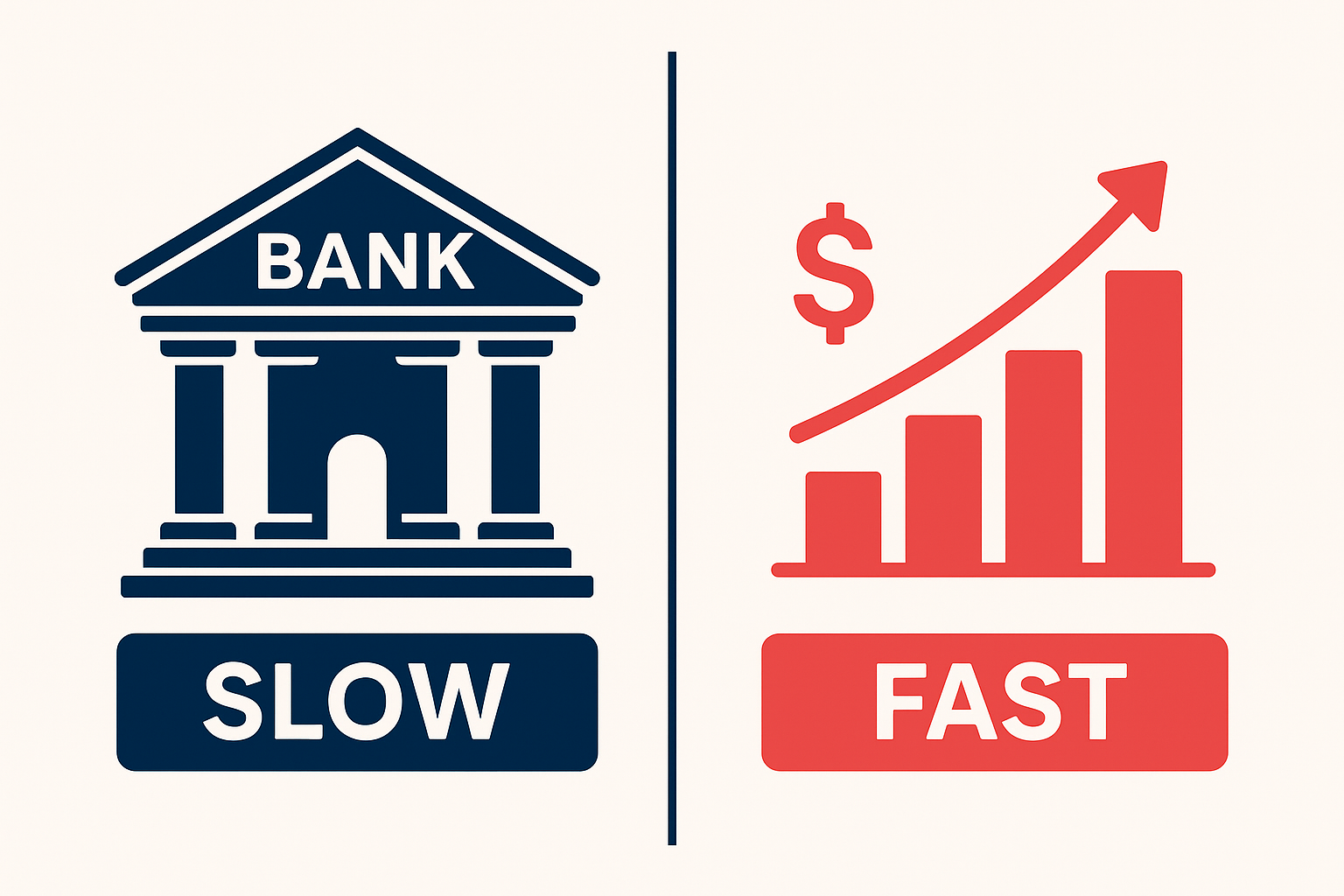
Comparing an SBA loan against alternative financing helps clarify which option fits a business’s timeline.
How to Apply for an SBA Loan in 6 Steps
Applying for an SBA loan follows a fairly predictable sequence. Therefore, understanding each step in advance can help reduce delays and frustration.
- Determine eligibility and loan purpose. Review your business revenue, time in business, and intended use of funds to identify which SBA loan program fits your situation before applying.
- Gather required documentation. Collect financial statements, tax returns, a business plan, and legal documents, since incomplete paperwork is one of the most common reasons for approval delays.
- Choose the right SBA loan program. Compare 7(a), 504, and microloan programs to match your funding amount and intended use with the program most likely to approve your request.
- Find an SBA-approved lender or financing partner. Work with an approved lender or a financing company that can match you with participating SBA lenders based on your business profile and qualifications.
- Submit your application and underwriting documents. Complete the formal application, submit supporting documents promptly, and respond quickly to underwriter requests to avoid unnecessary processing delays.
- Review terms and close on funding. Carefully review the interest rate, repayment schedule, and fees before signing, then complete closing steps to receive your business funding.
Alternative Financing When an SBA Loan Isn’t a Fit
Not every business can wait weeks or months for approval, and not every business meets strict SBA underwriting standards. Fortunately, other financing paths exist.
For example, working capital financing, business lines of credit, and revenue-based funding can provide capital in days rather than months. Meanwhile, businesses generating at least $20,000 in monthly revenue may qualify for financing options ranging from roughly $30,000 to $20 million, depending on qualifications and the funding partner’s requirements. Notably, exploring these options typically does not require a hard credit inquiry, which allows business owners to compare offers without affecting their credit score.
As a result, many businesses use a combination of financing tools over time, starting with faster alternative options while an SBA loan application is still in process. Learn more about the full range of options at USA Patriot Loans.

Discussing SBA loan alternatives with a financing advisor can help identify faster funding solutions.
Frequently Asked Questions About SBA Loans
What is an SBA loan?
An SBA loan is a business loan that is partially guaranteed by the U.S. Small Business Administration and issued through approved lenders. The guarantee reduces the lender’s risk, which often allows for longer repayment terms and competitive rates. For a deeper walkthrough, see our SBA Small Business Loan Guide: Rates, Terms & How to Qualify.
How does an SBA loan differ from a regular business loan?
Unlike a conventional bank loan, an SBA loan carries a government guarantee that covers a portion of the lender’s loss if the borrower defaults. This typically results in longer terms and lower down payments than standard commercial financing.
How long does it take to get an SBA loan?
Funding timelines vary, but traditional SBA loans often take 30 to 90 days due to underwriting and documentation requirements. Some SBA Express and alternative financing products move considerably faster.
What credit score do I need for an SBA loan?
Most SBA lenders look for a personal credit score in the mid-600s or higher, though requirements vary by lender and loan program. Strong business revenue and time in business can sometimes offset a lower score.
How much can I borrow with an SBA loan?
SBA loan amounts generally range from a few thousand dollars up to $5 million for 7(a) loans, though specific caps depend on the program. Businesses needing larger amounts may explore other financing structures.
What can SBA loan funds be used for?
SBA loan proceeds can typically cover working capital, equipment, real estate, inventory, refinancing existing debt, and business expansion. Specific allowable uses depend on the loan program selected.
What are common mistakes when applying for an SBA loan?
Common mistakes include incomplete documentation, applying for the wrong loan program, and underestimating how long underwriting takes. Business owners also sometimes overlook alternative financing while waiting on a slow approval.
Is an SBA loan hard to qualify for?
SBA loans generally have stricter documentation and underwriting requirements than short-term alternative financing. However, qualification depends heavily on revenue, credit history, and time in business.
What is the interest rate on an SBA loan?
SBA loan rates are usually tied to a base rate, such as the prime rate, plus a lender markup, often landing in the high single digits to low double digits. Rates vary by lender, program, and borrower qualifications.
Can startups get an SBA loan?
Startups can sometimes qualify for certain SBA programs, but most lenders prefer at least two years of operating history and consistent revenue. Newer businesses may find alternative financing more accessible in the short term.
What is the difference between SBA 7(a) and SBA 504 loans?
SBA 7(a) loans are flexible and can be used for working capital, equipment, or expansion, while SBA 504 loans are specifically designed for major fixed assets like real estate or heavy machinery. Terms, structures, and eligible uses differ between the two.
What happens if I am denied an SBA loan?
If an SBA loan application is denied, business owners can address the underlying issue, apply with a different lender, or explore alternative financing products with faster approval timelines. Many alternative options do not require a hard credit inquiry. For a deeper walkthrough, see our SBA Loans Lender: Complete Guide for Business Owners.
How can USA Patriot Loans help with SBA loan financing?
USA Patriot Loans helps connect qualified business owners with lenders offering SBA loan programs and other financing solutions based on their revenue and needs. The company does not lend its own capital but matches businesses with appropriate third-party funding partners nationwide.
Final Thoughts on Choosing an SBA Loan
In summary, an SBA loan can be a strong choice for established businesses that have time to navigate underwriting and want favorable long-term rates. However, businesses that need capital quickly, or that don’t yet meet strict SBA requirements, often benefit from exploring alternative financing alongside or instead of an SBA loan.
Therefore, comparing every available option, rather than assuming an SBA loan is the only path forward, gives business owners the clearest picture of what they can realistically secure. To review financing options tailored to your business’s revenue and goals, visit USA Patriot Loans and connect with a funding partner suited to your needs.