The difference between credit union and bank comes down to ownership, purpose, and how each institution treats borrowers. For small business owners comparing financing sources, however, that difference can also shape how quickly you get approved and how much a loan actually costs. This guide breaks down both options plainly, then explains where faster, more flexible commercial financing fits into the picture.
Quick Answer: A bank is a for-profit institution owned by shareholders, while a credit union is a nonprofit cooperative owned by its members. As a result, credit unions often offer lower rates and fees, but banks generally provide more loan products, higher borrowing limits, and fewer membership restrictions.
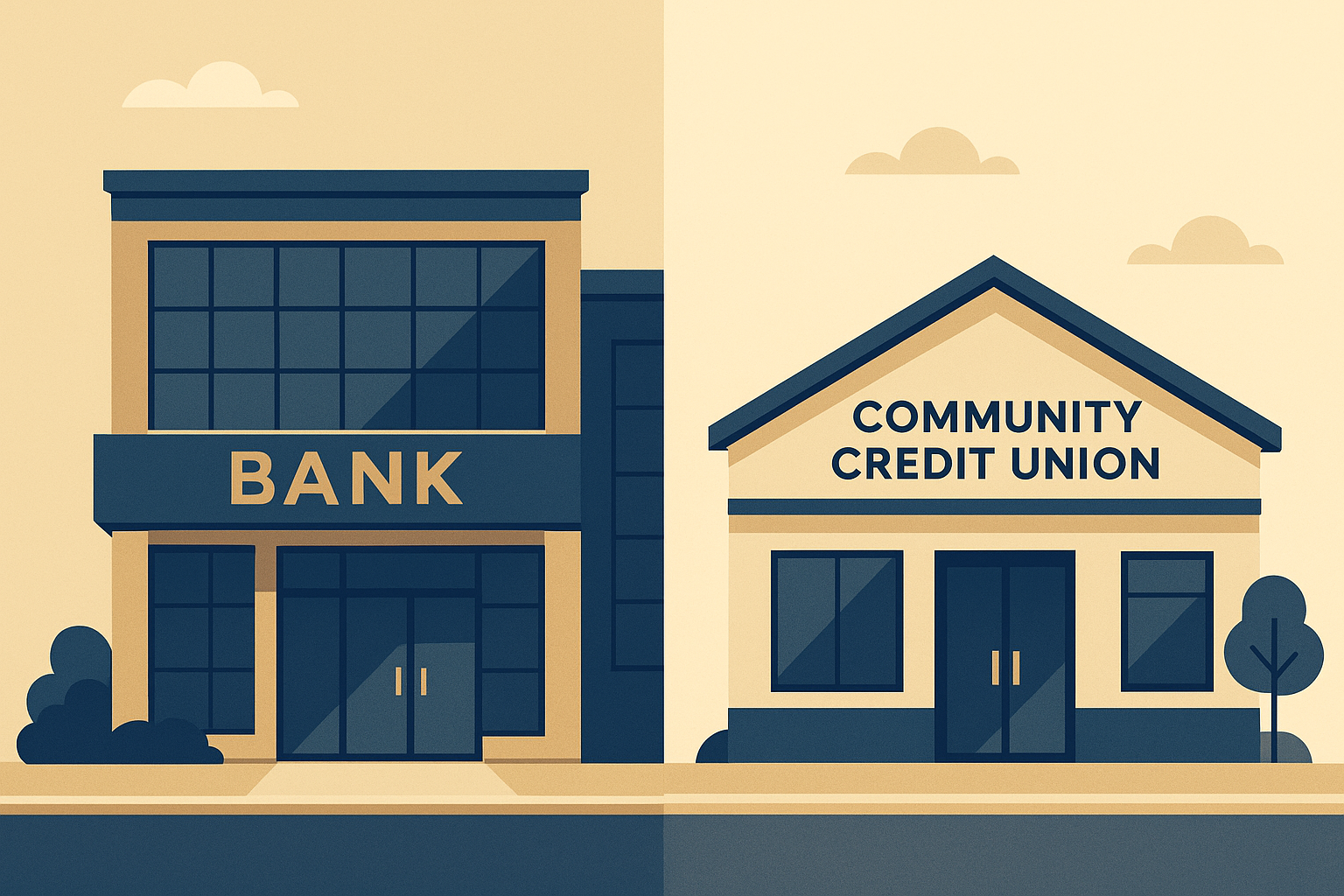
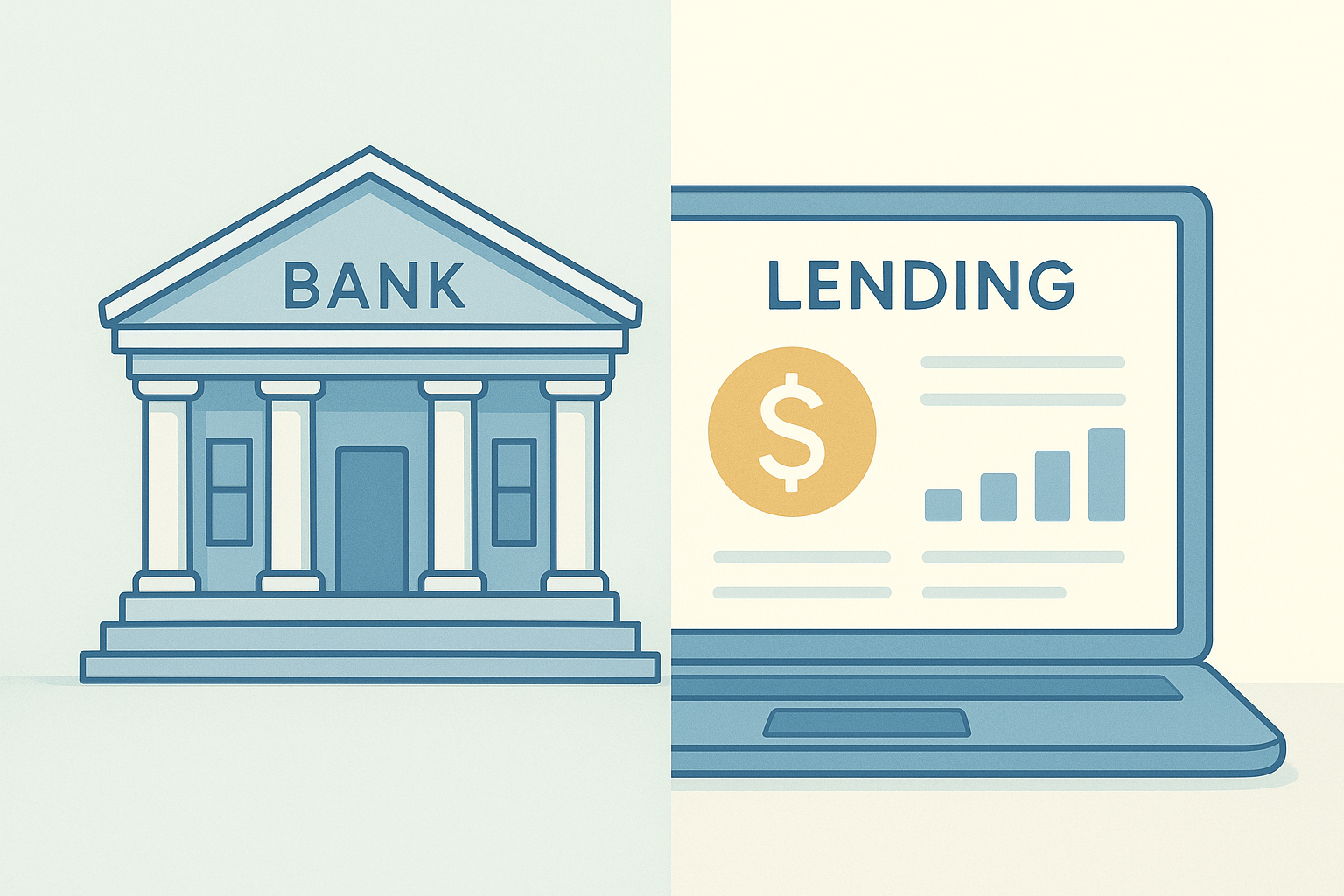
Understanding the difference between credit union and bank institutions helps business owners choose the right financing path.
What Is the Difference Between Credit Union and Bank Institutions?
The difference between credit union and bank institutions is primarily structural. A bank is a for-profit business, typically owned by shareholders, that generates revenue through interest, fees, and investment activity. A credit union, in contrast, is a nonprofit financial cooperative owned collectively by its members, who must usually share a common bond such as employer, location, or profession.
Because credit unions do not answer to shareholders, they generally return profits to members through lower loan rates and reduced fees. Banks, on the other hand, prioritize profitability and shareholder returns, which can mean higher fees but also more resources, more branches, and a wider range of financial products. According to the Wikipedia entry on credit unions, this cooperative structure dates back to 19th-century Europe and remains the defining feature that separates credit unions from traditional banks today.
Credit Union vs. Bank Ownership and Structure
Specifically, credit union members typically get one vote each, regardless of how much money they hold in an account. This democratic structure means major decisions, like electing a board of directors, are made collectively rather than by outside investors. In addition, credit unions are insured through the National Credit Union Administration (NCUA), a federal agency that protects deposits similarly to how the FDIC protects bank deposits.
Banks, meanwhile, are structured as corporations. Shareholders elect a board, and executives run daily operations with profitability as a central goal. As a result, banks often invest heavily in technology, physical branches, and specialized lending divisions, which can benefit borrowers who need complex commercial products such as SBA loans or large equipment financing packages.
How Traditional Banks Operate
Traditional banks operate on a wide scale, often across multiple states or nationally. Consequently, they tend to offer a broader menu of financial products, including checking accounts, mortgages, and various forms of business financing. For established businesses, this range can be an advantage, since a single bank may handle everything from payroll accounts to term loans.
However, that scale comes with tradeoffs. Larger banks frequently rely on standardized underwriting models, meaning approval decisions may hinge heavily on credit score thresholds and revenue benchmarks rather than individual business circumstances. In particular, this can make it harder for newer or smaller companies to secure fast approval, even when the business itself is healthy.
Bank Versus Credit Union: Key Differences for Business Owners
For business owners specifically, the bank versus credit union decision often comes down to a handful of practical factors. The table below summarizes the core distinctions.
| Factor | Bank | Credit Union |
|---|---|---|
| Ownership | Shareholders | Members |
| Profit goal | For-profit | Nonprofit |
| Eligibility | Open to public | Membership required |
| Loan product range | Broad | Often limited |
| Deposit insurance | FDIC | NCUA |
As the table shows, neither option is universally better. Instead, the right choice depends on your business’s eligibility, urgency, and the specific financing product you need. The FDIC and NCUA both maintain public resources explaining exactly how deposit insurance protections differ between the two institution types.

Comparing paperwork and terms is a key step before choosing a lender.
Which Option Better Serves Growing Businesses?
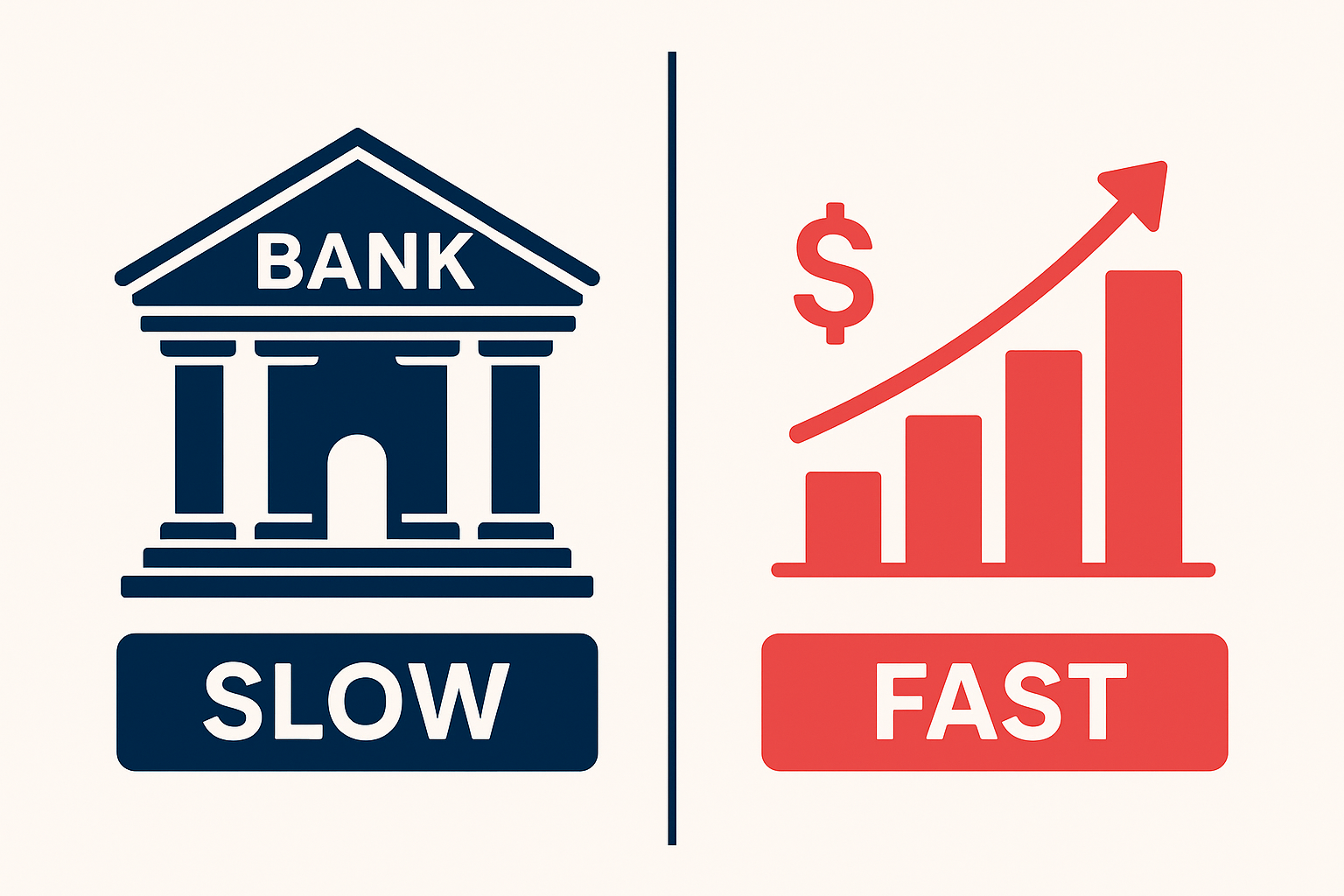
For fast-growing businesses, neither a bank nor a credit union is automatically the right fit. Growing companies often need larger loan amounts, flexible repayment structures, or funding within days rather than weeks. Unfortunately, both banks and credit unions typically rely on lengthy underwriting processes involving extensive documentation, tax returns, and collateral review.
According to NCUA data, credit unions collectively served more than 140 million members across the United States as of 2023, showing how widespread the model has become. Still, membership eligibility rules mean a business simply cannot join every credit union it might want to borrow from, which limits accessibility compared to a bank’s open enrollment.
Why Many Business Owners Look Beyond Banks and Credit Unions for Funding
Given the timelines and eligibility hurdles above, many small and medium-sized business owners turn to alternative commercial lenders instead. This is where a lender such as USA Patriot Loans becomes relevant. As a nationwide, disabled-veteran-owned business financing company, USA Patriot Loans works with established businesses generating at least $20,000 in monthly revenue to provide options including SBA loans, working capital loans, business lines of credit, equipment financing, and same-day business funding.
Unlike a traditional bank or credit union, alternative lenders often prioritize speed and flexibility over rigid, one-size-fits-all underwriting. Therefore, businesses that have been declined by a bank, or that simply cannot wait weeks for a decision, frequently find alternative financing to be a practical bridge. To see the full range of financing options and eligibility details, visit the why choose us overview for more detail on how the process works.
How to Decide Between a Credit Union and a Bank for Business Financing
Choosing the right financing source does not have to be overwhelming. Use the following steps to evaluate your options methodically.
- Define your funding timeline. Determine how quickly you need capital, since banks and credit unions can take weeks to fund a loan while alternative lenders may fund within days. For a deeper walkthrough, see our Capital Finance Guide: How to Fund Your Business Fast.
- Check membership and eligibility requirements. Confirm whether you qualify for credit union membership based on location, industry, or employer, since ineligible businesses cannot access credit union loan products at all.
- Compare rates, fees, and total loan cost. Request full rate and fee disclosures from each institution and calculate the total repayment cost, not just the advertised interest rate, before making a decision.
- Evaluate alternative financing if you are declined or need speed. If a bank or credit union denies your application or the process is too slow, explore alternative commercial lenders offering working capital, lines of credit, or same-day business funding.
Common Mistakes When Comparing Bank and Credit Union Loans
One frequent mistake is focusing solely on the advertised interest rate while ignoring origination fees, prepayment penalties, or collateral requirements. Another common error involves assuming approval is guaranteed simply because a business has an existing account relationship. In reality, both banks and credit unions run independent underwriting reviews for every loan application, regardless of account history.
Furthermore, some business owners wait too long to explore alternatives after a decline, which can create cash flow strain. Consequently, it often makes sense to research multiple financing paths simultaneously rather than sequentially, especially when working capital needs are time-sensitive.
Frequently Asked Questions About the Difference Between Credit Union and Bank
What is the main difference between credit union and bank?
The main difference between credit union and bank institutions is ownership: credit unions are member-owned nonprofits, while banks are for-profit companies owned by shareholders. This affects rates, fees, and how decisions get made.
Are credit unions safer than banks?
Both are considered safe because deposits are federally insured. Credit union deposits are insured by the NCUA, while bank deposits are insured by the FDIC, each up to $250,000 per depositor.
Do credit unions offer lower interest rates than banks?
Credit unions often offer lower loan rates and fees because they operate as nonprofits and return profits to members. However, rates vary widely by institution, credit profile, and loan type.
Can any business join a credit union?
No, credit unions require membership eligibility based on factors like location, employer, or industry association. This restriction can slow down or block access for businesses that don’t qualify.
Which is better for small business loans, a bank or a credit union?
It depends on your timeline and needs. Banks typically offer more loan products and higher limits, while credit unions may offer friendlier service, but both often involve lengthy underwriting for business financing.
How long does it take to get a business loan from a bank or credit union?
Traditional banks and credit unions often take two to eight weeks to approve and fund a business loan. This is significantly slower than alternative lenders that can fund in as little as 24 to 48 hours.
What are common mistakes business owners make when choosing between a bank and credit union?
A common mistake is assuming lower advertised rates always mean lower total cost, without factoring in fees, membership requirements, or approval timelines. Another mistake is not comparing alternative financing options for time-sensitive needs.
Do banks or credit unions have stricter loan requirements?
Both tend to require strong credit scores, collateral, and detailed financial documentation for business loans. Credit unions may be slightly more flexible for existing members, but requirements remain rigorous at both institution types.
Why do some businesses choose alternative lenders over banks and credit unions?
Businesses often choose alternative lenders for speed, flexibility, and higher approval rates when banks or credit unions decline them. Alternative lenders can also offer specialized products like merchant cash advances or revenue-based financing.
What is the cost difference between borrowing from a credit union versus a bank?
Credit unions sometimes charge lower fees and interest because they are not profit-driven, but the actual cost depends on the loan product, term, and your creditworthiness. Comparing annual percentage rates and total fees is the best way to evaluate cost.
Can a credit union offer the same business financing products as a bank?
Many credit unions offer business loans, lines of credit, and SBA loans similar to banks, but product variety is often more limited. Larger banks typically have more specialized commercial financing options available.
Is it harder to get approved at a bank or a credit union?
Approval difficulty depends on the institution, but both banks and credit unions apply conservative underwriting standards for business loans. This is why many established businesses with lower monthly revenue turn to alternative commercial lenders instead.
What documents do I need to apply for a business loan at a bank or credit union?
You typically need financial statements, tax returns, a business plan, and personal identification. Additional documents like collateral valuations or cash flow projections may also be required depending on the loan size.
Final Thoughts on Choosing a Financing Partner
Ultimately, the difference between credit union and bank institutions boils down to ownership, eligibility, and product range, while both share a common drawback for business owners: slow, standardized underwriting. In particular, businesses that need capital quickly, or that don’t fit neatly into traditional lending criteria, often benefit from exploring alternative commercial financing alongside banks and credit unions. Whether you ultimately choose a bank, a credit union, or a specialized lender, comparing rates, timelines, and eligibility requirements side by side remains the best way to secure the right funding for your business’s next stage of growth. For a closer look at additional financing options nationwide, visit USA Patriot Loans to review current programs.