
Category: Uncategorized

  • Business Loans for Companies Making $20k a Month Options

    Business Loans for Companies Making $20k a Month Options

    Business Loans for Companies Making $20k a Month Options

    Business loans for companies making $20k a month are more within reach than many owners assume, especially once revenue has been steady for six months or longer. Lenders view consistent monthly deposits of $20,000 or more as a sign of operational stability, which opens the door to a wide range of financing options. In addition, this revenue level typically qualifies businesses for products that were once reserved for larger companies, including SBA-backed loans and sizable working capital lines.

    Quick answer: Businesses generating at least $20,000 in monthly revenue generally qualify for SBA loans, working capital loans, business lines of credit, and revenue-based financing ranging from roughly $30,000 up to several million dollars, with approval often possible within 24 to 48 hours through alternative lenders.

    Small business owner reviewing financial documents before applying for business loans for companies making $20k a month

    Reviewing monthly revenue is the first step toward securing business loans for companies making $20k a month.

    What Are Business Loans for Companies Making $20k a Month?

    Business loans for companies making $20k a month are financing products built around a specific revenue benchmark that lenders use to gauge repayment ability. In practice, this means a business with roughly $240,000 in annual revenue can access term loans, lines of credit, equipment financing, and SBA programs. Consequently, owners at this revenue level are no longer limited to high-cost short-term options; they can often qualify for more favorable rates and longer repayment terms than businesses with lower or inconsistent income.

    Lenders typically verify this threshold by reviewing bank statements rather than relying solely on tax returns, which speeds up the process considerably. As a result, businesses with seasonal fluctuations can still qualify if their average monthly deposits meet the requirement over a three to six month period.

    Why $20,000 in Monthly Revenue Matters to Lenders

    Monthly revenue serves as a proxy for a business’s ability to handle regular loan payments without straining operations. For example, a lender reviewing an application will calculate the debt service coverage ratio, essentially comparing expected loan payments to incoming cash flow. Therefore, hitting the $20,000 mark signals enough cushion to absorb a new payment obligation.

    According to the Federal Reserve’s Small Business Credit Survey, access to capital remains one of the top operational challenges small business owners report year after year. In particular, businesses that can document steady revenue tend to move through underwriting faster and receive more competitive offers than those with inconsistent cash flow. If you want a deeper breakdown of how this specific revenue figure affects eligibility, see our full guide on qualifying with $20,000 in monthly revenue.

    Types of Financing Available at This Revenue Level

    Several loan types fit businesses generating $20,000 or more each month, and choosing the right one depends largely on the purpose of the funds. Below are the most common options small business owners consider.

    • SBA Loans: Government-backed financing with competitive rates, suited to long-term growth plans. Learn more directly from the U.S. Small Business Administration.
    • Working Capital Loans: Short-term funds for payroll, inventory, or day-to-day operations.
    • Business Lines of Credit: Revolving access to funds for recurring or unpredictable expenses.
    • Equipment Financing: Capital secured by the equipment itself, often with flexible terms.
    • Revenue-Based Financing: Repayment tied to a percentage of future sales rather than a fixed payment.
    • Merchant Cash Advances: Fast access to capital repaid through daily or weekly sales deductions.

    Similarly, invoice financing and short-term business loans can bridge gaps for companies waiting on customer payments. Those preparing for a larger project may also want to review options for business expansion financing before selecting a product.
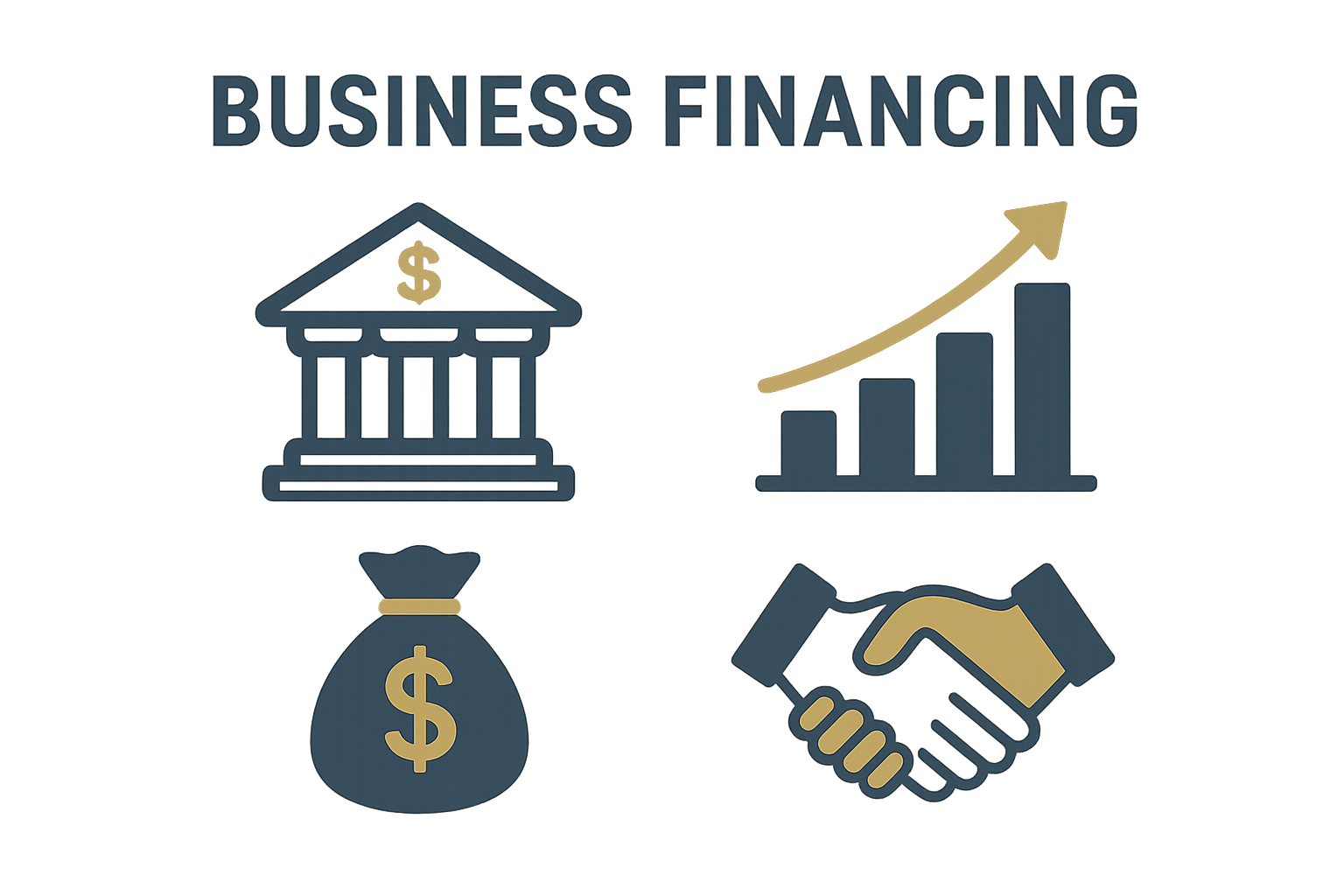
    Illustration of different business loan types including SBA loans, lines of credit, and working capital for small companies

    Comparing loan types helps owners match financing to their specific growth goals.

    How to Qualify: A Step-by-Step Process

    Qualifying for financing becomes much simpler when owners prepare in advance. The following steps outline a reliable path from initial review to funding.

    1. Confirm your average monthly revenue. Pull the last three to six months of business bank statements and calculate average monthly deposits to confirm you consistently meet the $20,000 revenue threshold most lenders require.
    2. Identify the right loan type. Match your funding need to a product, such as a term loan for equipment, a line of credit for cash flow gaps, or an SBA loan for long-term expansion financing.
    3. Gather required documents. Collect bank statements, a voided business check, government-issued identification, and business formation paperwork so your application can move through underwriting without delays.
    4. Submit your application and respond quickly. Complete the lender application accurately and respond promptly to any follow-up requests for documentation, since delayed responses are the most common cause of slower funding timelines.
    5. Compare offers before accepting funding. Review the total repayment amount, rate structure, and repayment schedule across any offers received, then accept the option that best matches your cash flow and growth plans.

    Notably, the U.S. Small Business Administration backed more than $27.5 billion in 7(a) loans during fiscal year 2023, showing how substantial government-supported financing has become for qualifying small businesses. For a broader walkthrough of this process, our guide on getting fast funding for your business covers additional preparation tips.

    Common Mistakes to Avoid During the Application Process

    Even qualified businesses sometimes face delays or denials due to avoidable errors. First, applying to multiple lenders at once without understanding each offer can create confusion and unnecessary credit inquiries. Second, owners sometimes focus only on the interest rate while ignoring fees, factor rates, or prepayment penalties that affect the true cost of borrowing.

    Furthermore, inconsistent or incomplete bank statements are one of the most frequent causes of processing delays. As a result, keeping clean, organized records throughout the year makes the entire application process noticeably smoother. Owners exploring working capital, we recommend reviewing small business loans with fast approval and minimal paperwork to understand which lenders prioritize speed without sacrificing clarity on terms.

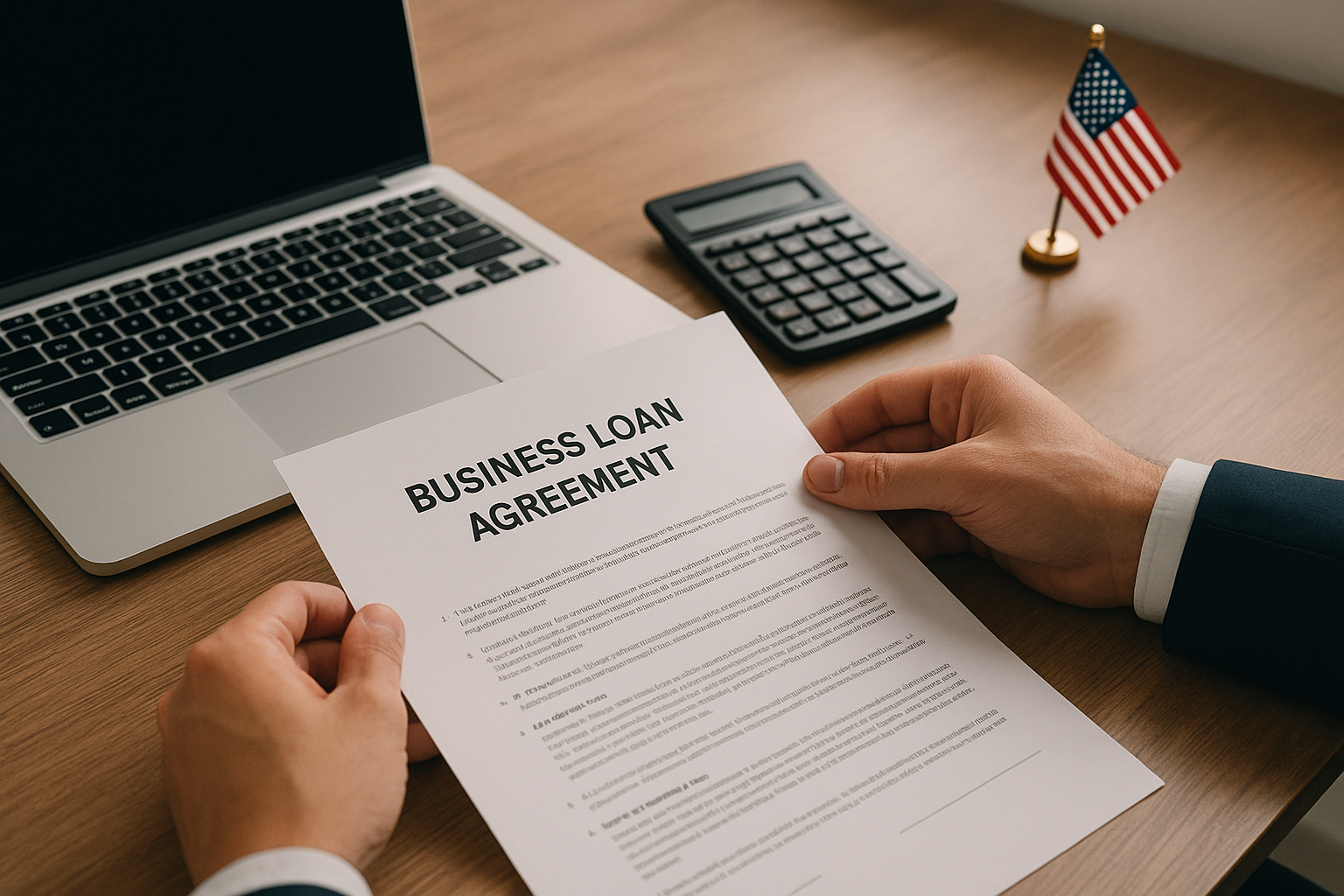
    Business owner and lender finalizing approval on a small business loan agreement

    Clear documentation and consistent revenue records speed up final approval.

    How USA Patriot Loans Supports Businesses at This Revenue Level

    USA Patriot Loans is a nationwide, disabled-veteran-owned business financing company founded in November 2023 and headquartered in Pennsylvania. The company works with established small and medium-sized businesses across all 50 states that generate at least $20,000 in monthly revenue, offering funding amounts from $30,000 up to $20 million. Options include SBA loans, working capital loans, business lines of credit, equipment financing, revenue-based financing, invoice financing, and same-day business funding for urgent needs.

    Because the company focuses specifically on this segment of established small businesses, applicants often experience fewer delays than they would with traditional banks. Owners can review current eligibility criteria and funding ranges directly on the USA Patriot Loans website, or explore the small companies loan guide for 2026 for a broader look at available programs.

    Working Capital and Cash Flow: What to Know Before Borrowing

    Working capital, the difference between current assets and current liabilities, is often the core reason businesses seek financing in the first place. In other words, even profitable companies can struggle if cash isn’t available when bills, payroll, or inventory purchases come due. Therefore, matching the right loan structure to your cash flow pattern matters just as much as securing approval.

    For instance, a business with predictable monthly revenue might prefer a term loan with fixed payments, while a seasonal business may benefit more from a flexible line of credit. Above all, understanding your own cash flow cycle before applying helps ensure the financing actually solves the problem it’s meant to address.

    Frequently Asked Questions

    What are business loans for companies making $20k a month?

    Business loans for companies making $20k a month are financing products designed for established small businesses with at least $20,000 in average monthly revenue. They include SBA loans, working capital loans, lines of credit, and revenue-based financing, typically ranging from $30,000 to $20 million depending on lender criteria.

    How much can a business with $20,000 in monthly revenue borrow?

    Most lenders base loan amounts on annualized revenue, so a business generating $20,000 monthly can often qualify for $30,000 to $150,000, though SBA loans and secured products may allow more. Actual amounts depend on time in business, credit profile, and cash flow stability.

    What credit score is needed for business loans for companies making $20k a month?

    Many alternative lenders approve applicants with credit scores as low as 550 to 600, while SBA and bank loans typically require 650 or higher. Revenue consistency often matters more than credit score for revenue-based financing and working capital products.

    How long does approval take for a small business loan at this revenue level?

    Online and alternative lenders can approve applications within 24 to 48 hours, with funding often arriving the same day or next business day. Traditional bank and SBA loans generally take two to eight weeks due to additional underwriting.

    What documents are required to apply?

    Lenders typically request three to six months of business bank statements, a government-issued ID, a voided business check, and basic business formation documents. Larger loans or SBA financing may also require tax returns and a profit and loss statement.

    What is the difference between a term loan and a business line of credit?

    A term loan provides a lump sum repaid over a fixed schedule, making it suited to one-time investments like equipment or expansion. A business line of credit offers revolving access to funds, which is better for managing cash flow gaps or recurring short-term needs.

    Can a newer business with $20k monthly revenue still qualify?

    Yes, many alternative lenders accept businesses operating for as little as six months if monthly revenue is consistent. SBA loans and traditional banks usually prefer two or more years in operation, so newer businesses often start with working capital or revenue-based options.

    How much do business loans for companies making $20k a month cost?

    Costs vary widely by product: SBA loans may carry annual percentage rates near 10 to 15 percent, while merchant cash advances and short-term loans often use factor rates that translate to higher effective costs. Comparing total repayment amount, not just the headline rate, is essential.

    What mistakes should business owners avoid when applying?

    Common mistakes include applying to multiple lenders simultaneously without understanding terms, underestimating total repayment cost, and submitting inconsistent bank statements. Reviewing the full repayment schedule beforehand helps avoid delays.

    Is SBA financing available for businesses generating $20,000 a month?

    Yes, SBA 7(a) and microloan programs are available to qualifying small businesses at this revenue level, provided they meet SBA size standards and underwriting criteria. SBA loans often require more documentation but typically offer lower rates and longer repayment terms.

    What is revenue-based financing?

    Revenue-based financing provides capital in exchange for a fixed percentage of future revenue until the advance is repaid, rather than a fixed monthly payment. It is often used by businesses with fluctuating income who need flexible repayment tied to sales performance.

    How does a lender verify monthly revenue?

    Lenders typically review three to six months of business bank statements to confirm average monthly deposits and cash flow consistency. Some lenders also connect directly to accounting software or request merchant processing statements for additional verification.

    Can I get same-day funding for my small business?

    Yes, many short-term loans, lines of credit, and merchant cash advances can fund the same business day once approved and documentation is verified. Same-day funding is most common with alternative lenders rather than traditional banks or SBA programs.

    Final Thoughts

    In summary, business loans for companies making $20k a month are far more accessible than many owners expect, provided revenue is consistent and documentation is ready. From SBA loans and working capital to lines of credit and revenue-based financing, there’s a product suited to nearly every stage of growth. Ultimately, the key is matching the right loan type to your specific cash flow needs and comparing total costs before accepting an offer. For businesses ready to move forward, reviewing current options through a lender experienced with this exact revenue range, such as USA Patriot Loans, is a practical next step toward securing the capital your business needs.


  • Short Term Loans for Business Growth: Fast Funding Guide

    Short Term Loans for Business Growth: Fast Funding Guide

    Short Term Loans for Business Growth: Fast Funding Guide

    Short term loans for business growth are designed to give small and medium-sized businesses quick access to capital when expansion opportunities arise. Unlike long-term bank loans that can take months to close, these financing options typically fund within days, which means owners can seize opportunities before they disappear. For example, a business might use short-term financing to stock up on inventory before a busy season, hire additional staff, or open a second location. According to the Federal Reserve’s Small Business Credit Survey, nearly two-thirds of small businesses that sought financing cited working capital and expansion as their primary reason. As a result, this guide explains how short term loans for business growth work, when they make sense, and how to qualify quickly.

    Quick answer: Short term loans for business growth provide a lump sum of capital, usually repaid within 3 to 24 months, so established businesses can fund expansion needs such as hiring, equipment, or inventory without waiting weeks for a traditional bank loan.

    What Are Short Term Loans for Business Growth?

    Short term loans for business growth are financing products that provide a one-time sum of capital, typically repaid over a period of 3 to 24 months. In contrast to a traditional term loan, which might stretch across five or ten years, these loans emphasize speed and accessibility over long repayment horizons. Because of that, approval decisions often come back in hours rather than weeks.

    Businesses generally use this type of financing for specific, time-sensitive goals rather than open-ended spending. For instance, a landscaping company might borrow to purchase equipment ahead of a busy spring season, while a retailer might use funds to restock inventory before a holiday rush. Since the repayment window is shorter, the total interest paid is often lower than a longer-term loan, even though the periodic payments are higher.

    Small business owner reviewing short term loans for business growth options

    Reviewing short term loans for business growth helps owners match funding to real expansion timelines.

    How Short-Term Business Financing Fuels Expansion

    Short-term business financing fuels expansion by closing the gap between an opportunity and the cash needed to act on it. Specifically, many growth moments are unpredictable: a key supplier offers a bulk discount, a competitor closes and opens up new customers, or a seasonal surge requires extra staff. In each case, waiting months for a conventional loan would mean missing the window entirely.

    In addition, short-term financing can bridge payroll during a temporary slow period, cover a down payment on equipment, or fund a marketing push tied to a specific event. Because the repayment schedule is compressed, businesses can treat the loan as a tool for a defined project rather than a permanent part of their balance sheet. You can review current structures for this type of funding directly at USA Patriot Loans, which works with established businesses nationwide.

    Key Benefits of Short-Term Growth Loans

    • Funding often arrives within 24 to 48 hours, as described in this guide to fast business funding.
    • Less paperwork than conventional bank term loans, since underwriting focuses on revenue trends.
    • Shorter repayment windows reduce total interest paid compared to some long-term products.
    • Flexible use cases, from inventory and payroll to equipment and emergency repairs.

    How to Qualify for Fast Business Growth Funding

    Qualifying for short term loans for business growth is generally more straightforward than qualifying for a conventional bank loan. However, lenders still want to see consistent revenue and a clear purpose for the funds. The process below outlines the typical path from preparation to funding.

    1. Assess revenue and cash flow needs. Review your monthly revenue, existing expenses, and cash flow patterns to determine exactly how much funding your growth plan requires, which prevents overborrowing.
    2. Gather financial documentation. Collect recent bank statements, basic tax returns, and proof of business ownership so your application can move through underwriting without unnecessary delays.
    3. Define the growth use case. Identify the specific purpose for the funds, such as inventory, equipment, staffing, or a new location, since lenders often ask how capital will be used.
    4. Compare lenders and loan terms. Evaluate at least two or three lenders on repayment terms, total cost, funding speed, and flexibility before choosing an offer that fits your timeline.
    5. Submit the application and review the offer. Submit documentation, respond promptly to any lender follow-up questions, and carefully review the total repayment amount before signing the agreement.

    Most lenders expect at least $20,000 in average monthly revenue and a minimum time in business, though exact requirements vary. For a deeper walkthrough of the broader lending process, this small business lending guide covers documentation and timelines in more detail. Similarly, the U.S. Small Business Administration publishes general guidance on how lenders evaluate small business borrowers.

    Entrepreneur preparing documents to apply for a short-term business loan

    Organized documentation speeds up approval for short term loans for business growth.

    Short-Term Loans vs. Other Business Financing Options

    Short-term loans are not the only way to fund growth, and in practice, they work best alongside other tools depending on the goal. For instance, a business line of credit offers revolving access to funds for ongoing, unpredictable needs, while a short-term loan delivers one lump sum for a defined project. Meanwhile, a longer term loan for expanding businesses may suit a major capital investment with a multi-year payback period.

    Short-Term Loan

    One lump sum, fixed repayment schedule, typically 3 to 24 months, best for a specific growth project.

    Business Line of Credit

    Revolving access to funds, draw and repay repeatedly, suited to ongoing or seasonal cash flow gaps.

    Term Loan

    Larger amounts, longer repayment, best for major equipment or expansion investments paid off over years.

    Furthermore, understanding the role of working capital helps clarify which product fits best. As Investopedia explains, working capital represents the difference between current assets and current liabilities, and it directly affects how much flexibility a business has to take on short-term debt.

    Common Mistakes to Avoid With Short-Term Business Loans

    Even though short-term financing is fast, businesses still make avoidable mistakes. First, borrowing more than necessary can strain daily cash flow once repayments begin. Second, stacking multiple short-term loans at once often leads to repayment conflicts that are difficult to untangle. Third, some owners use short-term capital for long-term assets, which mismatches the repayment timeline with the return on investment.

    Therefore, before signing any agreement, it helps to calculate the total repayment amount rather than focusing only on the periodic payment. Comparing at least two or three offers, as outlined in this guide on short-term business loans with low interest, can prevent overpaying for speed.

    Choosing the Right Lender for Business Growth Loans

    Choosing a lender matters just as much as choosing the right loan type. Specifically, look for transparent pricing, clear repayment terms, and a straightforward application process. A disabled-veteran-owned lender such as USA Patriot Loans, for example, works with established businesses nationwide generating at least $20,000 in monthly revenue, offering amounts from $30,000 to $20 million across products including working capital loans, lines of credit, and same-day business funding.

    In contrast, a lender with vague terms or pressure tactics is usually a sign to keep comparing. Above all, a trustworthy lender will walk through total repayment cost before asking for a signature.

    Lender and small business owner finalizing a short-term growth loan agreement

    Finalizing short term loans for business growth works best with a transparent, responsive lender.

    Frequently Asked Questions About Short Term Loans for Business Growth

    What are short term loans for business growth?

    Short term loans for business growth are financing products that give established businesses a lump sum of capital, usually repaid within 3 to 24 months, used to fund expansion activities like hiring, equipment, or inventory. They prioritize speed of funding over long repayment schedules.

    How fast can a business receive short-term growth funding?

    Many lenders, including online and alternative finance companies, can approve and fund short-term loans within 24 to 48 hours once documentation is submitted. Traditional banks typically take several weeks longer for the same amount.

    Why do small businesses use short-term loans instead of long-term loans?

    Businesses often choose short-term loans because they fund quickly and require less paperwork than long-term bank loans. They are ideal for time-sensitive opportunities, such as seasonal inventory or a short gap in cash flow.

    How much can a business typically borrow with a short-term growth loan?

    Loan amounts commonly range from $30,000 to $20 million, depending on monthly revenue, time in business, and the lender’s underwriting criteria. Most small businesses qualify based on consistent monthly revenue rather than collateral alone.

    What credit score is needed to qualify for a short-term business loan?

    Many alternative lenders accept credit scores in the mid-500s to 600s, since they weigh revenue and cash flow more heavily than personal credit. However, stronger credit typically unlocks better rates and terms.

    How long are repayment terms for short-term business financing?

    Repayment terms generally range from 3 to 24 months, with some products offering daily or weekly automatic payments instead of monthly installments. Shorter terms usually mean higher payment frequency but lower total interest paid.

    What is the difference between a short-term loan and a line of credit?

    A short-term loan provides one lump sum repaid on a fixed schedule, while a business line of credit offers revolving access to funds that can be drawn and repaid repeatedly. Lines of credit suit ongoing needs, while loans suit one-time growth projects.

    What are common mistakes businesses make when using short-term loans for growth?

    Common mistakes include borrowing more than needed, failing to compare total repayment costs, and using short-term capital for long-term assets. Overlapping multiple short-term loans at once can also strain daily cash flow.

    What documents are required to apply for short-term business funding?

    Lenders typically request recent bank statements, basic tax returns, and a government-issued ID, along with proof of business ownership. Some lenders also request a short explanation of how the funds will be used.

    Can startups qualify for short-term growth loans?

    Most short-term growth loans are designed for established businesses with at least several months of operating history and consistent monthly revenue. Brand-new startups without revenue history generally have fewer short-term loan options.

    What are the best practices for using short-term loans to grow a business?

    Best practices include matching the loan term to the expected return timeline, calculating total repayment cost before signing, and avoiding stacking multiple loans simultaneously. It also helps to compare at least two or three lenders before committing.

    How much does a short-term business loan cost in fees and interest?

    Costs vary widely by lender and risk profile, often expressed as a factor rate or annual percentage rate rather than simple interest. Businesses should always ask for the total repayment amount, not just the periodic payment, before accepting an offer.

    Final Thoughts

    In summary, short term loans for business growth give established businesses a practical way to act on time-sensitive opportunities without waiting months for traditional financing. They work best when matched to a specific project, backed by clear documentation, and compared across a few lenders before signing. As a result, businesses that plan their borrowing carefully can fund expansion, inventory, hiring, or equipment needs while keeping repayment manageable. For businesses ready to explore options, resources like this USA Patriot Loans overview and the broader concept of working capital offer a solid starting point for deciding how much to borrow and when.

  • Fixed Rate Small Business Loans: Rates & How to Qualify

    Fixed Rate Small Business Loans: Rates & How to Qualify

    Fixed Rate Small Business Loans: Rates & How to Qualify

    Fixed rate small business loans give business owners a predictable way to borrow money because the interest rate, and therefore the monthly payment, never changes over the life of the loan. For companies trying to manage cash flow around payroll, inventory, or expansion costs, that predictability can matter more than chasing the lowest possible starting rate. This guide explains how fixed rate financing works, who typically qualifies, and how to compare it against other funding options before you apply.

    Quick answer: Fixed rate small business loans lock your interest rate for the entire repayment term, keeping monthly payments the same from the first installment to the last. They are commonly used for term loans, SBA loans, and equipment financing, and they suit businesses that want stable, predictable budgeting over flexibility.

    Business owner reviewing fixed rate small business loans paperwork with a lender

    Reviewing fixed rate small business loans paperwork with a lender before signing.

    What Are Fixed Rate Small Business Loans?

    Fixed rate small business loans are financing products where the lender sets one interest rate at closing, and that rate stays the same for the entire repayment term. As a result, the monthly principal and interest payment is identical from the first payment to the last, unlike variable rate loans that fluctuate with an index such as the prime rate.

    This structure is common across several financing types, including term loans, equipment financing, and certain SBA loan programs. According to the U.S. Small Business Administration, lenders participating in SBA programs can offer either fixed or variable rates, but fixed rate caps are set relative to the prime rate published by the Federal Reserve. In particular, this gives borrowers a transparent ceiling on how high the rate can go, even before the loan is approved.

    How Do Fixed Interest Rate Business Loans Work?

    Once a lender approves a fixed rate business loan, the interest rate is built into an amortization schedule that spreads payments evenly across the term. Each payment includes a portion of principal and a portion of interest, and that split shifts slightly over time, but the total payment amount itself stays constant.

    For example, a business borrowing $150,000 over five years at a fixed rate will pay the same amount every month regardless of what happens to broader market interest rates. In contrast, a variable rate loan tied to the prime rate could see payments rise if the Federal Reserve raises rates during the loan term. Readers who want a deeper breakdown of how banks set these benchmarks can review our guide on how bank interest rates affect small business loans for additional context.

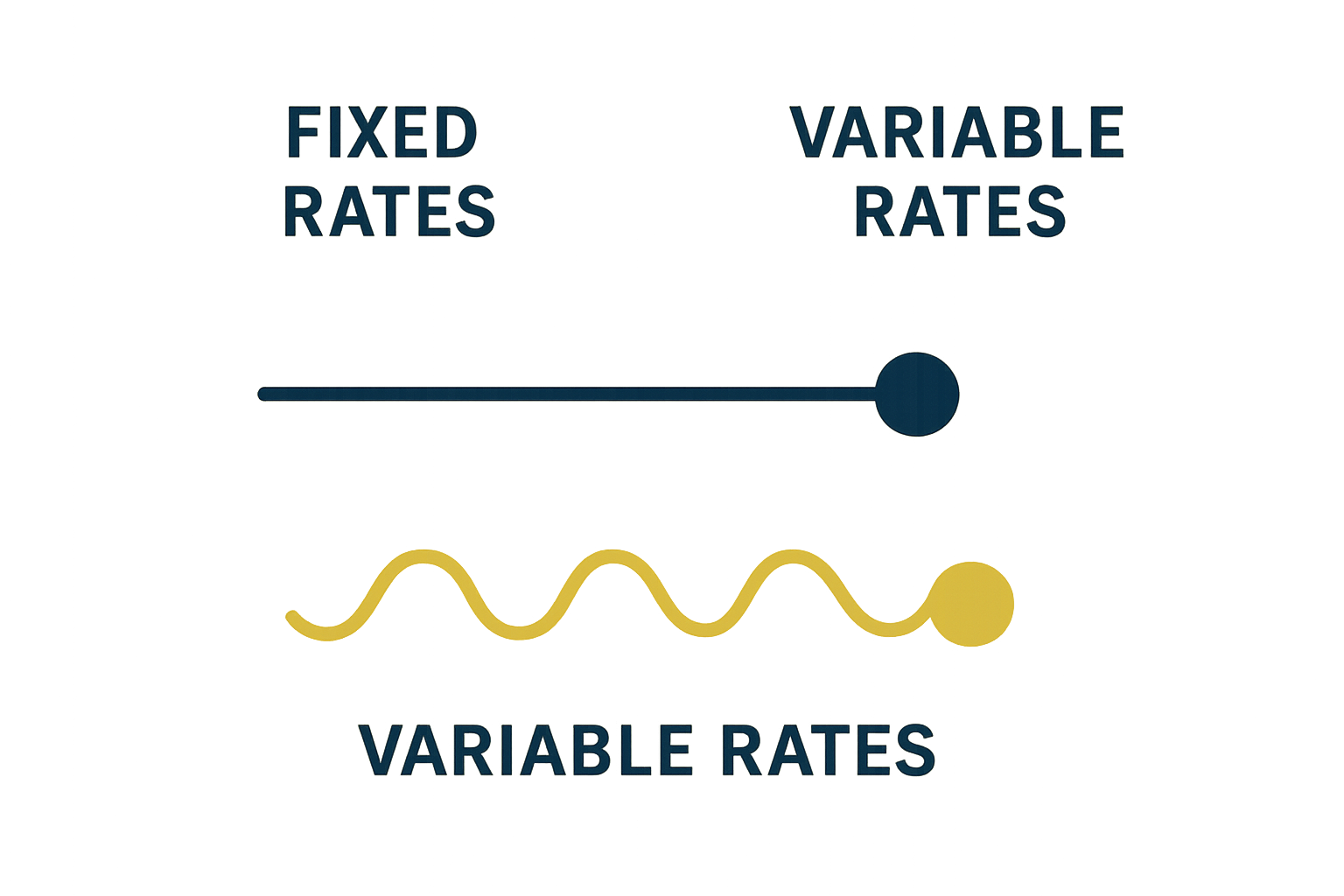
    Chart comparing fixed and variable interest rates for business financing

    Fixed rates stay flat for the full term, while variable rates move with the market.

    Fixed Rate vs. Variable Rate Small Business Financing

    Choosing between fixed and variable rate financing usually comes down to how much certainty a business needs. Fixed rates offer stable monthly payments, which simplifies budgeting and forecasting. Variable rates, however, sometimes start lower and can save money if benchmark rates fall during the loan term.

    Fixed Rate

    Predictable payments, protection from rising rates, easier long-term budgeting.

    Variable Rate

    Potentially lower starting rate, but payments can rise if market rates increase.

    Businesses weighing short-term financing against longer commitments may also want to compare options in our article on short-term business loans with low interest, since term length directly affects which rate structure makes more sense.

    Benefits of Choosing Fixed Rate Small Business Loans

    Fixed rate small business loans offer several practical advantages beyond simple predictability. First, they make it easier to forecast cash flow months or years in advance, since the payment obligation never shifts. Second, they protect borrowers from rate increases driven by Federal Reserve policy changes, which matters for businesses with tight margins.

    Additionally, fixed rate loans tend to simplify internal accounting and lender reporting, since the interest expense line item stays consistent. For businesses planning large purchases or expansions, that stability can reduce financial risk considerably.

    Who Qualifies for Fixed Rate Small Business Financing?

    Qualification requirements vary by lender, but most fixed rate loan programs look for established businesses with steady revenue, typically at least $20,000 in monthly income, along with a reasonable personal credit history. Time in business also matters; lenders generally prefer companies operating for a year or more.

    The SBA notes that 7(a) loan rate caps are calculated using the prime rate plus a margin that depends on loan size and maturity, which means businesses with stronger qualifications often secure more favorable fixed terms. Specifically, larger loans with longer repayment periods tend to carry higher rate ceilings than smaller, shorter-term loans. For a broader look at qualification standards across lender types, see our nationwide comparison of top lenders for small business loans.

    How to Apply for a Fixed Rate Small Business Loan

    Applying for fixed rate financing follows a fairly consistent process across most lenders. The following steps outline what to expect from start to funding.

    1. Review your financials. Gather recent bank statements, tax returns, and profit and loss reports so lenders can accurately assess your revenue and repayment capacity.
    2. Determine how much funding you need. Calculate the exact amount required for your project, whether it is working capital, equipment, or expansion, to avoid over-borrowing or under-funding your plans.
    3. Compare lenders and rate structures. Request quotes from multiple lenders and compare fixed interest rate offers, fees, and repayment terms side by side before committing to one option.
    4. Submit your application and documentation. Complete the lender’s application and upload supporting documents promptly, since missing paperwork is the most common cause of funding delays.
    5. Review and sign the final loan agreement. Carefully read the repayment schedule, fees, and any prepayment terms before signing, then confirm funding details with your lender to begin receiving capital.

    Businesses that need capital quickly should also review our guide on how to get funded fast, which covers ways to speed up documentation and approval.

    Small business owner signing a loan agreement at a modern office desk

    Signing the final agreement is the last step before funding arrives.

    Where to Find Fixed Rate Small Business Loans Nationwide

    Banks, credit unions, SBA-approved lenders, and alternative financing companies all offer versions of fixed rate small business loans, though terms and speed of funding vary widely. Traditional banks often provide the lowest rates but require more documentation and longer approval timelines, while alternative lenders can move faster with more flexible underwriting.

    USA Patriot Loans, a disabled-veteran-owned nationwide lending company, works with established small and medium-sized businesses seeking $30,000 to $20 million in working capital or commercial financing, including term loans, SBA loans, and equipment financing options with fixed rate structures. For businesses that also want to minimize paperwork during the process, our overview of fast approval loans with minimal paperwork outlines additional options worth comparing.

    Frequently Asked Questions About Fixed Rate Small Business Loans

    What are fixed rate small business loans?

    Fixed rate small business loans are financing products where the interest rate stays the same for the entire loan term, so monthly payments never change. This makes budgeting easier because owners know exactly what they owe each month regardless of market rate swings.

    How do fixed rate small business loans differ from variable rate loans?

    Fixed rate loans lock in one interest rate for the life of the loan, while variable rate loans move up or down with an index like the prime rate. Variable loans can start lower but carry the risk of rising payments later.

    What credit score is needed to qualify for fixed rate small business loans?

    Most lenders look for a personal credit score in the mid-600s or higher, though requirements vary by lender and loan type. Strong revenue and time in business can sometimes offset a lower credit score.

    How much can I borrow with a fixed rate business loan?

    Loan amounts typically range from around $30,000 to $20 million depending on the lender, collateral, and the business’s annual revenue. Larger amounts usually require stronger financials and sometimes collateral.

    Are SBA loans fixed or variable rate?

    SBA loans can be structured as either fixed or variable rate, depending on the loan program and lender. The U.S. Small Business Administration sets maximum rate caps for both options based on the prime rate.

    How long does it take to get approved for a fixed rate small business loan?

    Approval timelines range from same-day decisions with alternative lenders to several weeks for traditional bank or SBA loans. Funding speed often depends on how quickly the business supplies complete documentation.

    What documents are required to apply for a fixed rate business loan?

    Lenders generally request recent bank statements, tax returns, a profit and loss statement, and proof of business ownership. Some lenders also ask for a business plan or collateral details for larger loan amounts.

    Can startups get fixed rate small business loans?

    Startups can qualify in some cases, but most fixed rate loan programs favor businesses with at least one to two years of operating history and consistent monthly revenue. Newer businesses may need to consider alternative financing first.

    What is the typical repayment term for a fixed rate business loan?

    Repayment terms commonly range from one to ten years, with shorter terms for working capital needs and longer terms for equipment or expansion financing. Term length directly affects the size of the monthly payment.

    Is a fixed rate always better than a variable rate for small business financing?

    Not always. Fixed rates offer predictability, which suits businesses that prioritize stable budgeting, while variable rates can save money if market rates fall. The right choice depends on cash flow stability and risk tolerance.

    What mistakes do business owners make when choosing fixed rate small business loans?

    A common mistake is focusing only on the interest rate while ignoring fees, prepayment penalties, and total repayment cost. Another is borrowing more than the business can comfortably repay from monthly cash flow.

    How much do fixed rate small business loans typically cost in fees?

    Fees vary by lender but often include an origination fee of one to five percent of the loan amount, plus possible underwriting or closing costs. Reviewing the full cost breakdown before signing helps avoid surprises.

    Final Thoughts on Fixed Rate Small Business Loans

    In summary, fixed rate small business loans remain one of the most predictable ways for established businesses to fund growth, cover working capital gaps, or finance equipment without worrying about shifting payments. Because the rate never changes, owners can budget with confidence and avoid surprises tied to Federal Reserve rate decisions. Before applying, however, it pays to compare lenders, review fee structures, and confirm the repayment term fits your cash flow. Businesses ready to explore options nationwide can start by visiting USA Patriot Loans to discuss fixed rate small business loans tailored to their funding needs.

  • Business Line of Credit Lending USA: Complete Guide

    Business Line of Credit Lending USA: Complete Guide

    Business Line of Credit Lending USA: Complete Guide

    Business line of credit lending USA programs give small business owners a flexible way to access working capital without committing to a rigid, lump-sum loan. Instead of borrowing one large amount, a business draws funds as needed, repays them, and borrows again, which makes this type of financing especially useful for managing payroll, inventory, or seasonal cash flow gaps. Nationwide lenders, including USA Patriot Loans, have made this type of funding faster and more accessible for established businesses generating at least $20,000 in monthly revenue.

    Direct Answer: Business line of credit lending USA refers to revolving credit products offered by banks and alternative lenders that let qualified businesses draw, repay, and reuse funds up to an approved limit, typically ranging from $30,000 to $20 million. Approval generally depends on monthly revenue, time in business, and credit history rather than collateral alone.

    What Is Business Line of Credit Lending USA?

    Business line of credit lending USA is a form of revolving financing that allows a business to borrow up to a predetermined limit, repay what it uses, and draw again without reapplying. In other words, it functions similarly to a credit card but typically carries lower rates and higher limits designed for business operations.

    Unlike a traditional term loan, interest usually accrues only on the amount drawn, not the full approved limit. Consequently, a business line of credit tends to be a more cost-efficient option for recurring or unpredictable expenses such as covering a slow sales month or purchasing inventory ahead of a busy season.

    According to the U.S. Small Business Administration, access to working capital remains one of the top challenges reported by small business owners nationwide. As a result, flexible credit products like revolving lines have become an increasingly popular alternative to conventional bank loans.

    Small business owner reviewing business line of credit lending USA approval details on a laptop

    Reviewing financing options is the first step toward securing business line of credit lending USA approval.

    How Small Business Credit Line Financing Works Nationwide

    Nationwide lenders evaluate applications based on several key factors, including monthly revenue, time in business, and personal or business credit history. Specifically, most alternative lenders prioritize cash flow over collateral, which allows businesses without significant assets to still qualify.

    Once approved, funds become available through an online portal or direct transfer, and the business can draw any amount up to the approved limit. Repayments then restore available credit, creating a reusable funding source rather than a one-time disbursement.

    For businesses weighing their options, understanding how to choose between a business line of credit and a term loan can clarify which structure best fits ongoing versus one-time funding needs.

    Business Line of Credit vs. Term Loans: Which Fits Your Business?

    A term loan delivers a lump sum upfront, repaid over a fixed schedule with set payments. In contrast, a line of credit offers ongoing access to capital, making it better suited for recurring expenses like payroll, supplies, or short-term cash flow dips.

    Businesses planning a large, one-time investment, such as equipment financing or a major expansion, may still benefit more from a term loan. However, businesses that need flexibility for variable or seasonal costs often find a revolving line more practical overall.

    Step-by-Step Guide to Securing a Business Credit Line

    Applying for financing can feel overwhelming without a clear process. Therefore, following a structured approach helps business owners avoid delays and improve approval odds.

    1. Check your business eligibility. Review your average monthly revenue, time in business, and personal credit score to confirm you meet the minimum requirements most lenders expect before applying.
    2. Gather financial documentation. Collect recent bank statements, tax returns, and proof of revenue so the lender can verify your business income quickly and avoid processing delays.
    3. Compare lenders and terms. Evaluate multiple nationwide lenders based on interest rates, draw fees, credit limits, and funding speed before committing to any single offer.
    4. Submit your application. Complete the online application with accurate business details and upload your supporting documents to begin the underwriting and approval process.
    5. Review and accept your offer. Carefully read the repayment terms, fees, and draw limits in your approval offer, then accept the terms that best match your working capital needs.

    For a more detailed walkthrough, this step-by-step guide to getting a line of credit for your small business breaks down each stage in greater depth.

    Business owner completing an online application for nationwide credit line financing

    Completing an online application is often the fastest path to approval for a business credit line.

    Business Line of Credit Lending USA: Rates, Terms, and Qualifications

    Rates and terms for business line of credit lending USA vary widely depending on the lender, loan amount, and the applicant’s financial profile. Generally, businesses with stronger revenue and longer operating history receive lower rates and higher credit limits.

    Most lenders require at least $20,000 in average monthly revenue, along with several months of consistent business banking history. In addition, some lenders request a personal guarantee, particularly for newer businesses without extensive credit history.

    Funding amounts commonly range from $30,000 to $20 million, with same-day or next-day funding available for qualified applicants. According to data referenced by the Federal Reserve’s Small Business Credit Survey, a significant share of small firms cite funding speed as a top priority when choosing a lender.

    Why Businesses Choose USA Patriot Loans for Nationwide Credit Line Financing

    USA Patriot Loans is a disabled-veteran-owned business financing company founded in November 2023, headquartered in Pennsylvania and serving businesses in all 50 states. The company focuses on helping established small and medium-sized businesses access $30,000 to $20 million in working capital without the long delays often associated with traditional bank underwriting.

    Beyond business lines of credit, the company also offers SBA loans, term loans, equipment financing, invoice financing, and emergency business funding for businesses facing urgent cash flow needs. For businesses facing a sudden shortfall, this overview of how USA Patriot Loans can help with emergency business funding explains available options in more detail.

    To learn more about the company’s lending philosophy and nationwide approach, visit the why choose us overview or explore current programs directly on usapatriotloans.com.

    Common Mistakes to Avoid When Applying

    One frequent mistake is underestimating how much funding a business actually needs, which can lead to repeated borrowing at higher costs. Similarly, submitting incomplete bank statements or tax documents often slows down underwriting unnecessarily.

    Another common error involves accepting the first offer without comparing fee structures across lenders. For example, a slightly lower interest rate paired with high draw fees can end up costing more than a higher rate with minimal fees. Therefore, reviewing the full cost of capital, not just the headline rate, remains essential.

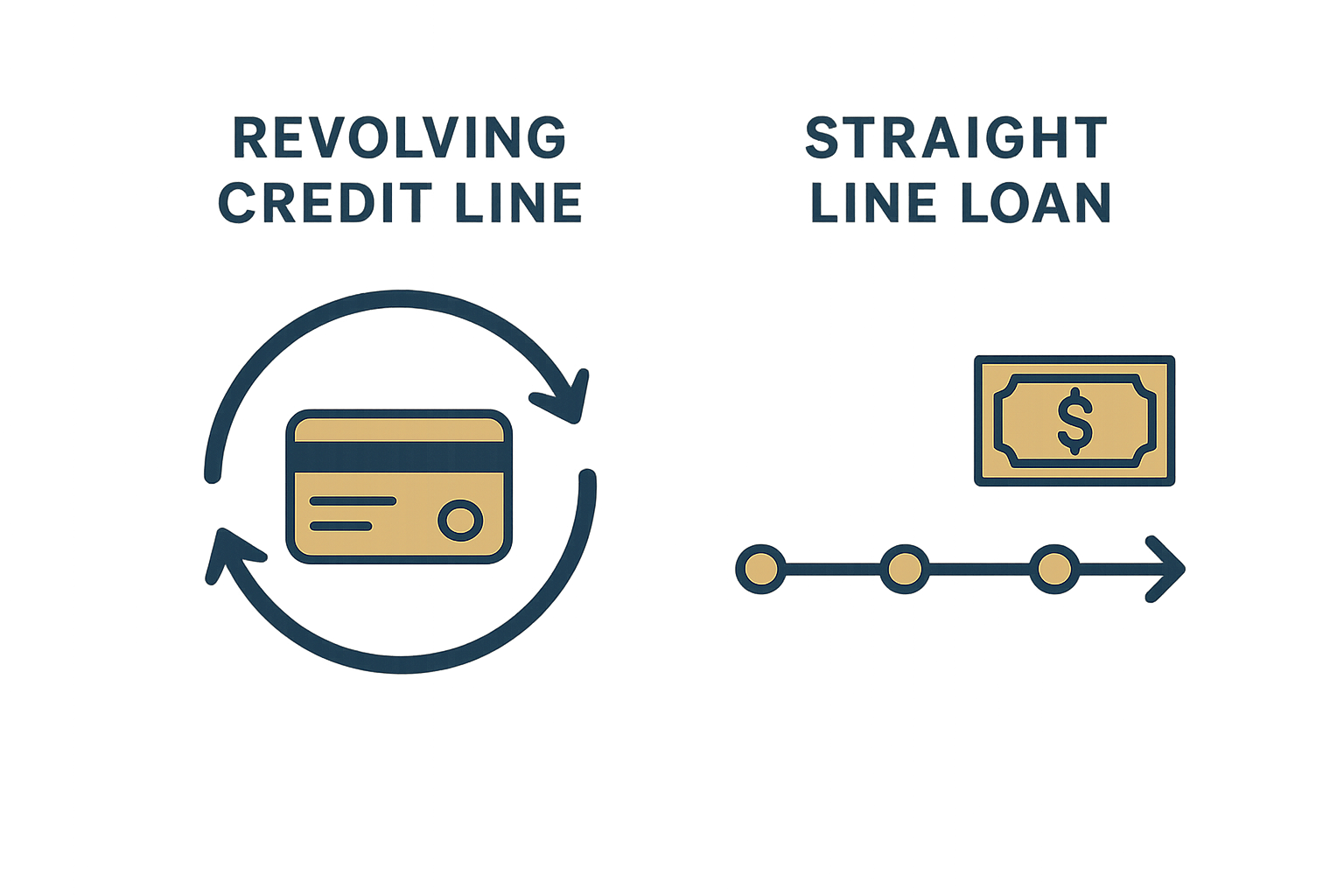
    Visual comparison of revolving business line of credit lending USA versus a fixed-term business loan

    Revolving credit lines allow repeated draws, while term loans follow a fixed repayment path.

    Frequently Asked Questions About Business Line of Credit Lending USA

    What is a business line of credit?

    A business line of credit is a revolving credit facility that lets a company draw funds up to a set limit, repay them, and borrow again. Unlike a term loan, you only pay interest on the amount you actually use.

    How does business line of credit lending USA work for small businesses?

    Business line of credit lending USA works by approving a business for a maximum credit limit based on revenue, time in business, and creditworthiness, then allowing draws as needed. As a result, businesses can manage cash flow gaps, cover payroll, or fund inventory without reapplying for a new loan each time.

    What is the difference between a business line of credit and a business loan?

    A term loan provides a lump sum repaid on a fixed schedule, while a line of credit is revolving and flexible. In contrast, a line of credit is better suited for ongoing or unpredictable expenses, whereas a term loan fits one-time, large purchases.

    How much can I qualify for with a business line of credit?

    Qualification amounts typically range from $30,000 to $20 million, depending on monthly revenue, business history, and documentation. Most lenders require at least $20,000 in average monthly revenue to consider an application.

    How fast can I get approved for a business line of credit?

    Many nationwide lenders, including alternative finance companies, can approve applications within 24 to 48 hours. Funding can often follow the same day once documents are verified.

    What credit score do I need for a business line of credit?

    Requirements vary, but many lenders accept personal credit scores starting around 600, especially when revenue and cash flow are strong. However, higher scores generally unlock lower rates and larger limits.

    How much does a business line of credit cost?

    Costs depend on the lender, loan amount, and risk profile, and may include interest rates, draw fees, or maintenance fees. Therefore, it is important to compare the total cost of capital rather than the interest rate alone.

    What documents are required to apply for a business line of credit?

    Lenders commonly request bank statements, tax returns, a business license, and proof of revenue. Additional documentation may include a profit and loss statement or accounts receivable aging report.

    Can startups qualify for a business line of credit?

    Most traditional lenders prefer at least six months to two years in business, though some alternative lenders work with younger companies that show strong revenue. Consequently, newer businesses may need to explore revenue-based financing first.

    What are common mistakes business owners make when applying?

    Common mistakes include underestimating funding needs, submitting incomplete documentation, and failing to compare multiple lenders. In addition, many owners overlook fee structures, which can significantly affect the true cost of borrowing.

    Is a business line of credit better than a merchant cash advance?

    A line of credit is generally more cost-effective and flexible than a merchant cash advance, which repays through a percentage of daily sales. Similarly, a line of credit allows reuse of funds without reapplying, unlike a one-time advance.

    How do I choose the best lender for business line of credit lending USA?

    Choosing the best lender for business line of credit lending USA involves comparing approval speed, funding limits, repayment terms, and customer support. Above all, look for a lender experienced in working with businesses similar in size and industry to your own.

    Can I use a business line of credit for emergency funding?

    Yes, a business line of credit is one of the most practical tools for emergency funding because funds are already approved and available on demand. This makes it faster than applying for new financing during a crisis.

    What happens if I don’t use my entire credit line?

    In most cases, you only pay interest or fees on the portion of the credit line you actually draw, not the full approved limit. Some lenders charge a small maintenance or inactivity fee, so it helps to confirm terms in advance.

    Final Thoughts on Business Line of Credit Lending USA

    Ultimately, business line of credit lending USA offers established businesses a flexible, reusable source of working capital that adapts to changing cash flow needs. Whether covering payroll during a slow month, stocking inventory ahead of peak season, or responding to an unexpected expense, a revolving credit line can provide faster and more adaptable access to funds than a traditional term loan.

    Before applying, it helps to compare lenders, review documentation requirements, and understand the full cost of capital rather than focusing on rate alone. For businesses ready to explore options, USA Patriot Loans provides nationwide access to business lines of credit, term loans, and emergency funding designed for established small and medium-sized businesses across all 50 states.

  • Equipment Financing for Small to Medium Business Guide

    Equipment Financing for Small to Medium Business Guide

    Equipment Financing for Small to Medium Business Guide

    Equipment financing for small to medium business is one of the fastest ways to acquire machinery, vehicles, or technology without draining cash reserves. Instead of paying the full purchase price upfront, a business owner borrows against the value of the equipment itself and repays the loan over time. For many companies, this type of funding bridges the gap between growth opportunities and the capital needed to seize them. In fact, according to the U.S. Small Business Administration, access to affordable capital remains one of the biggest challenges facing small business owners nationwide. This guide explains how equipment financing works, what it costs, and how to qualify quickly.

    Small business owner reviewing equipment financing for small to medium business paperwork in a workshop

    Reviewing loan terms carefully is the first step toward smart equipment financing for small to medium business.

    What Is Equipment Financing for Small to Medium Business?

    Equipment financing for small to medium business is a loan or lease arranged specifically to help companies purchase tools, vehicles, machinery, or technology they need to operate and grow. The equipment itself usually serves as collateral, which means lenders take on less risk and can often approve funding faster than an unsecured loan. Terms typically range from 24 to 84 months, depending on how long the equipment financing arrangement expects the asset to remain useful.

    As a result, monthly payments stay predictable and manageable even for businesses with tight cash flow. Unlike a general working capital loan, these funds must be used for a specific asset, such as a delivery truck, commercial oven, or manufacturing press. To see the full mechanics behind approval and funding timelines, this breakdown of how equipment financing works for small businesses walks through each stage in detail.

    How Does Equipment Financing Work in Practice?

    The process usually starts when a business owner selects the equipment and gets a quote from a vendor. Next, the lender reviews the quote, the business’s financials, and the equipment’s expected lifespan to determine loan terms. In addition, most lenders require a down payment of 10% to 20%, though some offer 100% financing for strong applicants. Once approved, funds go directly to the vendor, or the lender purchases the equipment and leases it back to the business. Consequently, the business can start using the equipment almost immediately while repaying the loan through fixed monthly installments.

    Types of Equipment Financing Options for Growing Companies

    Several financing structures fall under this umbrella, and each suits different situations. Equipment term loans spread the cost over a fixed schedule with a set interest rate. Equipment leasing, on the other hand, lets a business use the asset without owning it outright, which can be useful for technology that becomes outdated quickly. SBA 7(a) loans can also cover equipment purchases, though they typically involve longer approval timelines. For businesses deciding between these paths, this comparison of which business financing is best for equipment purchases breaks down the pros and cons of each option side by side.

    Key Benefits of Financing Equipment Instead of Paying Cash

    Above all, equipment financing preserves working capital for payroll, inventory, and day-to-day operations. Because the loan is secured by the asset, interest rates are often lower than unsecured business loans or credit lines. Furthermore, Section 179 of the U.S. tax code allows many businesses to deduct the full purchase price of qualifying equipment in the year it is placed into service, which can meaningfully lower tax liability.

    Similarly, making consistent payments on time helps build a stronger business credit profile, opening doors to better financing terms down the road. For a broader look at how equipment financing fits into a company’s overall funding strategy, this capital finance guide on funding your business fast offers additional context.

    Warehouse forklift representing heavy equipment acquired through small business equipment financing

    Heavy machinery like forklifts is a common asset purchased through equipment financing programs.

    How to Qualify for Equipment Financing: A Step-by-Step Guide

    Qualifying for equipment financing is generally more straightforward than qualifying for an unsecured loan, since the equipment backs the loan itself. However, lenders still review several factors before approving an application. The following steps outline what to expect during the process.

    1. Confirm time in business and revenue. Most lenders want to see at least six months to one year in operation and consistent monthly revenue, often starting around $20,000 per month, to qualify for competitive terms.
    2. Gather financial documentation. Prepare recent bank statements, tax returns, and a profit and loss statement so the lender can quickly verify income and cash flow trends.
    3. Select the equipment and request a vendor quote. Identify the specific machinery, vehicle, or technology needed and obtain a formal quote, since lenders use this figure to structure the loan amount and terms.
    4. Compare lenders and loan structures. Review interest rates, down payment requirements, and repayment terms across multiple lenders to find the option that fits the business’s cash flow best.
    5. Submit the application and finalize funding. Once approved, sign the agreement and funds are typically released to the vendor within a few business days, allowing operations to continue without delay.

    For businesses that need funding even faster, particularly when equipment purchases overlap with payroll obligations, this guide on where to get quick business funding for equipment and payroll covers same-day and short-term options.

    Equipment Financing vs. Other Business Funding Options

    Equipment financing is not the only path to funding growth, and comparing it against alternatives helps business owners choose wisely. A business line of credit offers more flexibility since funds can be used for nearly anything, but it generally carries higher rates for unsecured amounts. Invoice financing, in contrast, advances cash against unpaid customer invoices rather than financing a physical asset, which makes it a better fit for cash flow gaps caused by slow-paying clients.

    For businesses juggling both equipment needs and outstanding receivables, this guide to invoice financing solutions for small business cash flow explains how the two strategies can work together. Meanwhile, merchant cash advances provide speed but often cost more over time, making them less suitable for large equipment purchases.

    What Does Equipment Financing Cost?

    Costs vary based on credit profile, equipment type, and lender. Generally, rates range from roughly 6% to 20% APR for well-qualified borrowers, though some short-term or lower-credit options carry higher factor rates. According to the Federal Reserve’s Small Business Credit Survey, a majority of small business owners who sought financing in recent years cited funding speed and approval odds as bigger concerns than rate alone.

    Therefore, it is worth weighing total repayment cost against how quickly the funding arrives and how it affects operations. Businesses exploring their options nationwide can review current programs through USA Patriot Loans to compare rates and terms before committing to a specific lender.

    Close-up of construction equipment financed by a growing small to medium business

    Construction and contracting companies frequently rely on financing to add heavy equipment without a large upfront cost.

    Common Mistakes to Avoid When Financing Equipment

    Even straightforward financing decisions can go wrong without careful planning. For instance, some business owners finance equipment they do not fully need, stretching cash flow thin for an asset that sits underused. Others skip comparing multiple lenders and accept the first offer, missing out on better rates elsewhere.

    In particular, failing to read prepayment penalty clauses can cost thousands if the business later wants to pay off the loan early. Similarly, underestimating maintenance and operating costs tied to new equipment can strain budgets that were calculated around the loan payment alone. Avoiding these pitfalls starts with comparing offers and reading terms closely before signing.

    Frequently Asked Questions About Equipment Financing for Small to Medium Business

    What is equipment financing for small to medium business?

    Equipment financing for small to medium business is a loan or lease used specifically to purchase machinery, vehicles, or technology, with the equipment itself typically serving as collateral. This structure often allows for faster approval and lower rates than unsecured funding.

    How does equipment financing work?

    A lender provides funds to purchase a specific piece of equipment, which then secures the loan. The business repays the amount through fixed monthly payments over a term usually between two and seven years.

    How much can a small business borrow for equipment?

    Loan amounts typically range from $30,000 to several million dollars, depending on the equipment’s value and the business’s financial profile. Larger purchases, such as heavy machinery, generally require more documentation.

    What credit score is needed to qualify for equipment financing?

    Many lenders accept credit scores in the 600s, though scores above 680 usually unlock better rates. Because the equipment secures the loan, approval standards are often more flexible than unsecured financing.

    How fast can a business get equipment financing?

    Funding can arrive in as little as 24 to 72 hours for straightforward applications with complete documentation. More complex purchases, such as specialized manufacturing equipment, may take one to two weeks.

    What can equipment financing be used for?

    It can cover vehicles, construction machinery, medical equipment, restaurant appliances, office technology, and most other income-producing business assets. Lenders generally require the equipment to have resale value that supports the loan.

    Is equipment financing better than a general business loan?

    It depends on the purpose. Equipment financing usually offers lower rates for asset purchases, while a general working capital loan or line of credit provides more flexibility for operating expenses.

    What are typical equipment financing rates?

    Rates commonly range from about 6% to 20% APR, depending on credit profile, down payment, and equipment type. Businesses with stronger financials and established credit history typically receive the lowest rates.

    Do I need a down payment for equipment financing?

    Most lenders require 10% to 20% down, though some offer 100% financing for qualified borrowers with strong credit and revenue history. A larger down payment can also lower the monthly payment and total interest paid.

    What happens if a business defaults on equipment financing?

    Because the equipment secures the loan, the lender can typically repossess the asset to recover losses. Default can also damage business credit, making future financing harder to obtain.

    Can a startup qualify for equipment financing?

    Some lenders work with newer businesses, though most prefer at least six months to a year of operating history and consistent revenue. Startups without that track record may need a larger down payment or a co-signer.

    What is the difference between equipment financing and equipment leasing?

    Equipment financing typically leads to ownership once the loan is paid off, while leasing allows use of the equipment for a set period without ownership. Leasing can suit assets that become outdated quickly, such as computers.

    What documents are needed to apply for equipment financing?

    Lenders generally request recent bank statements, business tax returns, a profit and loss statement, and a vendor quote for the equipment. Having these ready in advance speeds up approval.

    Can existing equipment be refinanced?

    Yes, many lenders offer equipment refinancing, which lets a business access the equity in equipment it already owns. This can free up cash flow or replace a higher-cost loan with better terms.

    Final Thoughts on Financing Business Equipment

    Choosing the right funding path matters as much as the equipment itself. Ultimately, equipment financing for small to medium business gives owners a practical way to acquire essential assets without tying up cash needed for payroll, inventory, or marketing. Because approval often hinges on the equipment’s value rather than perfect credit, it remains accessible to a wide range of established businesses.

    Before applying, compare rates, review total repayment cost, and gather documentation early to keep the process moving quickly. With the right lender and a clear plan, financing new equipment can become one of the most effective ways to support long-term business growth.

  • Fast SBA Loan Funding Nationwide for Small Businesses

    Fast SBA Loan Funding Nationwide for Small Businesses

    Fast SBA Loan Funding Nationwide for Small Businesses

    Fast SBA loan funding nationwide is possible when business owners work with lenders who understand how to navigate SBA requirements without unnecessary delays. Traditional SBA loans are known for strong rates and long repayment terms, but the standard approval timeline can stretch for months. As a result, many small business owners now search for lenders who specialize in speeding up this process while keeping the loan’s core benefits intact. This guide explains how nationwide SBA funding works, what slows most applications down, and how to position your business for a faster closing.

    Quick Answer: Fast SBA loan funding nationwide typically takes 30 to 60 days when working with an experienced SBA-focused lender, compared to 60 to 90 or more days through many traditional banks. Businesses that prepare complete documentation upfront and work with a lender offering streamlined underwriting can sometimes close certain SBA loan types in as little as two to three weeks.

    What Is Fast SBA Loan Funding Nationwide?

    Fast SBA loan funding nationwide is a financing approach where small business owners anywhere in the United States receive SBA-backed loan approval and disbursement on an accelerated timeline. Instead of waiting on a slow, generalist bank process, businesses work with lenders who process SBA loans regularly and know exactly what underwriters need to see.

    According to the U.S. Small Business Administration, 7(a) loans remain the agency’s most popular program, with billions approved annually to support small business growth. However, because the loan carries a federal guarantee, extra documentation is required, which is exactly why specialized lenders focus on reducing friction in that paperwork.

    In short, speed does not come from skipping steps. It comes from doing every step efficiently, in the right order, with a lender who already knows the SBA checklist by heart.

    Map of the United States representing fast SBA loan funding nationwide for small businesses

    Fast SBA loan funding nationwide connects small businesses in every state with streamlined lending resources.

    How Does Quick SBA Financing Work?

    Quick SBA financing works by compressing the same underwriting steps a traditional bank uses, but handling them in parallel instead of one after another. For example, document collection, eligibility screening, and credit review can often happen at the same time rather than in sequence.

    Furthermore, lenders who specialize in SBA products tend to have dedicated underwriting teams instead of shared staff who also process mortgages or auto loans. Consequently, applications move through the pipeline with fewer handoffs and less waiting.

    For businesses comparing options, resources like this guide to business loans with fast approval can help clarify which SBA or non-SBA product best fits a specific funding timeline.

    Steps to Secure Rapid SBA Loan Approval

    Rapid SBA loan approval generally follows a predictable sequence. Below is the process most nationwide SBA lenders, including those focused on fast turnaround, use to move applications from submission to funding.

    1. Gather core financial documents. Collect two to three years of business and personal tax returns, recent bank statements, a profit and loss statement, and a current business debt schedule before applying.
    2. Choose an SBA-focused lender. Work with a nationwide lender that specializes in SBA loan processing, since generalist banks often take longer due to lower SBA transaction volume.
    3. Complete pre-qualification review. Submit basic business details so the lender can confirm eligibility and recommend the right SBA loan product before full underwriting begins.
    4. Submit the full SBA application package. Provide complete documentation in one submission rather than piecemeal, since incomplete packages are the leading cause of SBA funding delays nationwide.
    5. Work through underwriting and closing. Respond quickly to underwriter requests, review final loan terms carefully, and sign closing documents to receive your funds and finalize the SBA loan.

    For a closer look at how this process plays out with a specific lender, see how quickly USA Patriot Loans can fund your business.

    SBA Loan Types That Support Nationwide Funding

    Not every SBA loan moves at the same speed. The SBA 7(a) loan is the most flexible and widely used program, covering working capital, equipment, and expansion needs up to $5 million, but it usually requires the most documentation.

    In contrast, the SBA Express loan caps funding lower in exchange for a faster lender decision, sometimes within 36 hours of a complete application, according to publicly available SBA program summaries. Meanwhile, SBA 504 loans focus specifically on real estate and major equipment purchases and follow a separate timeline tied to project financing.

    Because each program serves a different purpose, matching the right SBA loan type to your business goal is often more important than chasing the fastest possible label. A lender who reviews all available options, such as those outlined in this SBA loan portal resource, can help identify which program fits best.

    Small business owner reviewing SBA loan documents during the application process

    Organized documentation is one of the biggest factors behind fast SBA loan funding nationwide.

    Common Mistakes That Delay SBA Funding Speed

    Even with a motivated lender, certain mistakes consistently slow down SBA funding speed. Recognizing them early can save weeks of back-and-forth during underwriting.

    First, submitting incomplete tax returns or missing schedules forces underwriters to pause the file until documents arrive. Second, unclear explanations for the use of funds often trigger additional questions, since the SBA requires a clear business purpose for every dollar borrowed.

    Third, slow responses to underwriter requests are one of the most avoidable delays. Therefore, business owners should treat every document request as time-sensitive, since even a two-day delay can push a closing date back by a week or more.

    Finally, applying with a lender that rarely processes SBA loans can add unnecessary friction. Instead, working with a nationwide lender that handles SBA financing regularly, similar to the comparison in this nationwide lender approval guide, tends to produce more predictable results.

    How USA Patriot Loans Supports Nationwide SBA Funding

    USA Patriot Loans is a disabled-veteran-owned business financing company founded by Paul Giordano in November 2023 and headquartered in Pennsylvania, serving businesses in all 50 states. The company focuses on helping established small and medium-sized businesses access $30,000 to $20 million in working capital without the delays common to traditional bank financing.

    In addition to SBA loans, the team works with business lines of credit, term loans, equipment financing, and emergency business funding, which allows business owners to compare options rather than being limited to a single product. For businesses with urgent cash flow needs, exploring emergency business funding support alongside an SBA application can help bridge the gap while the SBA loan finishes processing.

    Business owners can learn more directly through USA Patriot Loans, where current SBA programs and nationwide lending options are outlined in detail.

    Frequently Asked Questions About Fast SBA Loan Funding Nationwide

    What is fast SBA loan funding nationwide?

    Fast SBA loan funding nationwide refers to SBA-backed small business loans processed and closed faster than the typical 60-to-90-day timeline, often through lenders that specialize in streamlined SBA underwriting across all 50 states.

    How long does SBA loan approval usually take?

    A standard SBA 7(a) loan often takes 60 to 90 days to close through a traditional bank. Specialized SBA lenders can sometimes shorten this to 30 to 45 days by organizing documentation and underwriting in parallel.

    Can I get an SBA loan with bad credit?

    SBA loans generally require reasonable personal and business credit, but approval is possible with lower scores if the business shows strong revenue, cash flow, and collateral. Each lender sets its own minimum credit thresholds within SBA guidelines.

    What’s the difference between SBA 7(a) and SBA Express loans?

    SBA 7(a) loans offer larger amounts and longer terms but take longer to process, while SBA Express loans cap funding lower in exchange for a faster decision, often within 36 hours of a complete application.

    How much can I borrow with an SBA loan?

    SBA 7(a) loans can go up to $5 million, while many working capital needs fall between $30,000 and $350,000. The right amount depends on revenue, use of funds, and repayment capacity.

    What documents do I need for a fast SBA application?

    Lenders typically need two to three years of tax returns, recent bank statements, a profit and loss statement, and a business debt schedule. Having these ready in advance is the single biggest factor in speeding up approval.

    Why do SBA loans take longer than other business loans?

    SBA loans involve a government guarantee, which requires additional paperwork, eligibility checks, and underwriting steps compared to conventional business loans. This extra review protects both the lender and the taxpayer-backed guarantee program.

    Is same-day SBA funding possible?

    True same-day funding is rare for SBA loans because of federal underwriting requirements. However, some lenders offer bridge or short-term working capital the same day while the SBA loan finishes processing.

    What are common reasons SBA loan applications get delayed?

    Missing tax documents, unclear use-of-funds explanations, incomplete business debt schedules, and slow responses to underwriter questions are the most common delays. Most of these issues are preventable with upfront preparation.

    How does USA Patriot Loans speed up SBA funding?

    USA Patriot Loans pre-reviews documentation, matches businesses with the appropriate SBA loan product, and coordinates directly with underwriters to reduce back-and-forth delays for business owners nationwide.

    What is the cost of getting an SBA loan?

    SBA loans involve a guarantee fee set by the SBA, plus lender fees and interest, which typically runs lower than many alternative financing products. Exact costs vary by loan size, term, and lender.

    Are SBA loans available in all 50 states?

    Yes, SBA loan programs are available to eligible small businesses in every state. Lenders that operate nationwide, rather than regionally, can often process applications more consistently regardless of location.

    Clock and calendar symbolizing the timeline for fast SBA loan funding nationwide

    Preparation and lender choice both influence how quickly fast SBA loan funding nationwide can close.

    Final Thoughts on Fast SBA Loan Funding Nationwide

    Ultimately, fast SBA loan funding nationwide comes down to preparation and lender choice working together. Businesses that gather documentation early, respond quickly during underwriting, and partner with a lender who processes SBA loans regularly tend to close faster than those relying on a generalist bank.

    Moreover, comparing SBA loans against other working capital options, such as those discussed in this fast-approval business loan overview, can help business owners decide whether an SBA loan or a shorter-term product better fits an urgent funding need. In the end, speed and SBA loan quality are not mutually exclusive when the right process and the right lender are in place.

  • SBA Loan Alternatives for Small Businesses: 2026 Guide

    SBA Loan Alternatives for Small Businesses: 2026 Guide

    SBA Loan Alternatives for Small Businesses: 2026 Guide

    SBA loan alternatives for small businesses have become increasingly popular among entrepreneurs who need working capital without the lengthy approval timelines tied to government-backed lending. Traditional SBA loans often take 30 to 90 days to fund, and that delay can cost a growing business real opportunities. However, several financing paths now offer similar loan amounts with faster decisions, fewer documentation requirements, and more flexible qualification standards. This guide examines the most practical alternatives available today, explains how they compare to SBA loans, and helps business owners nationwide identify funding solutions that match their specific cash flow needs, revenue history, and growth timeline.

    Small business owner comparing SBA loan alternatives for small businesses on a laptop

    Reviewing SBA loan alternatives for small businesses often starts with comparing funding speed, cost, and documentation requirements.

    What Are SBA Loan Alternatives for Small Businesses?

    SBA loan alternatives for small businesses are financing products offered outside the U.S. Small Business Administration’s guarantee programs, including working capital loans, lines of credit, equipment financing, and revenue-based funding. These options generally close faster than SBA loans and carry fewer eligibility hurdles, though they may charge different rates depending on risk and repayment structure.

    In other words, these products sit outside the 7(a), 504, and microloan programs that the SBA guarantees through partner banks. Instead, they come directly from online lenders, community lenders, or specialty finance companies. Consequently, approval can hinge more on recent bank deposits and revenue trends than on a lengthy credit file review. For business owners who need capital within days rather than months, that difference matters considerably.

    Why Business Owners Look for Alternatives to SBA Loans

    SBA loans remain attractive because of their long terms and competitive rates. However, the application process requires tax returns, business plans, collateral documentation, and often a personal guarantee. According to the SBA’s own program guidance, standard 7(a) loans can take 60 to 90 days to close once underwriting begins, and that timeline assumes no documentation gaps along the way.

    For a business facing a sudden equipment failure, a seasonal inventory crunch, or a time-sensitive contract, that waiting period simply does not work. In addition, many SBA programs set minimum credit score thresholds and require businesses to show at least two to three years of financial history. As a result, newer businesses or those with past credit challenges frequently seek alternatives to SBA loans that focus more heavily on current cash flow than historical credit data.

    Furthermore, SBA loan amounts tend to skew larger than many small businesses actually need. Industry lending data consistently shows average SBA 7(a) loan sizes well above $400,000, a figure that doesn’t fit a business simply trying to bridge a $50,000 cash flow gap. For more detail on how the standard process works, the SBA small business loan guide breaks down rates, terms, and qualification standards in depth.

    Top SBA Loan Alternatives for Small Businesses to Explore

    The right alternative depends heavily on the funding purpose, repayment timeline, and how quickly cash is needed. Below are the most widely used options, along with how each typically functions in practice.

    Business Lines of Credit and Working Capital Loans

    A business line of credit provides revolving access to funds, meaning a company can draw, repay, and draw again as needed. Similarly, working capital loans deliver a lump sum designed to cover day-to-day operating costs like payroll, rent, or supplier payments. Both options suit businesses with fluctuating cash needs rather than a single large purchase.

    Term Loans and Short-Term Business Loans

    Term loans offer a fixed amount repaid over a set schedule, typically ranging from one to five years. Short-term business loans compress that timeline into months rather than years, which generally means faster approval but higher periodic payments. These products work well for a defined, one-time expense with a clear return on investment.

    Equipment Financing and Inventory Financing

    Equipment financing uses the purchased machinery or vehicle as collateral, which often leads to easier approval and lower rates than unsecured products. Inventory financing operates similarly, advancing funds against stock a business plans to resell. Because the asset itself secures the loan, lenders can move faster through underwriting.

    Invoice Financing and Revenue-Based Financing

    Invoice financing lets a business borrow against unpaid customer invoices instead of waiting 30 to 90 days for payment to arrive. Revenue-based financing, by contrast, ties repayment to a percentage of ongoing sales, which means payments naturally rise and fall with business performance. Both reduce reliance on personal credit history.

    Merchant Cash Advances and Same-Day Business Funding

    A merchant cash advance provides a lump sum in exchange for a share of future card sales, making it a fast option for businesses with steady daily transactions. Same-day business funding takes speed even further, often depositing approved funds within hours. These products typically cost more overall, so they fit urgent, short-term needs best.

    Business owner and lender shaking hands after approving alternative small business financing

    Choosing among SBA loan alternatives for small businesses often comes down to matching speed, cost, and collateral requirements.

    Commercial Hard Money Loans for Larger Projects

    For businesses pursuing real estate purchases, renovations, or larger expansion projects, commercial hard money loans use property or hard assets as collateral. Approval generally depends more on asset value than credit history, which makes this option useful when speed matters more than the lowest possible rate. Business expansion financing often overlaps with this category when growth plans involve a physical location.

    How to Choose the Right Small Business Financing Option

    Selecting among the many alternatives to SBA loans can feel overwhelming at first. The following steps simplify the decision process:

    1. Define the funding purpose. Identify exactly what the money will fund, such as payroll, inventory, equipment, or expansion, since the purpose often determines which financing structure fits best.
    2. Review monthly revenue and cash flow. Gather at least three to six months of bank statements and revenue figures, because most alternative lenders base approval primarily on consistent cash flow rather than credit alone.
    3. Compare funding speed against cost. Weigh how quickly you need capital against the total repayment cost, since faster products like merchant cash advances usually cost more than term loans or lines of credit.
    4. Check collateral and guarantee requirements. Determine whether the lender requires collateral, a personal guarantee, or a lien on business assets, and confirm you are comfortable with those terms before applying.
    5. Request quotes from multiple lenders. Apply with two or three reputable commercial lenders to compare rates, terms, and funding timelines side by side before signing any financing agreement.

    For businesses still leaning toward a government-backed option, the SBA loan portal guide explains how to find the right SBA program fast, while the SBA microloan programs guide covers smaller funding amounts specifically.

    SBA Loans vs Alternative Financing: A Quick Comparison

    Side-by-side, the differences in speed and flexibility become clear:

    Factor SBA Loans Alternative Financing
    Typical funding time 30 to 90 days Same day to 1 week
    Documentation required Extensive Minimal to moderate
    Credit flexibility Stricter thresholds More flexible, revenue-focused
    Funding range Often $350K+ $30,000 to $20 million

    How USA Patriot Loans Helps Businesses Access Fast Capital

    USA Patriot Loans, a disabled-veteran-owned financing company founded by Paul Giordano, works with established small and mid-sized businesses nationwide that generate at least $20,000 in monthly revenue. The company offers working capital loans, business lines of credit, equipment financing, invoice financing, merchant cash advances, revenue-based financing, and same-day business funding ranging from $30,000 to $20 million. Because the focus stays on current revenue rather than rigid SBA-style criteria, approval decisions often move faster than traditional bank underwriting.

    Business owners comparing options can visit USA Patriot Loans directly to review current programs, or explore the best options for expanding a business with loans for growth-specific financing. Those still weighing a government-backed route first should review the complete SBA loans lender guide before deciding which path fits their timeline.

    Frequently Asked Questions About SBA Loan Alternatives for Small Businesses

    What are the best SBA loan alternatives for small businesses?

    The best SBA loan alternatives for small businesses include working capital loans, business lines of credit, term loans, equipment financing, invoice financing, and merchant cash advances. Each option offers different funding speeds, amounts, and qualification standards compared to traditional SBA lending.

    How fast can I get funding compared to an SBA loan?

    Many alternative lenders fund approved applications within 24 to 72 hours, while SBA loans typically take 30 to 90 days to close. Same-day business funding is also available for qualifying applicants with urgent cash flow needs.

    Why do small businesses choose alternatives to SBA loans?

    Small businesses often choose alternatives because SBA loans require extensive paperwork, collateral, and long approval timelines. Alternative financing typically has fewer documentation requirements and more flexible credit standards.

    Do SBA loan alternatives require good credit?

    Credit requirements vary widely by product and lender. Revenue-based options like merchant cash advances and invoice financing often weigh cash flow more heavily than personal credit scores.

    How much funding can a business get without an SBA loan?

    Depending on the lender and financing type, small businesses can access anywhere from $30,000 to $20 million through alternative commercial financing products. Loan size usually depends on monthly revenue, time in business, and the chosen financing structure.

    What is the difference between a term loan and a business line of credit?

    A term loan provides a lump sum repaid over a fixed schedule, while a business line of credit offers revolving access to funds that can be drawn and repaid repeatedly. Lines of credit are better suited for ongoing or unpredictable expenses.

    Are merchant cash advances a good SBA loan alternative?

    Merchant cash advances can be a strong option for businesses with steady card sales that need fast cash without collateral. However, they typically cost more than term loans, so they work best for short-term needs.

    How does invoice financing work as a funding alternative?

    Invoice financing allows a business to borrow against unpaid customer invoices instead of waiting 30 to 90 days for payment. The lender advances a percentage of the invoice value and collects repayment once the customer pays.

    What mistakes should business owners avoid when choosing financing?

    A common mistake is borrowing more than the business can comfortably repay based on current cash flow. Owners should also avoid ignoring total repayment cost and failing to compare multiple SBA loan alternatives for small businesses before committing.

    Can startups qualify for alternative business financing?

    Most alternative lenders prefer businesses with at least six months to one year of operating history and consistent monthly revenue. Startups with limited history may need to explore equipment financing or secured options instead.

    How much does alternative business financing typically cost?

    Costs vary by product, with term loans and lines of credit generally offering lower overall costs than merchant cash advances or short-term loans. Rates depend on revenue, time in business, industry risk, and repayment length.

    What documents are needed to apply for SBA loan alternatives?

    Most alternative lenders request recent bank statements, basic business financials, and proof of time in operation rather than the extensive paperwork SBA loans require. This streamlined process is a major reason businesses choose alternative financing.

    Final Thoughts on Finding the Right Funding Fit

    Ultimately, SBA loan alternatives for small businesses exist because one financing model cannot serve every situation equally well. Whether a business needs a quick bridge through a cash flow gap, a larger sum for equipment, or flexible revolving credit, faster and more adaptable options are available beyond traditional SBA programs. By comparing funding speed, total cost, collateral requirements, and revenue fit, owners can match their specific needs to the right product rather than defaulting to the slowest, most document-heavy path. For businesses ready to move forward, reviewing current programs through a nationwide commercial lender is a practical next step toward securing capital on a realistic timeline.

  • Commercial Finance Services for Small Businesses: Guide

    Commercial Finance Services for Small Businesses: Guide

    Commercial Finance Services for Small Businesses: Guide

    Commercial finance services for small businesses give established companies a way to access working capital, equipment funding, and expansion financing without the long waits typical of traditional banks. Whether you run a contracting company, a medical practice, or a retail operation, the right financing structure can determine how quickly you can act on an opportunity. In addition, understanding your options before you apply helps you avoid costly mistakes and mismatched loan terms.

    Quick Answer: Commercial finance services for small businesses are funding products — such as SBA loans, lines of credit, term loans, and equipment financing — built specifically for business needs rather than personal use. Most lenders offer amounts from $30,000 to $20 million, with approval often based on monthly revenue instead of only personal credit history.

    Small business owner reviewing commercial finance services for small businesses paperwork at a desk

    Reviewing financial statements is the first step toward securing commercial finance services for small businesses.

    What Are Commercial Finance Services for Small Businesses?

    Commercial finance services for small businesses is a broad term that covers any lending product designed for business purposes rather than personal borrowing. Specifically, it includes SBA loans, term loans, working capital loans, business lines of credit, equipment financing, invoice financing, and merchant cash advances. Unlike a personal loan, these products typically evaluate business revenue, time in operation, and cash flow patterns rather than relying solely on an owner’s personal credit score.

    As a result, businesses with strong monthly revenue but limited collateral can still access meaningful funding. For a deeper breakdown of how these structures compare, this capital finance guide for fast business funding walks through additional options in more detail.

    Why Small Businesses Need Flexible Business Financing Options

    Cash flow gaps happen for predictable reasons: slow-paying customers, seasonal demand swings, or the need to buy inventory before a busy season. Therefore, having access to flexible business financing options is often what separates a business that grows steadily from one that stalls during a rough quarter.

    According to the Federal Reserve’s Small Business Credit Survey, a majority of small employer firms report applying for financing specifically to meet operating expenses or pursue expansion, underscoring how common these funding gaps are across industries. Consequently, having a financing relationship in place before a cash crunch hits puts a business in a much stronger negotiating position than scrambling for funds under pressure.

    In particular, businesses that plan ahead can compare offers calmly rather than accepting the first available terms out of urgency.

    Types of Commercial Funding Solutions Available

    Not every commercial funding solution fits every situation. Below is a closer look at the most common products small business owners use today.

    SBA Loans and Term Loans

    SBA loans are partially guaranteed by the U.S. Small Business Administration, which allows lenders to offer longer repayment terms and lower rates than many alternative products. Term loans, by contrast, are funded directly by a lender and repaid in fixed installments, making them a predictable option for a one-time investment such as a renovation or acquisition.

    Business Lines of Credit and Working Capital Loans

    A business line of credit gives you revolving access to funds, so you only pay interest on what you actually draw. Working capital loans, meanwhile, deliver a lump sum meant to cover day-to-day operating costs. For help deciding between the two structures, this comparison of business lines of credit versus term loans breaks down the trade-offs in plain terms.

    Equipment Financing and Invoice Financing

    Equipment financing uses the purchased equipment as collateral, which often means faster approval and better rates than unsecured products. Invoice financing, on the other hand, advances cash against unpaid customer invoices. To understand each option more fully, see this guide on how equipment financing works for small businesses and this resource on invoice financing solutions for small business cash flow.

    Business owners discussing working capital and equipment financing options with a lending advisor

    Comparing financing structures with a lender helps match the right product to your business goals.

    How to Qualify for Small Business Capital Solutions

    Qualifying for small business capital solutions is more straightforward than many owners expect, especially when the paperwork is organized in advance. Above all, lenders want to see consistent revenue and a clear purpose for the funds. The following steps outline a typical path from preparation to funding.

    1. Review your financials. Pull three to six months of bank statements to understand what products you realistically qualify for.
    2. Match the product to the need. Decide whether an ongoing expense calls for a line of credit, or a one-time purchase calls for a term loan.
    3. Gather documentation. Collect tax returns, profit and loss statements, and basic business identification before applying.
    4. Submit your application. Apply with a lender experienced in your industry and funding size, and respond promptly to follow-up requests.
    5. Review terms and close. Confirm the rate, repayment schedule, and fees before signing, then verify the funding timeline.

    Furthermore, keeping these documents organized year-round, not just at application time, shortens future funding cycles significantly.

    Commercial Finance Services for Small Businesses vs. Traditional Bank Loans

    Traditional banks often require two or more years of tax returns, substantial collateral, and a lengthy underwriting process that can stretch for months. In contrast, commercial finance services for small businesses from alternative and non-bank lenders typically focus more on current cash flow, which allows for same-day or next-day funding decisions on some products.

    That said, bank loans can still offer lower rates for businesses that meet stricter qualification standards. Therefore, the right choice often depends on how quickly you need capital and how your business profile matches each lender’s requirements. For a plain-language breakdown of how rates are set, this explainer on bank interest rates for small business loans is a useful next step.

    Choosing the Right Small Business Lending Partner

    Selecting a lending partner matters just as much as selecting the right product. Specifically, look for a lender that is transparent about rates, responsive during underwriting, and experienced with businesses of your size and industry.

    USA Patriot Loans, for example, is a disabled-veteran-owned, nationwide commercial lender founded in 2023 and headquartered in Pennsylvania. The company works with established small and medium-sized businesses across all 50 states on funding from $30,000 to $20 million, including SBA loans, lines of credit, equipment financing, and same-day business funding. You can review current programs directly at USA Patriot Loans to see which options fit your situation.

    Icons representing SBA loans, business lines of credit, and equipment financing solutions

    Comparing multiple funding solutions side by side makes it easier to choose the right fit.

    Frequently Asked Questions

    What are commercial finance services for small businesses?

    Commercial finance services for small businesses are funding products designed specifically for business use, including SBA loans, lines of credit, term loans, and equipment financing. These services help established companies cover operating costs, expansion, or large purchases without tying up personal credit.

    How do commercial finance services for small businesses differ from traditional bank loans?

    Commercial finance providers often approve funding faster and work with a wider range of credit profiles than traditional banks. Banks typically require years of financial history and extensive collateral, while alternative lenders focus more on current cash flow and revenue.

    How much funding can a small business typically qualify for?

    Funding amounts generally range from $30,000 to $20 million, depending on the lender, loan type, and business revenue. Most lenders require at least $20,000 in average monthly revenue to qualify for larger facilities.

    How long does it take to get approved for small business funding?

    Approval timelines vary from same-day decisions for working capital products to several weeks for SBA loans. Alternative lenders that specialize in fast funding can often disburse capital within 24 to 72 hours of approval.

    What documents are needed to apply for commercial financing?

    Most applications require recent bank statements, tax returns, a profit and loss statement, and basic business identification documents. Some lenders also ask for accounts receivable aging reports when considering invoice financing.

    What is the difference between a business line of credit and a term loan?

    A business line of credit offers revolving access to funds you can draw on as needed, while a term loan provides a lump sum repaid over a fixed schedule. Lines of credit suit ongoing cash flow gaps, and term loans suit one-time investments like expansion.

    Can a startup qualify for commercial finance services for small businesses?

    Newer businesses can qualify for some commercial finance services, though most lenders prefer at least six months to a year of operating history and consistent revenue. Startups without that track record may need to consider equipment financing or revenue-based options instead.

    What credit score is needed for small business financing?

    Requirements vary widely, with some lenders accepting scores in the mid-500s for short-term products while SBA loans typically favor scores above 650. Strong monthly revenue can sometimes offset a lower personal credit score.

    What are common mistakes businesses make when applying for financing?

    Common mistakes include applying to multiple lenders at once, submitting incomplete financial documentation, and choosing a loan structure that does not match the actual business need. Taking time to match the financing type to the purpose reduces rejection and overborrowing.

    How does equipment financing work for small businesses?

    Equipment financing uses the purchased equipment itself as collateral, which often allows for easier approval and competitive rates. Payments are spread over the useful life of the equipment, preserving working capital for other needs.

    What is invoice financing and how can it help cash flow?

    Invoice financing lets a business borrow against unpaid customer invoices rather than waiting 30 to 90 days for payment. This approach frees up cash tied up in receivables and keeps operations funded during slow payment cycles.

    Are merchant cash advances a good option for small businesses?

    Merchant cash advances can provide fast access to capital for businesses with strong daily card sales, but they typically carry higher costs than loans or lines of credit. They work best as a short-term bridge rather than a long-term financing strategy.

    How much does commercial financing typically cost?

    Costs vary by product, with SBA loans and term loans generally offering lower rates than short-term or revenue-based products. Factors like credit profile, time in business, and collateral all influence the final rate a lender offers.

    What makes USA Patriot Loans different from other lenders?

    USA Patriot Loans is a disabled-veteran-owned nationwide lender founded in 2023 that focuses on reducing the delays common with traditional bank financing. The company works with established businesses across all 50 states on funding from $30,000 to $20 million.

    What is the best way to choose a commercial finance partner?

    Compare total cost, funding speed, and flexibility across at least two or three lenders before committing. It also helps to confirm the lender has direct experience with your industry and the specific financing product you need.

    Final Thoughts on Commercial Finance Services for Small Businesses

    Ultimately, commercial finance services for small businesses exist to close the gap between opportunity and available cash. Whether you need a working capital loan to cover payroll during a slow month, equipment financing to replace aging machinery, or an SBA loan to fund long-term growth, understanding each product helps you borrow with confidence rather than guesswork.

    As you compare lenders, pay close attention to funding speed, total cost, and how well the product fits your actual use case. For additional background on how to evaluate lenders and rates, the U.S. Small Business Administration’s loan programs page, the Federal Reserve Small Business Credit Survey, and this overview of business loans on Wikipedia all provide useful, independent context. With the right preparation, most established businesses can find a commercial financing solution that matches both their timeline and their budget.

  • Veteran Owned Business Loans Pennsylvania: Fast Funding

    Veteran Owned Business Loans Pennsylvania: Fast Funding

    Veteran Owned Business Loans Pennsylvania: Fast Funding

    Veteran owned business loans Pennsylvania options have become essential for former service members who now run companies across the Keystone State. Many banks still move slowly, and that delay can hurt a growing business when cash flow gets tight. Fortunately, lenders built by and for veterans, like USA Patriot Loans, now offer a faster path to working capital.

    Founded in November 2023 by Paul Giordano, USA Patriot Loans is a disabled-veteran-owned financing company headquartered in Pennsylvania. As a result, the team understands firsthand the discipline and urgency that veteran entrepreneurs bring to their businesses. You can learn more about the company’s background by visiting USA Patriot Loans directly.

    Veteran owned business loans Pennsylvania helping a local shop owner expand

    Veteran owned business loans Pennsylvania programs help local entrepreneurs expand without waiting months for approval.

    What Are Veteran Owned Business Loans in Pennsylvania?

    Veteran owned business loans Pennsylvania refers to financing products offered by, or tailored for, veteran-led companies operating anywhere in the state. These loans range from traditional SBA-backed programs to faster alternative financing like working capital loans and merchant cash advances. Specifically, they aim to give veteran entrepreneurs the same funding access as any other established business, without unnecessary friction.

    In practice, this means a veteran-owned auto repair shop near Pittsburgh or a logistics company outside Philadelphia can apply using bank statements instead of years of tax returns. Consequently, approval decisions often happen in hours rather than weeks.

    Why Pennsylvania Veteran Entrepreneurs Choose Veteran-Owned Lenders

    Veteran-owned lenders tend to understand the operational discipline that comes from military service, and that shared perspective often shapes how they underwrite deals. For example, a lender who has run a business through tight cash-flow periods knows that timing matters more than paperwork volume.

    According to the U.S. Census Bureau’s Annual Business Survey, veterans own more than 1.9 million businesses nationwide, generating over $1.1 trillion in combined annual receipts. This scale underscores why lenders are building products specifically for this community.

    In addition, working with a Pennsylvania-headquartered company means local knowledge of state licensing, seasonal industries, and regional economic patterns. Therefore, applications are reviewed with context rather than generic national benchmarks alone.

    Types of Financing Available for Veteran-Owned Companies in PA

    USA Patriot Loans offers several financing structures so veteran business owners can match the product to their actual need rather than settling for one-size-fits-all terms.

    • SBA Loans – government-backed financing with longer terms and competitive rates.
    • Working Capital Loans – quick funding for payroll, rent, or inventory gaps.
    • Business Lines of Credit – reusable access to funds for ongoing expenses.
    • Equipment Financing – capital for machinery, vehicles, or technology upgrades.
    • Merchant Cash Advances – advances repaid through a share of future sales.
    • Revenue-Based Financing – flexible repayment tied to monthly revenue.
    • Invoice Financing and Short-Term Business Loans for immediate cash-flow needs.

    Business owner reviewing financing paperwork for business loans in Pennsylvania

    Reviewing funding terms carefully helps Pennsylvania business owners choose the right loan structure.

    How to Apply for Veteran Owned Business Loans in Pennsylvania

    Applying for financing does not need to be complicated. Below is the general process most veteran business owners in Pennsylvania follow when working with USA Patriot Loans.

    1. Research Veteran-Friendly Lenders: Compare lenders that understand veteran-owned business needs and review their speed, products, and eligibility requirements.
    2. Gather Financial Documents: Collect recent bank statements, an ID, and basic formation paperwork so underwriting moves quickly.
    3. Submit Your Application Online: Share monthly revenue, time in business, and the amount of funding needed.
    4. Review Your Funding Offer: Check repayment terms and ask questions about fees before signing.
    5. Receive Funds and Deploy Capital: Approved funds are typically deposited directly into the business bank account.

    For a closer look at typical funding timelines, the article on how quickly funding arrives walks through real turnaround expectations in more detail.

    Eligibility Requirements for Veteran Business Owners in PA

    Generally, lenders want to see that a business is stable enough to repay financing comfortably. Most programs require at least $20,000 in monthly revenue and an established operating history, though exact thresholds vary by product.

    Unlike conventional bank underwriting, many veteran-focused lenders place less weight on personal credit score alone. Instead, they look closely at cash-flow trends shown in recent bank statements, since this often reflects a business’s true financial health more accurately than credit history.

    Veteran Owned Business Loans Pennsylvania vs. Traditional Bank Financing

    Traditional banks typically offer lower interest rates, but the trade-off is a slower, document-heavy process that can take weeks or months. In contrast, veteran-owned alternative lenders prioritize speed, often approving and funding requests within one to three business days.

    Furthermore, banks often decline newer businesses or those with seasonal revenue swings, while alternative financing products like revenue-based financing and merchant cash advances are built specifically to accommodate that variability. Similarly, emergency situations rarely fit a bank’s timeline, which is why many Pennsylvania business owners turn to emergency business funding resources when cash flow becomes urgent.

    Is USA Patriot Loans a Trustworthy Choice?

    Before committing to any lender, it’s reasonable for business owners to ask about legitimacy and track record. USA Patriot Loans has addressed this directly in a dedicated review covering whether the company is a legitimate business funding provider, along with its founding story and lending approach.

    Additionally, the company outlines its value proposition in detail on its why choose us page, which covers specific advantages for veteran-owned and non-veteran businesses alike seeking fast capital nationwide.

    Frequently Asked Questions About Veteran Owned Business Loans Pennsylvania

    What are veteran owned business loans Pennsylvania lenders provide?

    Veteran owned business loans Pennsylvania lenders provide are financing products offered by or designed for veteran-owned companies in the state, including term loans, lines of credit, and working capital advances. These loans help cover payroll, inventory, equipment, and expansion costs.

    How do veteran-owned businesses qualify for financing in PA?

    Most lenders look at monthly revenue, time in business, and bank statements rather than personal credit alone. Businesses generating at least $20,000 per month typically qualify for working capital or revenue-based financing.

    Why should I choose a veteran-owned lender for my business loan?

    A veteran-owned lender often understands the unique cash-flow challenges and mission-driven goals of fellow veteran entrepreneurs. This shared background can translate into faster communication and more flexible underwriting.

    How does USA Patriot Loans compare to SBA veteran loan programs?

    SBA loans typically offer lower rates but require extensive paperwork and can take weeks or months to fund. USA Patriot Loans, in contrast, focuses on speed and flexibility, often funding approved applications within days.

    How much can I borrow through veteran owned business loans in Pennsylvania?

    Funding amounts generally range from $30,000 to $20 million, depending on revenue, time in business, and the financing type selected. Larger amounts usually require stronger financials and collateral.

    How long does it take to get approved for business funding?

    Approval can happen within hours for straightforward working capital requests, while funding often arrives within one to three business days. Complex deals involving equipment or commercial real estate may take longer.

    What documents do I need to apply for a business loan in PA?

    Lenders typically request recent bank statements, a government-issued ID, and basic business formation documents. Some products also ask for tax returns or a profit-and-loss statement.

    What mistakes should veteran business owners avoid when applying for financing?

    A common mistake is applying for the wrong loan type, such as choosing a long-term loan for a short-term cash gap. Another is submitting incomplete bank statements, which slows underwriting and delays funding.

    Is USA Patriot Loans a legit business funding company?

    Yes, USA Patriot Loans is a disabled-veteran-owned financing company headquartered in Pennsylvania that has funded small businesses nationwide since 2023. Its lending practices and background are detailed in a dedicated legitimacy review on the company website.

    Can startups owned by veterans qualify for these loans?

    Very new startups with limited revenue history may find it harder to qualify for traditional term loans. However, alternative products like merchant cash advances or invoice financing can sometimes work for younger businesses with consistent cash flow.

    What is revenue-based financing and is it available in Pennsylvania?

    Revenue-based financing provides capital in exchange for a fixed percentage of future revenue rather than fixed monthly payments. It is available to qualifying Pennsylvania businesses and can be helpful for companies with seasonal income.

    How do I get emergency business funding as a veteran-owned company?

    Emergency funding typically requires submitting recent bank statements online for a rapid cash-flow review. Many veteran-owned companies secure emergency capital within a single business day through streamlined online applications.

    What is the difference between a term loan and a business line of credit?

    A term loan provides a lump sum repaid on a fixed schedule, while a line of credit offers reusable access to funds up to a set limit. Lines of credit work well for ongoing or unpredictable expenses.

    Small business district in Pennsylvania supported by veteran-owned financing

    Fast, flexible funding helps Pennsylvania business districts grow despite economic uncertainty.

    Final Thoughts on Veteran Owned Business Loans Pennsylvania

    Ultimately, veteran owned business loans Pennsylvania options give local entrepreneurs a faster, more understanding alternative to traditional bank financing. Whether the need is working capital, equipment financing, or emergency funding, a lender that grasps the veteran business journey can make the difference between a stalled opportunity and real growth. For more detail on SBA resources for veteran business owners, the SBA’s official guide is a useful starting point alongside direct conversations with lenders like USA Patriot Loans.

  • Working Capital Loans with Flexible Terms: 2026 Guide

    Working Capital Loans with Flexible Terms: 2026 Guide

    Working Capital Loans with Flexible Terms: 2026 Guide

    Working capital loans with flexible terms give small business owners the breathing room they need to cover payroll, inventory, and day-to-day expenses without being locked into a rigid repayment schedule. Unlike conventional financing, these loans adjust to match a company’s actual cash flow, offering shorter or longer terms depending on revenue patterns. For many owners, that flexibility is the difference between staying afloat during a slow season and falling behind on obligations. Therefore, understanding how these loans work, who qualifies, and where to find them matters more than ever for businesses navigating today’s unpredictable economy.

    Small business owner reviewing working capital loans with flexible terms paperwork at a desk

    Reviewing financing options is the first step toward securing working capital loans with flexible terms.

    What Are Working Capital Loans with Flexible Terms?

    Working capital loans with flexible terms are short- to medium-term business financing products that let borrowers customize repayment schedules, payment frequency, or loan duration based on cash flow. Unlike fixed-term bank loans, these products often allow weekly, biweekly, or revenue-based payments that rise and fall with sales. As a result, business owners get funding that fits their actual income patterns rather than a one-size-fits-all schedule.

    In practice, this type of financing covers gaps between expenses and incoming revenue. For instance, a seasonal retailer might need extra cash before a holiday rush, while a service business might use it to cover payroll during a slow quarter. According to the general concept of working capital, it reflects the difference between a company’s current assets and current liabilities, which is exactly what these loans are designed to support.

    Specifically, lenders that offer flexible terms tend to underwrite based on monthly deposits rather than solely on credit score. Consequently, businesses with steady revenue but imperfect credit often qualify faster than they would through a traditional bank.

    How Flexible Repayment Terms Work for Small Businesses

    Flexible repayment simply means the loan adapts to the borrower’s cash flow instead of forcing a fixed monthly payment regardless of revenue. For example, some lenders offer daily or weekly automatic debits that are smaller but more frequent, while others allow monthly payments that scale with sales volume.

    In addition, many flexible-term products let borrowers choose their repayment length upfront, often between three months and five years. Shorter terms usually mean higher payments but less total interest, whereas longer terms lower the payment amount while increasing total cost. Because of this tradeoff, comparing total repayment amounts, not just the payment size, matters when selecting a term.

    Furthermore, some lenders allow early payoff without penalty, which can reduce the overall cost of borrowing. Business owners should always confirm this detail before signing, since not every flexible-term product includes it.

    Types of Flexible Working Capital Financing Options

    Several financing products fall under the umbrella of flexible-term working capital solutions. Each one suits different needs, so matching the product to the goal is important.

    • Business lines of credit — draw funds as needed and repay only what you use.
    • Short-term business loans — lump-sum funding repaid over a few months to two years.
    • Revenue-based financing — repayment tied to a percentage of monthly sales.
    • Invoice financing — advances against unpaid customer invoices.
    • Term loans — fixed funding with adjustable repayment length options.

    Notably, businesses planning a specific campaign, such as a marketing push, should review which financing type best fits marketing expenses before applying, since the ideal structure depends on how quickly the campaign is expected to generate returns.

    Chart illustrating a flexible repayment schedule for a working capital loan

    Flexible repayment schedules let payment size and timing follow revenue instead of a fixed calendar date.

    How Does Working Capital Financing Differ From a Traditional Bank Loan?

    Traditional bank loans typically require strong credit, collateral, and a lengthy approval process that can take weeks or months. In contrast, working capital loans with flexible terms focus more on recent revenue and cash flow trends, which allows faster decisions.

    Moreover, banks usually impose a single fixed monthly payment for the life of the loan. Flexible-term lenders, however, often let borrowers select payment frequency and adjust terms if revenue changes significantly. For a deeper comparison, see this detailed breakdown of how working capital financing differs from a traditional bank loan.

    According to the Federal Reserve’s Small Business Credit Survey, a large share of small employer firms that sought financing cited covering operating expenses, including payroll and inventory, as their primary reason. This data point underscores why speed and flexibility often outweigh the lowest possible interest rate for many owners. You can review the underlying survey methodology on the Federal Reserve’s official site.

    Steps to Qualify for Flexible Business Funding Fast

    Qualifying quickly for working capital loans with flexible terms generally follows a predictable sequence. The following steps outline that process.

    1. Gather core financial documents. Collect the last three to six months of business bank statements along with a valid ID, since lenders use these records to verify monthly revenue and cash flow consistency before approving flexible terms.
    2. Confirm minimum revenue requirements. Verify that the business generates at least twenty thousand dollars in monthly revenue, as most flexible-term lenders set this threshold as a baseline eligibility requirement for approval.
    3. Compare lenders offering flexible terms. Request quotes from several lenders and compare factor rates, repayment length, and payment frequency so the structure matches the business’s seasonal cash flow patterns.
    4. Submit a complete application. Fill out the lender’s application accurately and upload all requested documents at once, since incomplete submissions are the most common reason funding gets delayed.
    5. Review and accept matching terms. Read the offered repayment schedule carefully and choose the option that aligns with monthly revenue cycles before signing.

    For a step-by-step qualification checklist specific to small businesses, see how to qualify fast for small business working capital loans. Similarly, businesses unsure where to begin can review how to access working capital for a small business for additional guidance.

    Benefits of Choosing Flexible-Term Business Loans

    Flexibility offers several practical advantages beyond simple convenience. First, it reduces the risk of missed payments during slow revenue months, since payment amounts can scale with sales. Second, faster approval timelines mean businesses can respond to opportunities, such as bulk inventory discounts, without waiting weeks for a decision.

    Additionally, many flexible-term products accept a wider range of credit profiles than traditional banks, which opens access for growing businesses that may not yet have an extensive credit history. Above all, this structure keeps cash available for operations instead of tying it up in rigid obligations.

    Why Business Owners Nationwide Choose USA Patriot Loans

    USA Patriot Loans is a disabled-veteran-owned business financing company founded by Paul Giordano in November 2023 and headquartered in Pennsylvania, serving businesses in all 50 states. The company works with established businesses generating at least $20,000 in monthly revenue, offering amounts from $30,000 up to $20 million across products including working capital loans, business lines of credit, SBA loans, and equipment financing.

    Businesses exploring options can visit USA Patriot Loans to compare flexible-term funding solutions suited to their revenue cycle.

    Small business team benefiting from flexible working capital financing

    Flexible-term financing helps teams keep operations running smoothly through seasonal swings.

    Common Mistakes When Applying for Working Capital Financing

    One frequent mistake is borrowing more than necessary simply because a higher amount is offered. This often increases total repayment cost without adding real business value. Another common error is choosing the shortest available term purely for a lower total cost, even when the resulting payment size strains weekly cash flow.

    Likewise, submitting incomplete documentation is a major cause of delay. Instead, owners should prepare bank statements and identification in advance so the application moves smoothly from submission to funding.

    Frequently Asked Questions About Working Capital Loans with Flexible Terms

    What are working capital loans with flexible terms?

    Working capital loans with flexible terms are short- to medium-term business financing products that let borrowers adjust repayment schedules, payment frequency, or loan length to match their cash flow. They differ from fixed bank loans because payments can rise and fall with revenue.

    How do working capital loans with flexible terms differ from traditional bank loans?

    Traditional bank loans usually require strong credit history, collateral, and fixed monthly payments over several years. Working capital loans with flexible terms focus more on cash flow and revenue, approve faster, and allow payment structures that adapt to slow or busy seasons.

    How fast can I get approved for a flexible working capital loan?

    Many flexible-term lenders approve applications within 24 to 48 hours and fund within a few business days. Speed depends on how quickly a business submits bank statements and revenue documentation.

    What credit score is needed to qualify for flexible working capital financing?

    Most flexible-term lenders accept credit scores in the mid-500s to low 600s, since they weigh monthly revenue more heavily than credit history. A stronger score can unlock lower rates but is rarely a strict requirement.

    How much can a business borrow with working capital loans with flexible terms?

    Loan amounts typically range from $30,000 to $20 million, depending on monthly revenue, time in business, and the lender’s underwriting model. Businesses generating at least $20,000 per month in revenue are generally considered eligible.

    What can working capital loans be used for?

    Businesses commonly use working capital financing for payroll, inventory purchases, marketing campaigns, equipment repairs, or bridging seasonal revenue gaps. It is meant for short-term operating needs rather than long-term asset purchases.

    Are working capital loans with flexible terms expensive?

    Costs vary by lender and risk profile, so they can be higher than traditional bank loans but lower than many short-term alternatives. Comparing factor rates, fees, and total repayment amounts helps determine true cost.

    What is the difference between a working capital loan and a merchant cash advance?

    A working capital loan is a fixed amount repaid over a set or flexible schedule, while a merchant cash advance is an advance against future card sales repaid through a percentage of daily transactions. Working capital loans generally offer more predictable structures.

    How long are repayment terms for flexible working capital loans?

    Repayment terms commonly range from three months to five years, depending on the lender and loan type. Flexible-term products often allow borrowers to choose shorter terms for lower total cost or longer terms for smaller payments.

    What documents do lenders require for a flexible working capital loan?

    Lenders typically request three to six months of business bank statements, a government-issued ID, and basic business information such as time in operation. Some lenders also ask for recent tax returns or a profit-and-loss statement.

    What is a common mistake businesses make when applying for working capital loans?

    A common mistake is borrowing more than needed or choosing the shortest available term without checking how it affects weekly cash flow. Businesses should match the loan structure to actual revenue timing instead of focusing only on approval speed.

    Can startups qualify for working capital loans with flexible terms?

    Most flexible-term working capital lenders prefer businesses with at least six months to one year of operating history and consistent monthly revenue. Brand-new startups without revenue history may need to explore other funding paths first.

    How is working capital financing different from a business line of credit?

    A working capital loan provides a lump sum repaid on a set schedule, while a business line of credit allows repeated draws up to a limit as needed. Both can offer flexible terms, but a line of credit suits ongoing, variable expenses better. For more on financing structures, the U.S. Small Business Administration outlines several government-backed options worth comparing.

    Final Thoughts on Choosing Flexible Business Funding

    In summary, working capital loans with flexible terms give small business owners a practical way to manage uneven cash flow without sacrificing growth plans. Because repayment schedules can adapt to revenue cycles, these loans often fit real-world business patterns better than rigid bank financing. As a result, comparing lenders, understanding documentation requirements, and matching loan length to actual cash flow needs remain the most important steps before signing any agreement. Ultimately, businesses that take time to evaluate these factors are better positioned to use flexible-term financing as a tool for stability rather than a source of added stress.