
The best credit cards for business owners are the ones that match real spending habits, keep borrowing costs low, and help build a track record of business credit. Choosing the right card, however, is only part of the picture. Many owners eventually need more capital than a card can provide, and that is where other financing tools come into play.
Quick answer: The best credit cards for business owners typically offer a 0% APR introductory period, rewards on categories like office supplies or travel, and no personal guarantee once the business qualifies on its own credit. For larger or ongoing capital needs, a business line of credit or working capital loan often costs less than carrying a card balance.

Comparing the best credit cards for business owners starts with understanding real spending patterns.
What Are the Best Credit Cards for Business Owners?
The best credit cards for business owners are cards designed around commercial spending, such as travel, advertising, or wholesale supply purchases, rather than personal consumer categories. In addition, strong business cards typically report activity to at least one business credit bureau, which helps establish a credit profile separate from the owner’s personal history.
Because most issuers still require a personal guarantee, the owner remains responsible for the balance even though the card is registered under the company name. As a result, business owners should treat a business card with the same discipline as any other credit obligation, since missed payments can affect both business and personal credit.
Key Features of Top Business Credit Cards
Not every card that markets itself to small businesses actually fits every business. Therefore, it helps to compare a few core features side by side before applying.
| Feature | Why It Matters |
|---|---|
| Introductory APR | A 0% period can offset short-term purchases without interest, provided the balance clears before the promo ends. |
| Rewards categories | Bonus categories should mirror actual recurring costs like fuel, shipping, or advertising. |
| Reporting practices | Cards that report to business bureaus help separate business credit from personal credit over time. |
| Annual fee | Premium perks are only worthwhile if the business actually uses them enough to offset the fee. |
According to the Federal Reserve’s Small Business Credit Survey, a majority of small employer firms use business credit cards as part of their day-to-day financing mix, alongside lines of credit and loans (Federal Reserve Small Business Credit Survey). That data point underscores why comparing card features carefully is worth the extra time.
Popular Types of Credit Cards for Small Business Owners
Business credit cards generally fall into a few broad categories, and understanding these groups makes comparison shopping much easier.
Cash-back cards return a flat or tiered percentage on purchases, which suits businesses with steady, predictable expenses. Travel rewards cards favor companies with frequent travel costs, since points often convert to flights or hotel stays. Low-interest cards prioritize a lower ongoing APR over rewards, which benefits businesses that occasionally carry a balance. Finally, secured or starter business cards help newer companies with limited credit history build a track record before qualifying for unsecured products.
For background on how credit cards are regulated generally, the Wikipedia entry on credit cards offers a useful overview of how issuers set terms and interest.
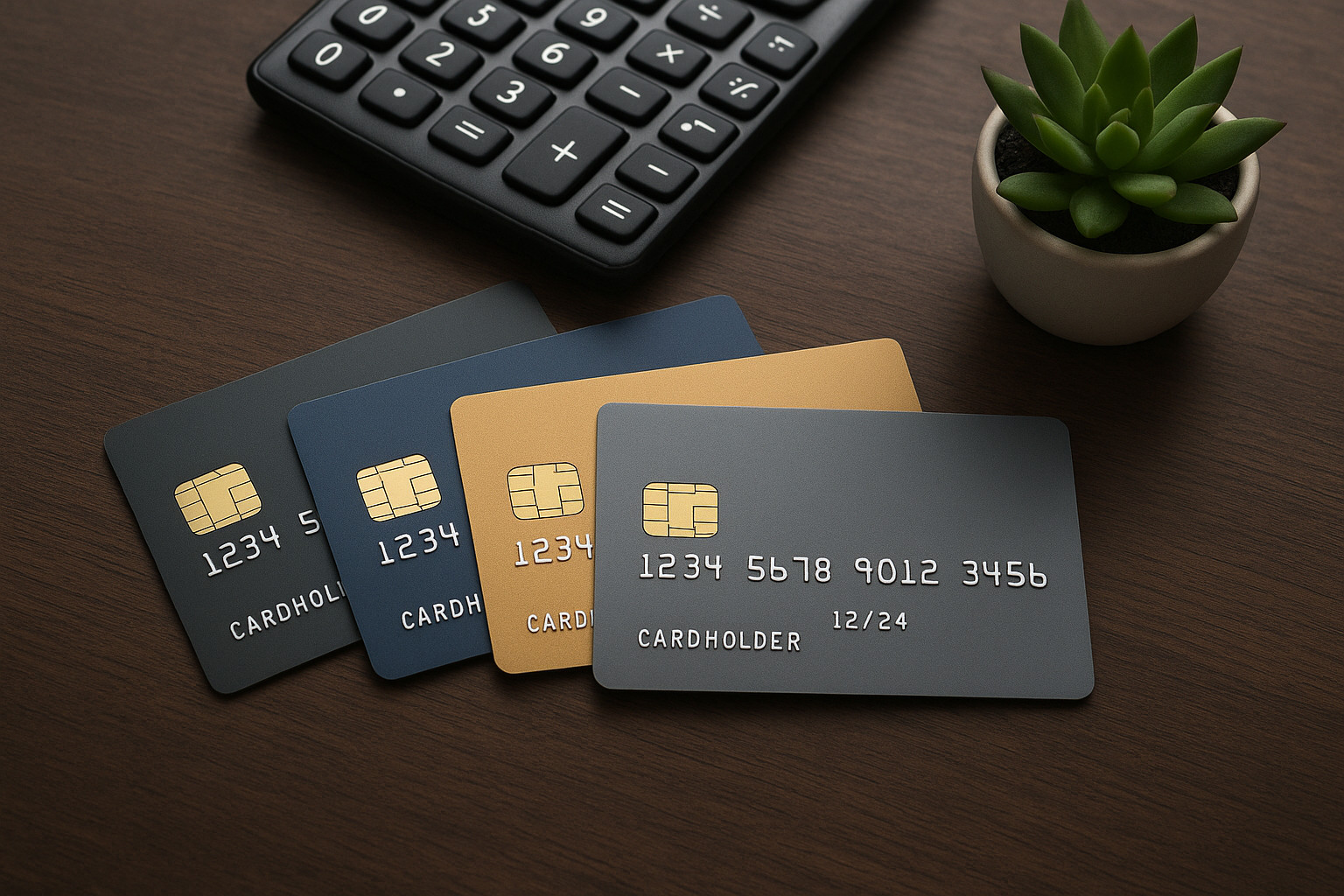
Different types of business credit cards suit different spending habits and repayment styles.
How to Choose the Right Business Credit Card: Step-by-Step
Choosing among the best credit cards for business owners becomes far easier with a structured process. Consider following these five steps before submitting an application.
- Review monthly spending patterns. Pull three to six months of expenses to see which categories, such as fuel or advertising, dominate the budget.
- Compare interest rates and fees. Line up APR, annual fees, and penalty charges across at least three offers before deciding.
- Check personal guarantee requirements. Confirm how the card reports activity and whether the owner remains personally liable.
- Match rewards to real expenses. A card only pays off when its bonus categories reflect genuine, recurring costs.
- Evaluate whether a card provides enough capital. If upcoming needs exceed the credit limit, a larger financing tool may serve the business better. For a deeper walkthrough, see our Capital Finance Guide: How to Fund Your Business Fast.
When Business Credit Cards Aren’t Enough: Alternative Financing Options
Credit cards work well for smaller, recurring purchases, but they were never designed to fund equipment upgrades, inventory buildups, or expansion projects. In these situations, business owners often turn to dedicated financing products instead of stretching a card past its limit.
USA Patriot Loans, a nationwide, disabled-veteran-owned business financing company founded in 2023, works with established businesses generating at least $20,000 in monthly revenue to arrange funding from $30,000 up to $20 million. Rather than relying on a single card, many owners pair a modest business credit card for everyday purchases with a business line of credit for larger, recurring capital needs.
For a one-time purchase like machinery, equipment financing often carries a lower rate than a card’s ongoing APR. Businesses weighing flexibility against predictable payments can also review this comparison of lines of credit versus term loans to decide which structure fits an upcoming project.
Business Credit Cards vs. Business Lines of Credit
Both tools offer revolving access to funds, yet they differ in cost and scale. A card typically suits purchases under a few thousand dollars with short repayment windows, while a line of credit usually offers higher limits and lower rates for bigger, ongoing working capital needs.
Consequently, cost matters just as much as convenience. Owners can review typical pricing in this breakdown of small business line of credit costs before deciding which product to prioritize for larger expenses. The U.S. Small Business Administration also outlines general financing options on its official site (SBA.gov), which is a useful starting point for comparing federal loan programs against private financing.
Common Mistakes Business Owners Make With Credit Cards
Even experienced owners fall into predictable traps. For instance, mixing personal and business expenses on one card makes bookkeeping messy and can complicate tax filing. Similarly, carrying a revolving balance at 20% or higher APR quietly erodes profit margins that took months to build.
Another frequent error involves opening several cards at once, which can temporarily lower a personal credit score and make cash flow harder to track. In contrast, disciplined owners typically use one primary card, pay it in full monthly, and reserve larger financing tools for bigger projects. Learn more about structuring capital access at USA Patriot Loans, which serves business owners nationwide.
Frequently Asked Questions About the Best Credit Cards for Business Owners
What are the best credit cards for business owners?
The best credit cards for business owners are cards that match the company’s spending patterns, offer manageable interest rates, and report to business credit bureaus. Owners should compare rewards, fees, and credit limits before applying.
How is a business credit card different from a personal card?
A business credit card is issued in the company’s name and typically offers higher limits and business-specific rewards, but it usually requires a personal guarantee from the owner. Personal cards protect consumers under different federal rules than business cards.
Do business credit cards affect personal credit scores?
Yes, most business credit cards require a personal guarantee, so missed payments can appear on the owner’s personal credit report. Some issuers also report card activity to consumer credit bureaus even when payments are made on time.
How much do business credit cards typically cost?
Annual fees range from $0 to roughly $695 for premium travel cards, while interest rates commonly fall between 18% and 29% APR. Late fees and cash advance fees add extra cost if balances are not managed carefully.
What credit score is needed to qualify for a business credit card?
Most issuers look for a personal credit score of 670 or higher, though some secured or starter business cards accept lower scores. Stronger scores generally unlock better rewards and higher credit limits.
How long does it take to get approved for a business credit card?
Many online applications receive a decision within minutes, while some issuers take several business days to verify income and business documentation. Approval speed often depends on the completeness of the application.
What is the biggest mistake business owners make with credit cards?
The most common mistake is carrying a revolving balance that accrues high interest, which can quietly erode profit margins. Owners should also avoid mixing personal and business expenses on the same card.
Are business credit cards better than a business line of credit?
Credit cards work well for small, recurring purchases and short payment cycles, while a business line of credit typically offers larger limits and lower rates for bigger working capital needs. The right choice depends on how much capital the business needs and how quickly it can repay.
Can a new business qualify for a business credit card?
Yes, many issuers approve newer businesses based primarily on the owner’s personal credit history and income rather than years in operation. However, limits are often lower until the business establishes its own credit profile.
What should business owners look for in card rewards programs?
Owners should match rewards categories to actual spending, such as bonus points on travel, office supplies, or advertising. A rewards program that does not align with real expenses rarely delivers meaningful value.
When should a business consider alternatives to credit cards?
Businesses needing more than a card’s credit limit, or facing a large one-time expense like equipment or expansion, are often better served by a term loan or working capital loan. Alternative financing can also offer lower rates on larger amounts.
How many business credit cards should a company have?
Most experts recommend one or two well-matched cards rather than many accounts, since multiple cards can complicate bookkeeping and encourage overspending. Fewer, better-chosen cards are easier to track and pay off in full.

Many owners pair a card with larger financing once spending needs outgrow a credit limit.
Final Thoughts on the Best Credit Cards for Business Owners
Ultimately, the best credit cards for business owners are the ones that fit real spending habits, carry manageable fees, and help build a separate business credit profile over time. However, cards are just one piece of a healthy financing strategy. When a business outgrows what a card can offer, options like working capital loans, business lines of credit, and equipment financing from lenders such as USA Patriot Loans can provide the larger, lower-cost capital that growth projects require. Comparing both paths carefully helps owners fund day-to-day operations and long-term expansion without overpaying in interest.