
Commercial hard money loan providers offer asset-based financing that helps business owners secure funding quickly when traditional bank loans fall through. Unlike conventional lenders, these providers focus primarily on the value of collateral — usually commercial real estate — rather than relying solely on credit history or years in business. As a result, businesses facing tight timelines or unconventional financial profiles can still access the capital they need to close deals, renovate properties, or bridge short-term cash flow gaps. This guide explains how these lenders operate, what to expect in costs, and how to choose a reputable provider for your next commercial project.
Quick answer: Commercial hard money loan providers are private lending companies that issue short-term, collateral-backed loans to businesses, typically closing in 7 to 14 days at interest rates between 8% and 15%. They are best suited for time-sensitive real estate deals, renovations, or situations where a bank has already declined financing.
What Are Commercial Hard Money Loan Providers?
Commercial hard money loan providers are private lenders or lending companies that issue short-term, asset-backed loans secured by commercial property or business assets. Because these loans emphasize collateral value over borrower credit, providers can approve and fund deals in days rather than the weeks or months typical of bank underwriting. This makes them a practical option for time-sensitive acquisitions, renovations, or bridge financing.
In particular, these lenders serve businesses that own real estate, equipment, or inventory but do not fit the strict box required by conventional banks. Consequently, hard money financing has become a common tool for investors and operating companies alike who need capital fast and are willing to accept a higher rate in exchange for speed and flexibility.

Commercial hard money loan providers evaluate collateral value more than credit history.
How Hard Money Loans Work for Business Owners
Hard money loans work differently than standard bank financing because the collateral, not the borrower’s balance sheet, drives the approval decision. Typically, a lender orders an appraisal, confirms the loan-to-value ratio, and issues a term sheet within a day or two of receiving basic property information.
Furthermore, because underwriting is streamlined, borrowers often skip the lengthy documentation cycles required by banks. However, this convenience comes at a price: rates are higher, terms are shorter, and most loans are structured to be repaid or refinanced within six months to three years.
According to the Wikipedia overview of hard money lending, this financing category originated in real estate investing and has since expanded into broader commercial and business use cases where speed outweighs rate sensitivity.
Key Features to Look for in Hard Money Lenders
Not all hard money lenders operate the same way, so it helps to know what separates a reliable provider from a risky one. Above all, transparency about fees and realistic funding timelines are the strongest indicators of a trustworthy lender.
- Clear loan-to-value guidelines stated upfront, typically 50–75% of collateral value.
- Straightforward fee disclosure covering points, underwriting costs, and prepayment terms.
- Proven funding track record with verifiable closed deals in your property type.
- Direct communication from underwriters rather than layers of brokers.
- Flexible terms for renovation draws, extensions, or interest-only periods.
How to Choose Among Commercial Hard Money Loan Providers
Choosing the right lender starts with comparing several commercial hard money loan providers side by side rather than accepting the first offer. Specifically, borrowers should request written term sheets so rates, points, and closing costs can be compared apples to apples.
In addition, it is worth verifying how long the lender has operated, whether they fund loans directly or broker them out, and how they have handled extensions for past borrowers. For businesses that also need working capital, lines of credit, or SBA-backed options alongside hard money financing, reviewing a broader comparison of lenders for business loan approval nationwide can help clarify which financing mix fits your situation.
Step-by-Step: How to Secure Funding From a Hard Money Lender
Once you understand the landscape, following a consistent process makes it easier to move from application to closing without surprises.
- Evaluate your collateral and equity position. Calculate the current market value of your property or business assets and determine how much equity you can offer as security, since most lenders require equity cushions between 30 and 50 percent.
- Gather property and business documentation. Collect recent appraisals, title reports, rent rolls, financial statements, and a written exit strategy so lenders can quickly verify collateral value and repayment plans.
- Compare multiple commercial hard money loan providers. Request term sheets from at least three lenders and compare interest rates, points, loan-to-value ratios, and prepayment penalties, since terms vary widely between lenders.
- Submit your application and review terms. Submit the formal application with supporting documents, then carefully review the commitment letter for fees, timelines, and default provisions before signing anything.
- Close and receive funding. After the lender completes a property inspection and title search, most loans close within seven to fourteen days and deliver funds directly to your business.

Closing typically happens within one to two weeks once documentation is complete.
What Do Commercial Hard Money Loans Cost?
Commercial hard money loans typically carry interest rates between 8% and 15% annually, along with origination points of 1% to 5% of the loan amount. These figures are notably higher than bank rates, but they reflect the speed and flexibility borrowers gain in exchange.
Meanwhile, the U.S. Small Business Administration notes that many small businesses struggle to meet bank underwriting standards, which helps explain why a meaningful share of owners eventually turn to alternative lenders such as hard money providers for time-sensitive needs. Since pricing varies by lender, always confirm whether points are charged upfront or rolled into the loan balance before signing.
Commercial Hard Money Loans vs. Traditional Business Financing
Compared with SBA loans or bank term loans, hard money financing trades a lower rate for speed and flexibility. Traditional lenders may take 60 to 90 days to fund, while hard money loans commonly close within two weeks.
Therefore, many businesses use hard money as a bridge while arranging longer-term financing, or as a one-time solution for a deal that cannot wait for conventional approval. For a broader look at how fast-funding options compare across loan types, this guide to fast funding options for small companies outlines additional alternatives worth considering.
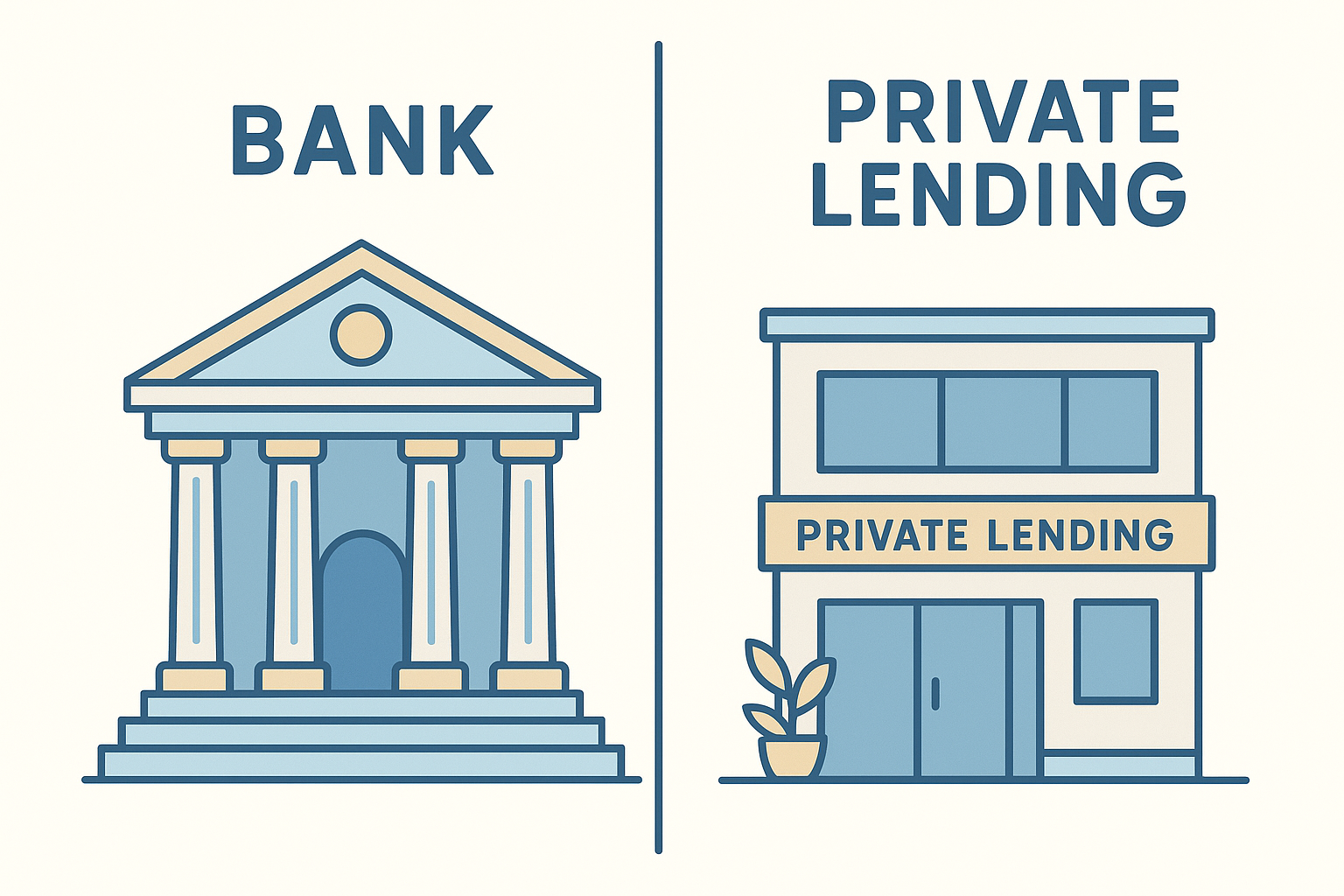
Commercial hard money loan providers prioritize speed, while banks prioritize rate.
Where USA Patriot Loans Fits In
USA Patriot Loans is a nationwide, disabled-veteran-owned business financing company founded in 2023 and headquartered in Pennsylvania, serving businesses across all 50 states. Among its offerings, the company provides commercial hard money loans alongside SBA loans, working capital loans, business lines of credit, equipment financing, and same-day business funding for companies generating at least $20,000 in monthly revenue.
For business owners comparing options, reviewing USA Patriot Loans’ nationwide financing programs alongside other commercial hard money loan providers can help clarify which lender offers the right combination of speed, funding range, and loan structure for a specific property or working capital need. Businesses located in fast-growing real estate markets may also find this hard money lending guide for Florida businesses useful for state-specific considerations.
Avoiding Common Pitfalls When Comparing Lenders
Even experienced borrowers can overlook details that lead to costly surprises later. For instance, failing to confirm whether a lender funds loans directly or brokers them elsewhere can add unexpected delays right before closing.
Similarly, borrowers sometimes underestimate prepayment penalties or extension fees, only to discover them after signing. As a result, reading every clause in the term sheet — and asking direct questions about worst-case scenarios — remains one of the best ways to avoid mistakes. Businesses exploring fast-approval alternatives alongside hard money financing may also benefit from this overview of business loans with fast approval.
Frequently Asked Questions
What is a commercial hard money loan?
A commercial hard money loan is a short-term, asset-based loan secured primarily by commercial real estate or business collateral rather than by credit score alone. These loans are issued by private lenders and typically close much faster than conventional bank financing.
How do commercial hard money loan providers determine loan amounts?
Commercial hard money loan providers base loan amounts mainly on the appraised value of the collateral, usually lending between 50 and 75 percent of the property’s value. Borrower income and credit history play a smaller role than the strength of the underlying asset.
Why do businesses choose hard money loans over bank loans?
Businesses often choose hard money loans when speed matters more than rate, such as during a time-sensitive acquisition or when a bank has denied financing. Approval and funding can happen in days instead of the weeks or months banks typically require.
How is a commercial hard money loan different from a traditional bank loan?
Traditional bank loans emphasize credit history, tax returns, and lengthy underwriting, while hard money loans focus on collateral value and exit strategy. As a result, hard money financing carries higher rates but far fewer approval hurdles.
How much do commercial hard money loans cost?
Commercial hard money loans typically carry interest rates between 8 and 15 percent annually, plus origination points ranging from 1 to 5 percent of the loan amount. Exact pricing depends on the lender, loan-to-value ratio, and property type.
How fast can commercial hard money loan providers fund a deal?
Many commercial hard money loan providers can close a deal within 7 to 14 days once collateral documentation and title work are complete. This speed makes them a common choice for auctions, foreclosures, and other time-sensitive purchases.
What credit score do you need for a commercial hard money loan?
Most hard money lenders do not require a minimum credit score since the loan is secured by collateral, though some prefer a score above 600 for additional assurance. Strong equity in the property usually matters far more than the borrower’s credit profile.
What types of properties qualify for commercial hard money financing?
Eligible properties often include office buildings, retail centers, warehouses, multifamily buildings, and mixed-use developments. Some lenders also accept raw land or properties needing renovation, provided there is sufficient equity.
What are common mistakes borrowers make when choosing hard money lenders?
Common mistakes include failing to compare multiple term sheets, overlooking prepayment penalties, and not confirming the lender’s actual funding history. Borrowers should also avoid signing agreements without a clear exit strategy for repaying or refinancing the loan.
What documents do commercial hard money loan providers require?
Most commercial hard money loan providers request a property appraisal, title report, purchase agreement or rent roll, and a brief statement of the borrower’s exit strategy. Compared to bank underwriting, documentation requirements are typically much lighter.
Can startups qualify for commercial hard money loans?
Yes, startups can qualify since hard money lending emphasizes collateral value rather than years in business. However, most lenders still expect the business to generate meaningful revenue or hold significant equity in the pledged property.
What happens if I can’t repay a commercial hard money loan on time?
If a borrower cannot repay on schedule, most lenders offer an extension for an additional fee, though continued default can lead to foreclosure on the collateral. This is why having a clear exit strategy before closing is essential.
Are commercial hard money loans regulated?
Commercial hard money loans are subject to state lending laws and general consumer protection oversight, but they face fewer federal underwriting mandates than residential mortgages. Borrowers should still verify a lender’s licensing through resources such as the Consumer Financial Protection Bureau before signing any agreement.
Final Thoughts
Choosing among commercial hard money loan providers ultimately comes down to balancing speed against cost. In particular, borrowers who compare term sheets, verify a lender’s track record, and plan a clear exit strategy tend to avoid the most common pitfalls. Whether you need to close on a property in days or bridge a short-term cash flow gap, hard money financing remains a practical tool when used deliberately and with a firm repayment plan in place. Above all, take the time to compare reputable commercial hard money loan providers before committing, since the right lender can make the difference between a smooth closing and an expensive mistake.