
Invoice financing solutions give business owners a way to convert unpaid customer invoices into immediate working capital, rather than waiting 30, 60, or even 90 days for payment. For many small and mid-sized companies, that gap between billing and collection creates real cash flow strain. Payroll comes due, suppliers need payment, and growth opportunities slip away while cash sits locked in receivables. In this guide, we break down how these funding tools work, what they cost, and how they compare to options like a business line of credit or revenue-based financing.
Direct answer: Invoice financing solutions convert unpaid invoices into fast cash by advancing 80% to 90% of the invoice value upfront, with the balance released once the customer pays. It’s one of the quickest ways to fix a cash flow gap without taking on a traditional term loan.

Reviewing outstanding invoices is the first step toward finding the right invoice financing solutions for your business.
What Are Invoice Financing Solutions?
Invoice financing solutions are financial products that let a business borrow money against the value of its outstanding invoices. Instead of waiting for a customer to pay, the business receives most of that cash right away. Consequently, day-to-day operations don’t have to pause while receivables sit on the books.
This category falls under the broader umbrella of accounts receivable financing, a term used by Investopedia to describe any funding secured by unpaid customer bills. Two common structures exist: invoice factoring, where the lender takes over collections, and invoice discounting, where the business keeps managing its own customer relationships. Both approaches aim to close the same gap—cash tied up in receivables that haven’t converted to available funds yet.
How Invoice Financing Solutions Work
In practice, the process is straightforward. A lender evaluates the invoice, the paying customer’s payment history, and the business’s receivables aging report. Once approved, funds typically move fast, often within one to three business days. As a result, businesses gain flexibility that traditional term loans usually can’t match on speed alone.
Here is the typical step-by-step flow:
- Submit outstanding invoices from creditworthy business customers to the lender for review, along with basic financials to verify accounts receivable value and customer payment history.
- Receive an advance once approved—the lender typically wires 80% to 90% of the invoice value directly into your business bank account within one to three business days.
- Your customer pays the invoice on its original terms, either to the lender under factoring or to your business under invoice discounting, depending on the structure chosen.
- After the invoice clears in full, the lender releases the remaining reserve balance minus fees, completing the cycle and freeing that receivable for future funding.
Types of Invoice Financing Solutions to Consider
Not every business needs the same structure when choosing invoice financing solutions. Spot factoring lets a company finance a single invoice or a handful of them, which works well for occasional cash gaps. Whole-ledger agreements finance the entire receivables portfolio and often carry lower per-invoice fees in exchange for volume commitment.
Recourse financing means the business remains responsible if a customer fails to pay, while non-recourse financing shifts more of that risk to the lender—usually at a higher cost. Meanwhile, businesses with heavy equipment needs alongside receivables gaps sometimes pair invoice funding with equipment financing to cover both fronts at once.
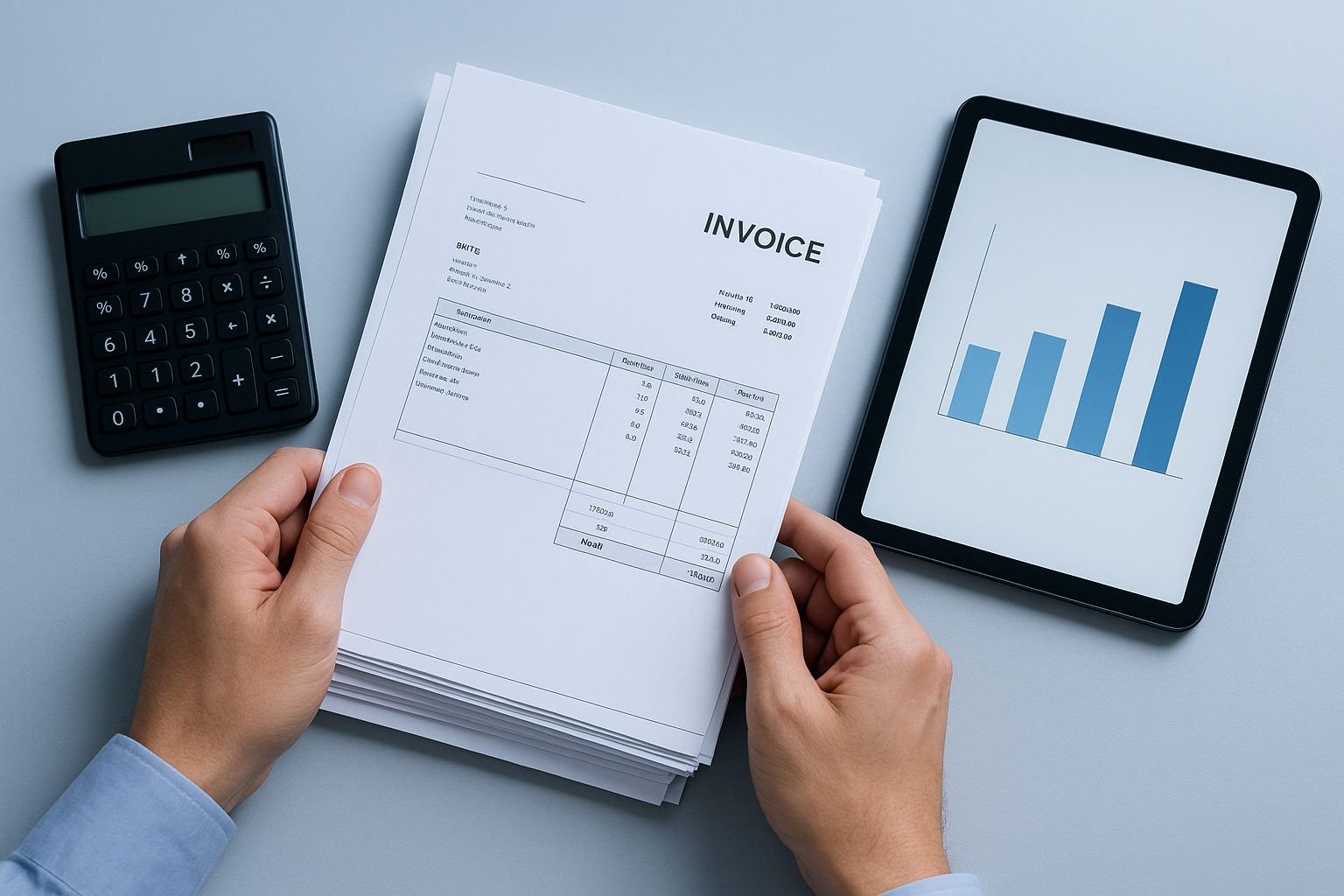
Sorting invoices by customer and due date helps determine which accounts qualify for financing.
Invoice Financing vs. Other Business Funding Options
Invoice financing is not the only path to working capital, so it helps to see how it stacks up. A business line of credit offers revolving access to funds but usually requires stronger credit and collateral than invoice financing does. In contrast, invoice financing leans on your customers’ payment reliability rather than your personal credit score.
Similarly, revenue-based financing repays a lender through a percentage of ongoing sales, which suits businesses without large unpaid invoices but steady revenue instead. For companies that need funds across multiple categories—payroll, inventory, or equipment—it’s often worth comparing quick funding options for equipment and payroll before committing to one structure.
Finally, businesses that need capital in under two days sometimes explore fast business funding delivered in 24 to 48 hours, which can complement or substitute invoice financing depending on urgency.
What Do Invoice Financing Solutions Cost?
Cost is usually the first question business owners ask, and understandably so. Fees typically range from 1% to 5% of the invoice value per month, according to industry data referenced by the U.S. Small Business Administration on accounts receivable-based financing. The final rate depends on customer creditworthiness, invoice size, and how quickly the invoice is expected to be paid.
For example, a $50,000 invoice financed at a 3% monthly fee that takes 45 days to collect might cost roughly $2,250 in total fees. That’s often still cheaper than the cost of a missed early-payment discount from a supplier or a bounced payroll run, which is why many businesses view the fee as a manageable trade-off rather than a burden.
Who Benefits Most from Invoice Funding?
Businesses that invoice other businesses on net-30 to net-90 terms tend to benefit most from these arrangements. Staffing agencies, trucking companies, manufacturers, wholesalers, and government contractors are frequent users because their payment cycles are long but predictable. In addition, seasonal businesses appreciate that funding scales up automatically during high-invoice months and tapers off during slower stretches, unlike a fixed monthly loan payment.
Choosing the Right Invoice Funding Partner
Because terms vary widely between lenders, it pays to compare advance rates, fee structures, and whether the arrangement is recourse or non-recourse before signing. Above all, look for transparency—reputable lenders explain fees in plain language rather than burying them in fine print.
USA Patriot Loans, a disabled-veteran-owned nationwide lending company founded in 2023, works with established businesses generating at least $20,000 in monthly revenue to arrange funding from $30,000 up to $20 million, including invoice financing alongside working capital loans, business lines of credit, and equipment financing. Businesses exploring their options can also review this guide to getting business financing funded fast for a broader comparison of funding paths.

Choosing a transparent lender is key to getting fair terms on invoice financing solutions.
Frequently Asked Questions About Invoice Financing Solutions
What are invoice financing solutions?
Invoice financing solutions let a business borrow against unpaid customer invoices, typically receiving 80% to 90% of the invoice value upfront. The remaining balance, minus fees, is released once the customer pays.
How does invoice financing differ from invoice factoring?
Invoice discounting lets the business keep control of collections and customer relationships, while factoring transfers collection duties to the lender. Both fall under the broader category of accounts receivable financing.
How fast can I get funded with invoice financing?
Most lenders fund approved invoices within one to three business days after submission. Ongoing facilities can advance funds even faster once the account is established.
What credit score do I need for invoice financing?
Invoice financing focuses more on your customers’ creditworthiness than your personal credit score. Many lenders approve businesses with limited or fair credit history as long as invoices come from reliable, paying customers.
What does invoice financing cost?
Fees typically range from 1% to 5% of the invoice value per month, depending on customer risk and invoice volume. Total cost depends on how long the invoice remains outstanding before payment.
Can startups use invoice financing solutions?
Yes, startups with business-to-business invoices and creditworthy customers often qualify for invoice financing solutions even without years of operating history. Lenders weigh customer payment reliability more heavily than company age.
What is the difference between invoice financing and a business line of credit?
Invoice financing is tied directly to specific unpaid invoices, while a business line of credit is a revolving fund not linked to receivables. Lines of credit often require stronger credit history and collateral.
Do I need to have all my customers approved for invoice financing?
No, most lenders allow you to select specific invoices or customers to finance rather than your entire ledger. This flexibility is often called spot factoring.
What industries use invoice financing the most?
Staffing agencies, trucking companies, manufacturers, wholesalers, and government contractors commonly rely on invoice financing due to long payment cycles. Any business that invoices other businesses on net-30 to net-90 terms can typically qualify.
Is invoice financing considered debt?
Invoice financing is generally structured as an advance against an asset you already own rather than a traditional loan, so it does not always appear as long-term debt on your balance sheet. However, terms vary by lender and structure.
What documents do I need to apply for invoice financing?
Lenders usually request an accounts receivable aging report, recent bank statements, a list of customers being invoiced, and basic business formation documents. Some also review your customers’ payment history.
Can I choose which invoices to finance?
In most spot-factoring arrangements, yes, you can select individual invoices rather than committing your whole receivables ledger. Whole-ledger agreements exist too, usually at lower per-invoice fees.
What happens if my customer doesn’t pay the invoice?
In recourse financing, the business remains responsible for repaying the advance if the customer defaults. Non-recourse agreements shift more of that risk to the lender, usually at a higher fee.
How much of my invoice value can I access upfront?
Most invoice financing solutions advance between 80% and 90% of the invoice’s face value upfront. The remaining reserve is paid out once the customer settles the invoice in full.
Are invoice financing solutions a good fit for seasonal businesses?
Yes, because funding scales with invoice volume, seasonal businesses can draw more capital during peak billing periods and less during slower months. This flexibility makes it different from fixed-payment term loans.
Final Thoughts on Invoice Financing Solutions
In summary, invoice financing solutions offer a practical way to unlock cash that’s already earned but not yet collected. Rather than waiting weeks or months for customer payments, businesses can access most of that value within days and keep operations running smoothly. Of course, the right choice depends on your invoice volume, customer reliability, and how the fees compare to alternatives like a line of credit or term loan.
Ultimately, comparing multiple funding paths—including options detailed at USA Patriot Loans—helps ensure you choose the structure that fits your cash flow cycle rather than forcing your business into a one-size-fits-all product. For businesses juggling payroll, inventory, and growth all at once, invoice financing solutions can be the difference between stalling and staying in motion.