Bank interest rates directly influence how much a small business pays to borrow money, and they shape nearly every financing decision an owner makes. When a bank raises or lowers its rates, monthly payments, total loan costs, and even approval odds can shift quickly. For many entrepreneurs, however, traditional bank interest rates come paired with long approval timelines, rigid qualification standards, and stacks of paperwork. As a result, business owners increasingly compare bank rates against alternatives such as working capital loans, business lines of credit, and revenue-based financing. This guide breaks down how bank interest rates work, why they change, and what small business owners can do to secure funding on better terms.
Quick Answer: Bank interest rates are the percentage a bank charges for lending money, based on factors like the federal funds rate, credit history, and loan risk. Because bank underwriting is often slow and strict, many small businesses turn to alternative lenders like USA Patriot Loans for faster access to capital.
What Are Bank Interest Rates?
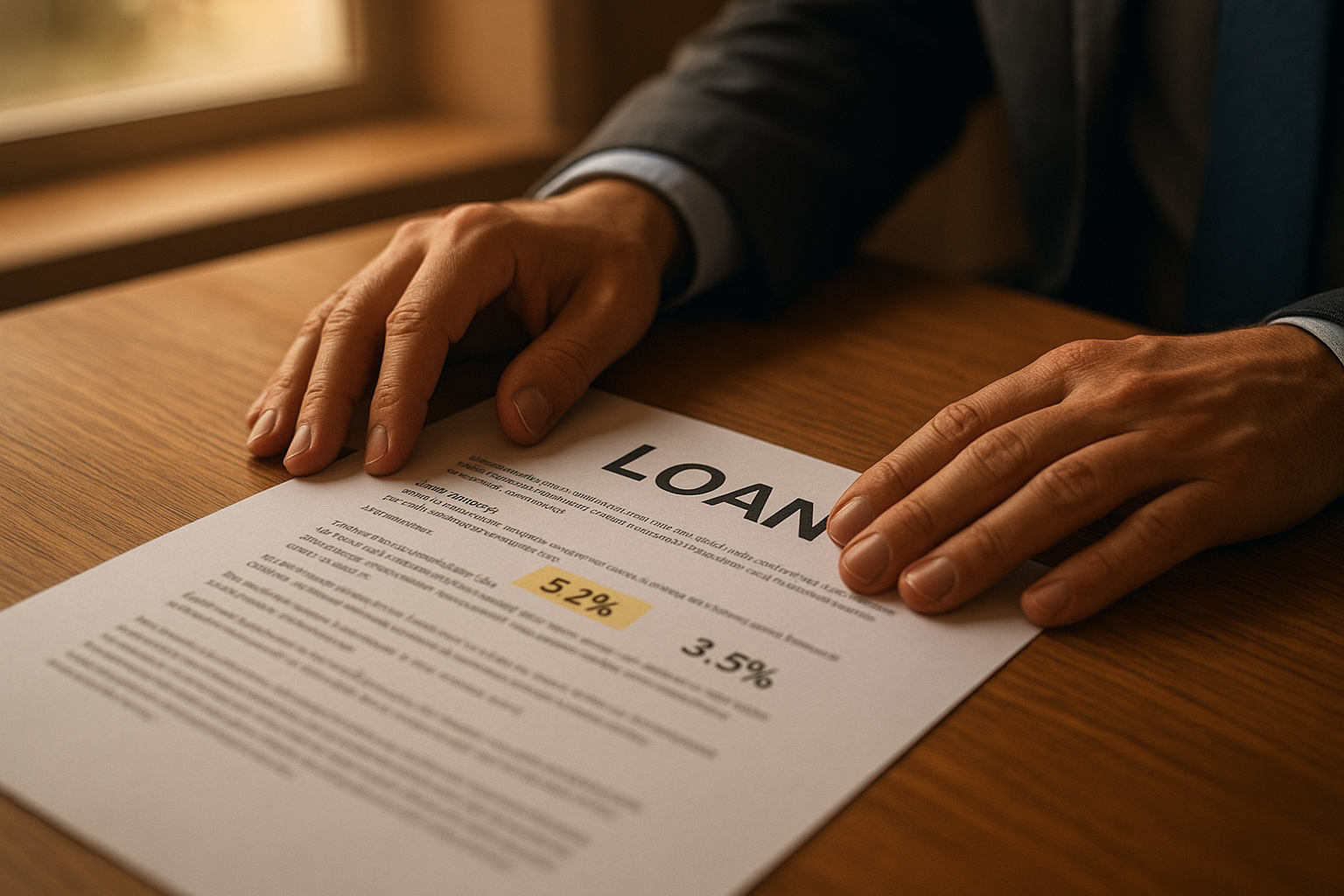
Bank interest rates are the percentage a financial institution charges a borrower for the use of borrowed money, expressed annually as an APR, or annual percentage rate — the yearly cost of a loan including interest and certain fees. In practical terms, a bank interest rate determines how much extra a business repays on top of the original loan amount, known as the principal. Consequently, even a one or two percentage point difference can add thousands of dollars to a loan’s total cost over its term.
Rates can be fixed, meaning they stay the same for the life of the loan, or variable, meaning they move with a benchmark index such as the prime rate. Therefore, before signing any agreement, it helps to understand which type of rate structure applies and how it could affect future payments. According to the Federal Reserve, changes to the federal funds rate ripple through nearly every commercial lending product in the country.
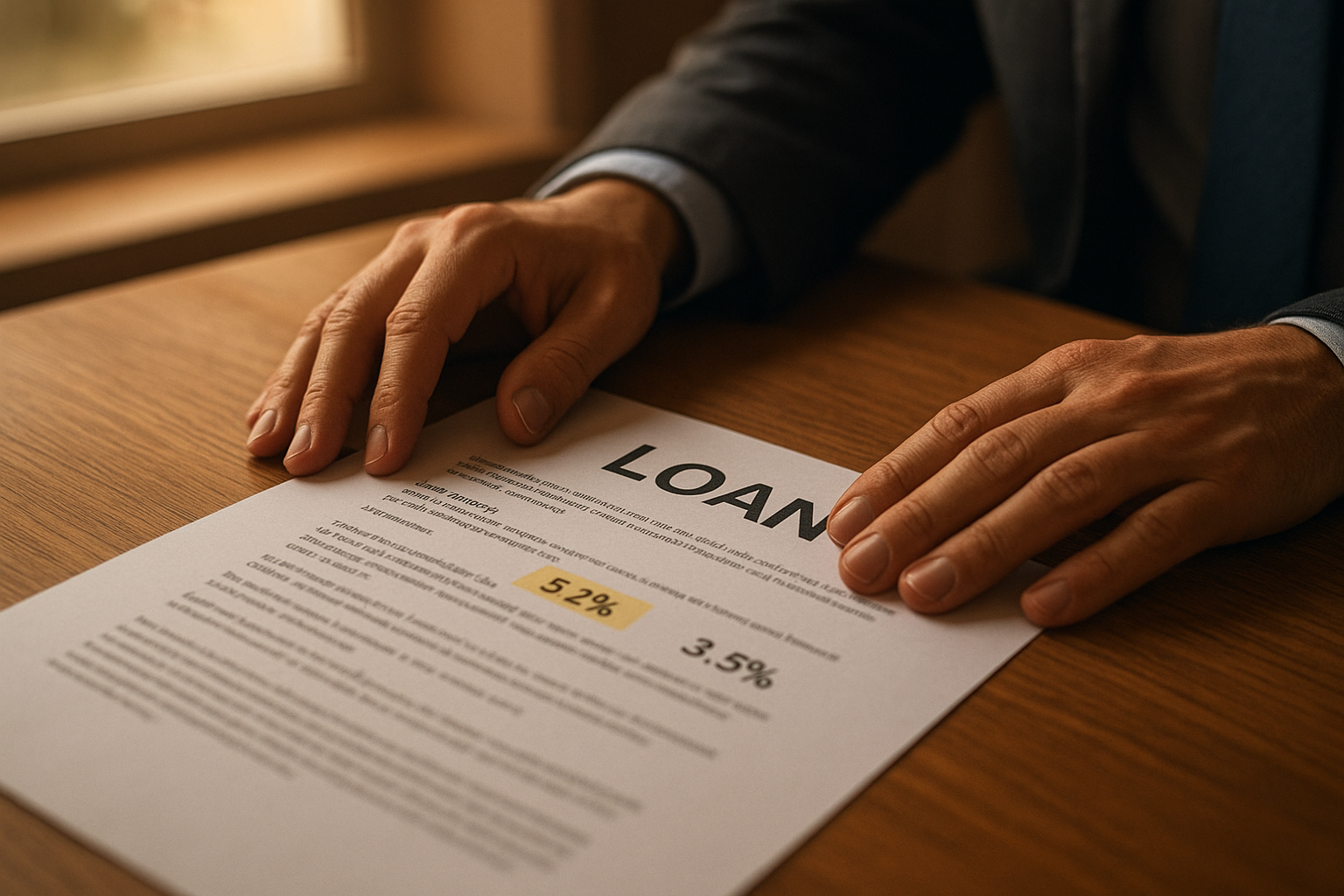
Understanding bank interest rates before signing a loan agreement helps business owners avoid costly surprises. For a deeper walkthrough, see our Common Terms for Business Term Loans Explained.
How Business Loan Interest Rates Are Determined
Several factors combine to set business loan interest rates, and none of them work in isolation. First, the federal funds rate sets a baseline cost of money across the entire banking system. Second, a business’s credit score, time in operation, and annual revenue all signal risk to underwriters. Third, the loan’s term length, collateral, and industry classification further adjust the final rate offered.
In addition, banks weigh broader economic conditions such as inflation and unemployment when setting lending policy. For example, during periods of rising inflation, banks typically raise rates to protect their margins. In contrast, when the economy slows, rates often drop to encourage borrowing and stimulate growth. Similarly, a business with strong cash flow and a solid repayment history is likely to receive a more favorable offer than one with limited financial history.
Specifically, most banks review at least three years of financial statements, tax returns, and personal credit history before finalizing a rate. As a result, newer businesses or those with thinner credit files often struggle to access the lowest advertised rates, even when their business fundamentals are strong.
Bank Rates vs. Alternative Small Business Financing Options
Traditional bank rates are often lower on paper, but the full picture includes more than the number itself. Above all, approval speed and flexibility matter just as much to many business owners. Bank loans can take several weeks to fund because of extensive underwriting, while alternative lenders frequently approve funding within a few business days.
For instance, working capital loans, business lines of credit, and revenue-based financing are structured to move faster than conventional bank products. Merchant cash advances and invoice financing likewise convert future receivables into immediate cash without the lengthy paperwork banks require. Meanwhile, SBA loans sit somewhere in between: government backing helps lower the rate, but the approval process still takes time.
Business owners considering their options can review a wide range of financing structures — including SBA loans, term loans, and short-term business loans through USA Patriot Loans — to compare speed, flexibility, and total cost side by side before committing to a bank offer.
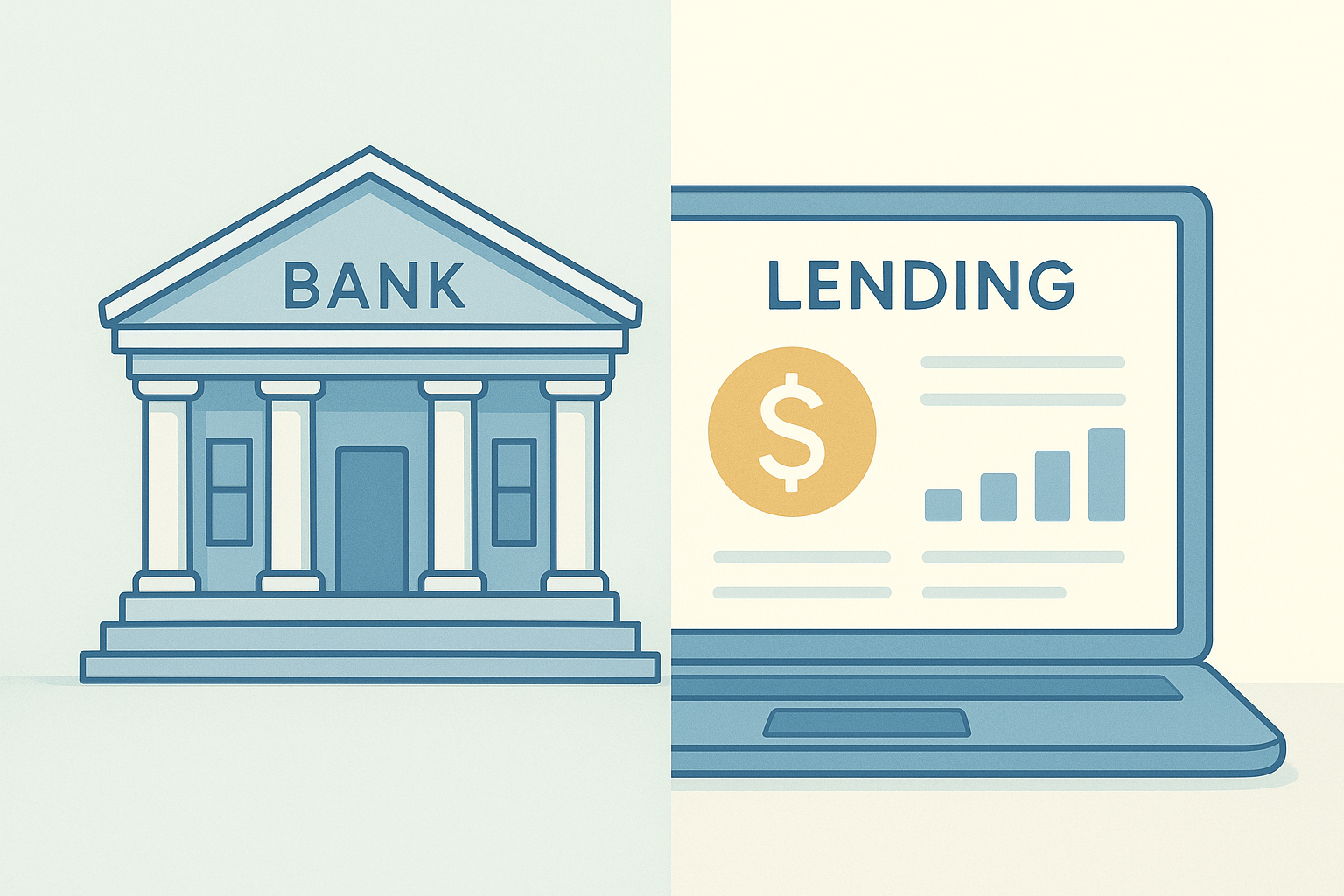
Comparing bank interest rates against alternative financing helps business owners choose the right funding path. For a deeper walkthrough, see our Business Loans for Small Companies: Funding Guide.
Why High Lending Rates Can Slow Small Business Growth
High lending rates raise monthly payments, which in turn reduce the cash a business has available for payroll, inventory, or expansion. Consequently, some owners delay growth plans simply because the cost of capital feels too steep. Furthermore, strict bank qualification standards mean many small businesses are denied financing altogether, even when their underlying operations are healthy.
According to the U.S. Small Business Administration, access to timely capital remains one of the most cited barriers to small business growth nationwide. In particular, seasonal businesses or those facing an unexpected opportunity often cannot wait weeks for bank approval. As a result, emergency business funding and same-day funding products have grown in popularity as a practical response to slow-moving traditional lending.
Ultimately, the true cost of a loan is not just the rate itself but also the opportunity cost of waiting. A slightly higher rate paired with fast funding can sometimes be more valuable to a growing business than a lower rate that arrives too late to matter.
Steps to Secure Better Financing When Rates Are High
Fortunately, business owners are not powerless against rising bank interest rates. The following steps outline a practical path toward more affordable, accessible financing.
- Compare multiple lenders. Request rate quotes from several banks and alternative lenders so you can compare total borrowing costs side by side before signing any agreement.
- Strengthen your credit profile. Pay down existing debt, correct credit report errors, and build a longer payment history to qualify for more competitive lending rates.
- Consider alternative financing structures. Explore working capital loans, revenue-based financing, or invoice financing, which can offer faster funding and flexible terms compared to traditional bank products. For a deeper walkthrough, see our Bank Statement Loans: Fast Funding Without Tax Returns.
- Review fees and total cost of capital. Read the full loan agreement carefully, calculate the APR rather than just the interest rate, and confirm there are no hidden origination or prepayment fees.
- Work with a nationwide business lender. Partner with a lender experienced in fast small business funding to secure capital quickly without waiting through lengthy bank underwriting cycles. For a deeper walkthrough, see our Top Lenders for Small Business Loans in My Area: A Nationwide Comparison Guide.
Businesses that follow these steps typically gain more negotiating power and a clearer view of their true financing costs. For a closer look at how a nationwide lender structures its approach, you can review why business owners choose USA Patriot Loans for speed and flexibility. For a deeper walkthrough, see our How Quickly Can I Get Business Funding From USA Patriot Loans?.

Comparing options before finalizing a loan can help business owners avoid unfavorable bank interest rates. For a deeper walkthrough, see our Best Options for Expanding My Business With Loans.
Frequently Asked Questions About Bank Interest Rates
What are bank interest rates?
Bank interest rates are the percentage a bank charges a borrower for the use of borrowed money, typically expressed as an annual percentage rate. They determine how much extra a business repays on top of the original loan amount. For a deeper walkthrough, see our How to Choose Between a Business Line of Credit and a Term Loan.
How do banks determine interest rates for small business loans?
Banks set rates based on the federal funds rate, the borrower’s credit history, loan term, collateral, and overall risk profile. Stronger financials and longer operating history usually lead to lower offered rates.
Are bank interest rates fixed or variable for business loans?
Bank business loans can carry either fixed or variable rates, depending on the loan product. Fixed rates stay the same for the loan term, while variable rates move with a benchmark index like the prime rate.
Why are bank interest rates often higher for small businesses than large corporations?
Small businesses often carry less collateral, shorter credit histories, and less predictable revenue than large corporations, so banks price in extra risk. As a result, small business rates are frequently higher than those offered to established enterprises.
How can I qualify for lower bank interest rates?
Improving your personal and business credit scores, reducing existing debt, and providing strong financial documentation all help secure lower rates. Offering collateral or a personal guarantee can also improve loan terms. For a deeper walkthrough, see our Can I Get a Business Loan With No Hard Credit Inquiry?.
What credit score do I need for competitive bank interest rates?
Most banks look for a personal credit score of 680 or higher to offer their most competitive rates. Businesses below that threshold often qualify for financing but at higher rates or through alternative lenders.
How do bank interest rates compare to SBA loan rates?
SBA loans often carry lower rates than conventional bank loans because the government guarantees a portion of the loan, reducing lender risk. However, SBA loans typically require longer approval timelines than standard bank financing.
Can bank interest rates change after loan approval?
Fixed-rate loans lock in the rate for the full term, so it will not change after approval. Variable-rate loans, however, can fluctuate whenever the underlying benchmark index moves. For a deeper walkthrough, see our What Are the Best Business Loans With Fast Approval?.
What is the difference between APR and bank interest rates?
The interest rate reflects only the cost of borrowing the principal, while the APR includes the interest rate plus additional fees like origination charges. Comparing APRs gives a more accurate picture of a loan’s true cost.
How long does it take to get a bank loan versus alternative financing?
Traditional bank loans can take several weeks to a few months to fund because of underwriting requirements. Alternative lenders often approve and fund loans within a few business days, sometimes even the same day. For a deeper walkthrough, see our Best Lenders for Business Loan Approval Nationwide 2026.
What mistakes should business owners avoid when comparing bank interest rates?
A common mistake is comparing only the interest rate without factoring in fees, repayment terms, and total cost of capital. Owners should also avoid applying to multiple banks simultaneously, which can trigger multiple hard credit inquiries.
Are there financing options with faster approval than banks?
Yes, alternative lenders offering working capital loans, revenue-based financing, and merchant cash advances often approve funding much faster than traditional banks. These options can be useful when speed matters more than securing the lowest possible rate. You can learn more about Wikipedia’s overview of interest rates for additional background.
Conclusion
Bank interest rates play a central role in the true cost of small business borrowing, but they are only one piece of the financing puzzle. Speed, flexibility, and total qualification requirements matter just as much as the rate printed on a term sheet. Therefore, comparing traditional bank offers against alternative options like working capital loans, business lines of credit, and revenue-based financing gives owners a fuller picture before they commit. Ultimately, understanding how bank interest rates are set — and knowing where to find faster, more flexible funding — helps small business owners make confident decisions and keep their growth plans moving forward.